
On a beautiful, bright Sunday morning in May, 1980, I left my home in Yakima, Washington to drive to my job just a few miles away. It was 7:45 a.m. and I needed to clock in at 8 a.m. It truly was a gorgeous morning, with bright blue skies, chirping birds and the temperatures were already promising a wonderfully warm day. I wished I could take the day off, and do anything but go to work.
At that point in my life, I was a junior at Central Washington University studying food science and nutrition. I spent my weekends working as a secretary in a clinical lab at a local hospital; a perfect job for a university student working towards a science degree. The weekend shift, which included a total of 32 work hours crammed into just three days, allowed me extra time for studying, plus, the lab technicians were knowledgeable in the sciences, and were very happy to help me with my homework.
I arrived at the lab and got right to work logging in the most recent specimens from patients in the hospital wings above, and from the emergency unit down the hall. Within a few minutes, lab results were available for a patient in the ER. The clinical lab was located in the middle of the hospital, with no windows to the outside. As I walked to the ER with the results, I glanced out the doors and did a double take; it was completely dark outside. What?!? I hurried to the nurse’s station looking alarmed, someone told me “it’s the big one this time”.

At that point in time, Mount Saint Helens, an active volcano in the Cascade Range had blown numerous times, but nothing like what happened on May 18, 1980 at 8:32 am. Yakima is 189 miles (304 km) from the mountain, however, the winds were not in our favor that day as they carried mountains of ash in our direction. The eruption was said to be much more powerful than an atomic bomb. It completely wiped away the north face of the mountain, creating the largest landslide in US history.
The devastation was tremendous; mudslides, ecological damage, plants and animals were killed, including 57 humans. The ash column shot 80,000 feet into the atmosphere and spread ash over 6 states. It destroyed 150,000 acres of forest, 200 homes, 185 miles of roads, 15 miles of railway and 27 bridges. 1,300 feet of the mountain summit was completely blown off. It is considered the most disastrous volcanic explosion in the history of the US.
As I walked to my car after work that day, I felt as though I was walking through a snow storm; it was completely dark and several inches of ash swirled around my feet and more showered down on me as I walked. Unbelievable.
During the next months the fine, abrasive ash seeped into houses, cars, machinery and disrupted air traffic. It short-circuited electrical power grids and distribution lines and seeped into the water supply. It irritated our eyes, lungs and caused health problems, so wearing face masks became a daily routine for us. Air filters on cars had to be changed weekly. It truly was a nightmare.
There are 20 active volcanos in the Cascade Range beginning in British Columbia, Canada with multiple volcanos including Mount Garibaldi. The range continues through Washington State with Mount Rainier and Mount Saint Helens, through Oregon with Mount Hood, Three Sisters and into northern California with Mount Shasta and Lassen Peak which blew in 1915. As I mentioned in a previous post, Mount Mazama, once part of this range, blew thousands of years ago. The result is now a massive lake – Crater Lake National Park in Oregon.

Here are my photos of some of these volcanos. You may remember these from past blog posts, so I apologize for the repetition.
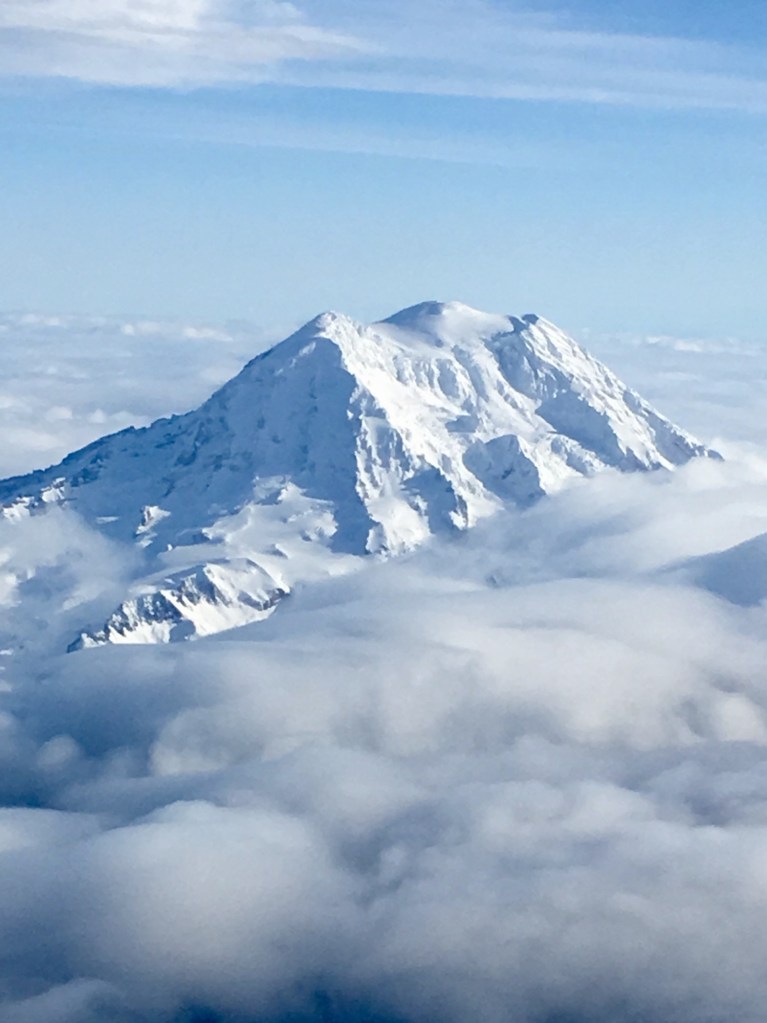
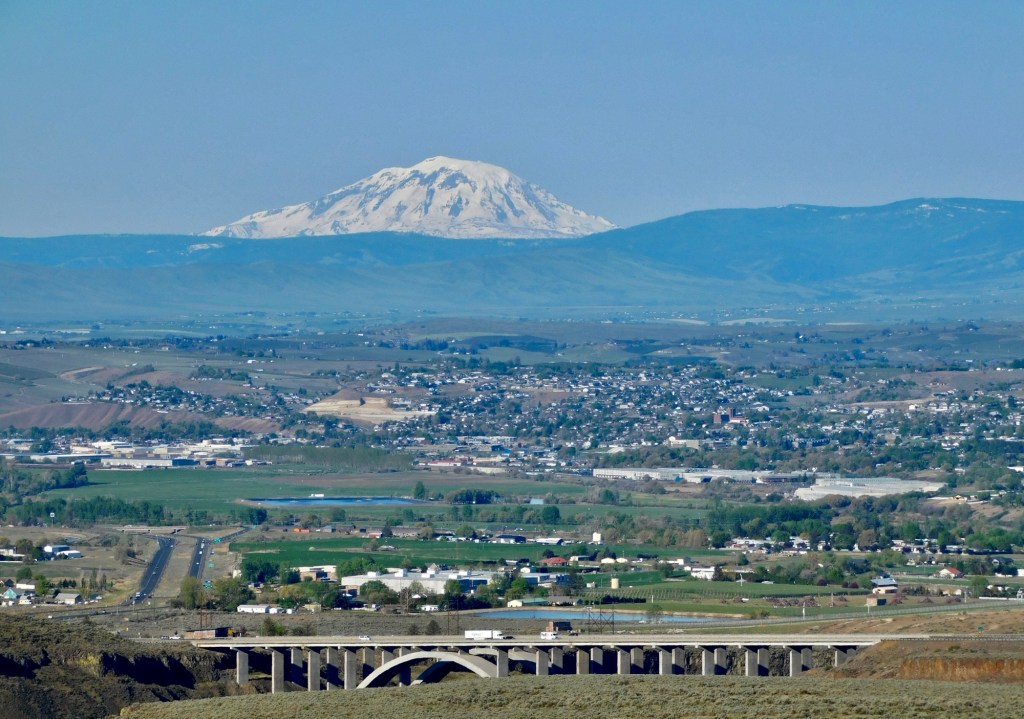


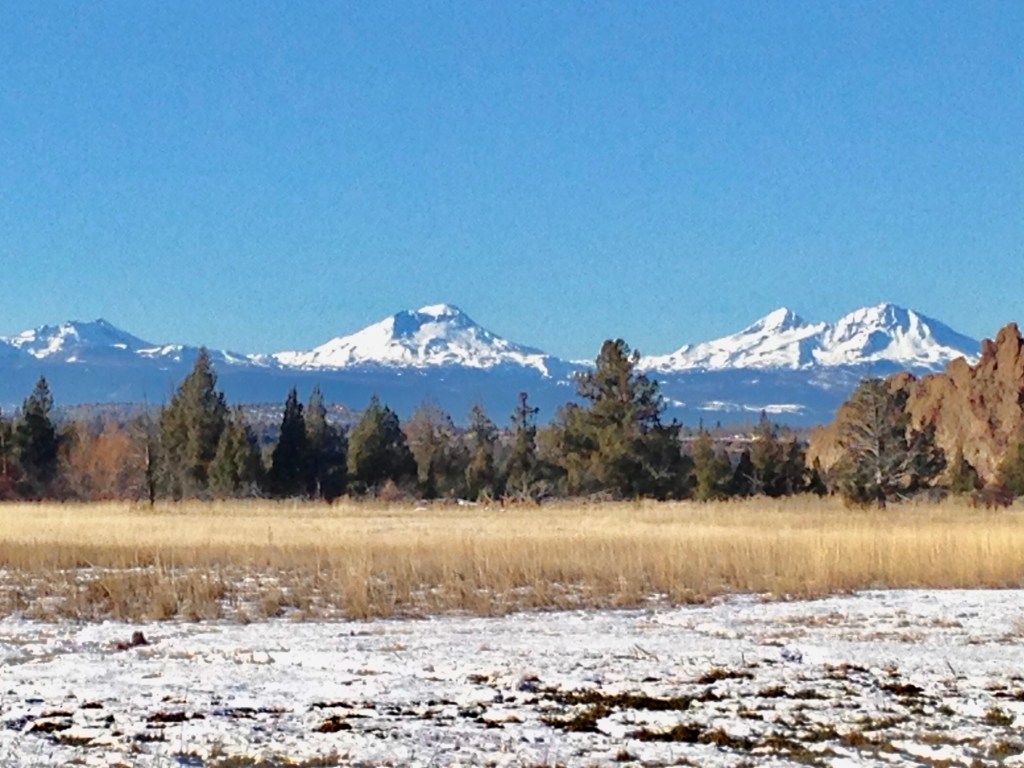
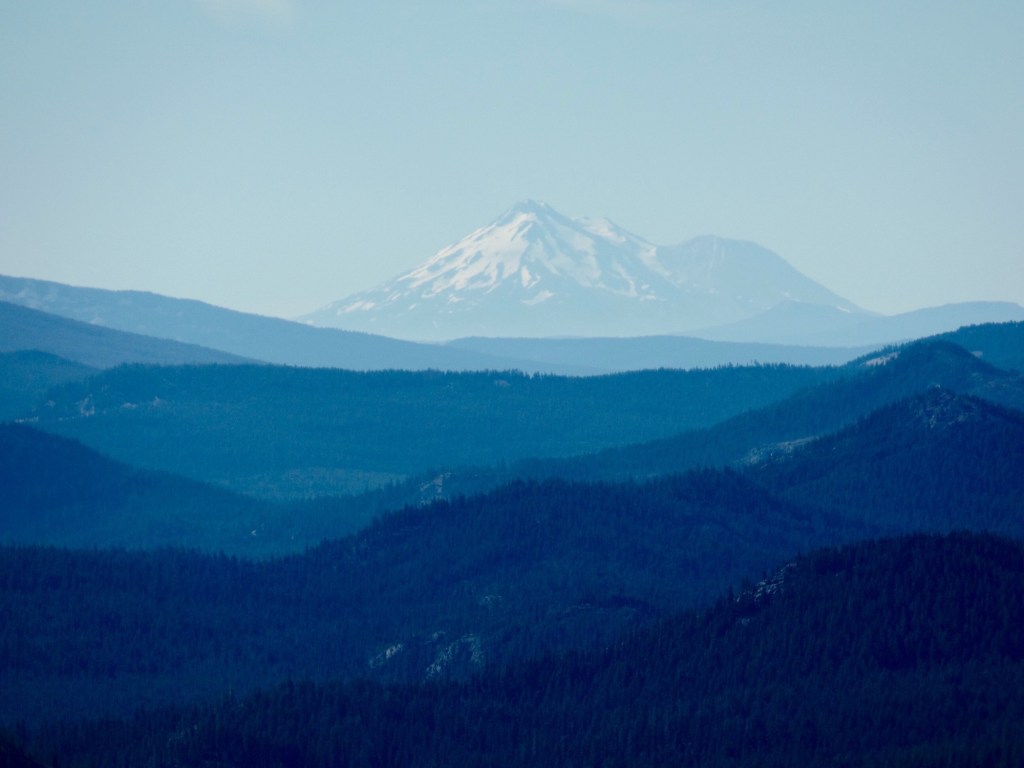

We visited Mount Saint Helens last week. Due to a landslide in 2023, much of the road is closed, so we weren’t able to get very close. But I managed to get a few photos and theTravelsketcher did a quick sketch.
We crossed Hoffstadt Creek on our way to the visitor’s center. The bridge was built in 1991 to replace a section of highway that was destroyed in the big blast. The bridge is located at the edge of the blast zone.


Volcanic activity in the Cascade Range is monitored by the David A. Johnson Cascades Volcano Observatory operated by the US Geological Survey. David Johnson was a volcanologist who was killed in the May, 1980 blast. The observatory is located in Vancouver, WA and was established in the summer of 1980 after the big blast.
The observatory issues weekly updates regarding the current seismic activity. Thankfully, the current activity is normal; hopefully, it will remain that way for many years to come.
Living through a volcanic eruption was a once in a lifetime experience; at least I certainly hope so!
As always, I would love to hear from you.
All the best,
Tricia
 Travels Through My Lens
I wasn’t around to experience Mount St Helens’ eruption, but I’ve read that it was a devastating event. It’s incredible that such a beautiful mountain could cause so much destruction. Glad you were safe from the eruption, although you weren’t too far from the site! Thanks for sharing your experience with us, Tricia.
LikeLiked by 1 person
It certainly was an incredible experience; one I hope not to experience again. Thanks, Rebecca!
LikeLiked by 1 person
Fascinating to see the before and after pictures. Volcanos shape so much of our world, both landscape and weather and of course famously disrupting travel plans (the one in Iceland). I love flying over Mt Ruapehu here which grumbles from time to time. Goodness knows how that would affect the country should it blow.
LikeLiked by 1 person
It’s amazing how much blew off the top of St. Helens. I remember the one in a Iceland, that was quite devastating too. Fingers crossed that the one in NZ doesn’t blow. Thanks for sharing!
LikeLike
Beautiful mountain pictures, Tricia. I was living in Lethbridge, Alberta (1170 km away) at the time of the Mount Saint Helens eruption and remember it well. We also experienced ash (nothing like yours of course) and I recall seeing a minor layer of it settling on anything outside for quite a while afterwards. Nature is the greatest force of all.
LikeLiked by 1 person
Thanks so much, Lynette. It certainly was a memorable event. It’s amazing that ash traveled as far as Alberta, but then as you said, nature is a mighty force. Thanks for commenting!
LikeLiked by 1 person
Wow, what an unfortunate event..
LikeLiked by 1 person
It truly was. Thanks for stopping by.
LikeLiked by 1 person
Thank you so much for the wonderful pictures and the story. I remember the occasion well but, reading about it in far-away Australia, my not quite have realized its magnitude. I had absolutely no idea the PNW had so many volcanoes, so thanks a lot for the geography lesson with its location map!
LikeLiked by 1 person
It was quite eventful to say the least. The PNW seems like volcano alley! Thanks for stopping by!
LikeLiked by 1 person
Nature beauty pic 💯
LikeLiked by 1 person
What a scary time that must have been. I remember the eruption. We had poor air quality for a while and I was in Winnipeg, Manitoba at the time, so quite far away. We always thought Mount Garibaldi was inactive but I guess it”s had a few rumblings too. Maggie
LikeLiked by 1 person
It was very frightening. It’s amazing how far the ash traveled, even to Manitoba; wow. Hopefully, Garibaldi will remain quiet, like the others in the range. Thanks, Maggie!
LikeLike
It’s funny how we can remember so many details on the day something big and important happens. It’s crazy to hear how close you were to Mount Saint Helens when it erupted and that you were directly impacted by the ash. Lovely captures of the volcanoes in the region. And here’s hoping we’re not around when the next big one hits.
LikeLiked by 1 person
Oh my, that’s so true! The details are so clear and it was 45 years ago! Agreed; let’s hope the volcanos stay calm for many more years. Thanks so much!
LikeLiked by 1 person
Oh wow, that is crazy that you experienced the eruption like that; it must have been really scary. I think it’s amazing nowadays how well they can predict eruptions, but it’s never 100% safe and I always think twice before hiking up one. I like that the Observatory is named in memory of David Johnson.
LikeLiked by 1 person
It was quite a frightening and traumatic experience; one I hope I never have to go through again! I thought it was a touching gesture that the observatory was named for him as well. Thanks, Hannah!
LikeLike
Wow! We’ve never heard the compelling story told by someone who ‘was there.’ Well, you weren’t exactly ‘there’ (thank goodness) but you were able to describe what people experienced and went through at a distance. You’re such a good writer, Tricia. Thank you for sharing this once in a lifetime experience–and thank you for all the wonderful photos. How special that you and the Travelsketcher recently visited the Mt. St Helens area. Thanks for another great posting!
LikeLiked by 1 person
Thanks so much, Shirley. I always appreciate your support and comments. Being in Yakima then was quite traumatic; hopefully, the volcanos will remain quiet for many years.
LikeLike
Wow, what a fascinating account. I have watched documentary films and read National geographic accounts about the eruption, but it’s quite special to hear about it from someone who lived through it all. Beautiful photos of the different volcanoes, the sketch is lovely, and the foxglove glorious.
LikeLiked by 1 person
Sometimes it’s hard to believe that I actually experienced it; it was pretty wild. Thanks so much for your comment and stopping by.
LikeLiked by 1 person
A very real and personal account of such a terrible event. This eruption was a couple years before I was born, but we talked about it all through school for years. We watched many videos about it and listened to many talks about the devastation that it caused. Then when I went to visit as an adult, I couldn’t believe how even after so many years later the land seemed to still be scarred from it all.
LikeLiked by 1 person
It’s interesting that you learned about the eruption when in school, but then, it was a major natural disaster. The lasting impact and destruction is truly astonishing. Thanks so much for your comment!
LikeLiked by 1 person
I really enjoyed your story about the Mount Saint Helens eruption – it is actually frightening how quickly a beautiful sunny day can turn into completely the opposite! And it’s amazing how many photos you have of volcanoes (I think the only one I’ve ever seen was Mt Etna in Sicily). Lovely photos!
LikeLiked by 1 person
Thanks so much, Corna! How amazing to see Mt. Etna! It is frightening how quickly things can turn for the worse. We live in an area with lots of volcanoes, so it’s easy to get photos.
LikeLiked by 1 person
This was so very interesting to read. I don’t think I’ve ever heard anyone’s account of living through something like that, and I surely had no idea there were quite so many active volcanos in the PNW!
LikeLiked by 1 person
Thanks so much. Let’s hope the volcanos stay quiet and calm for many years to come.
LikeLiked by 1 person