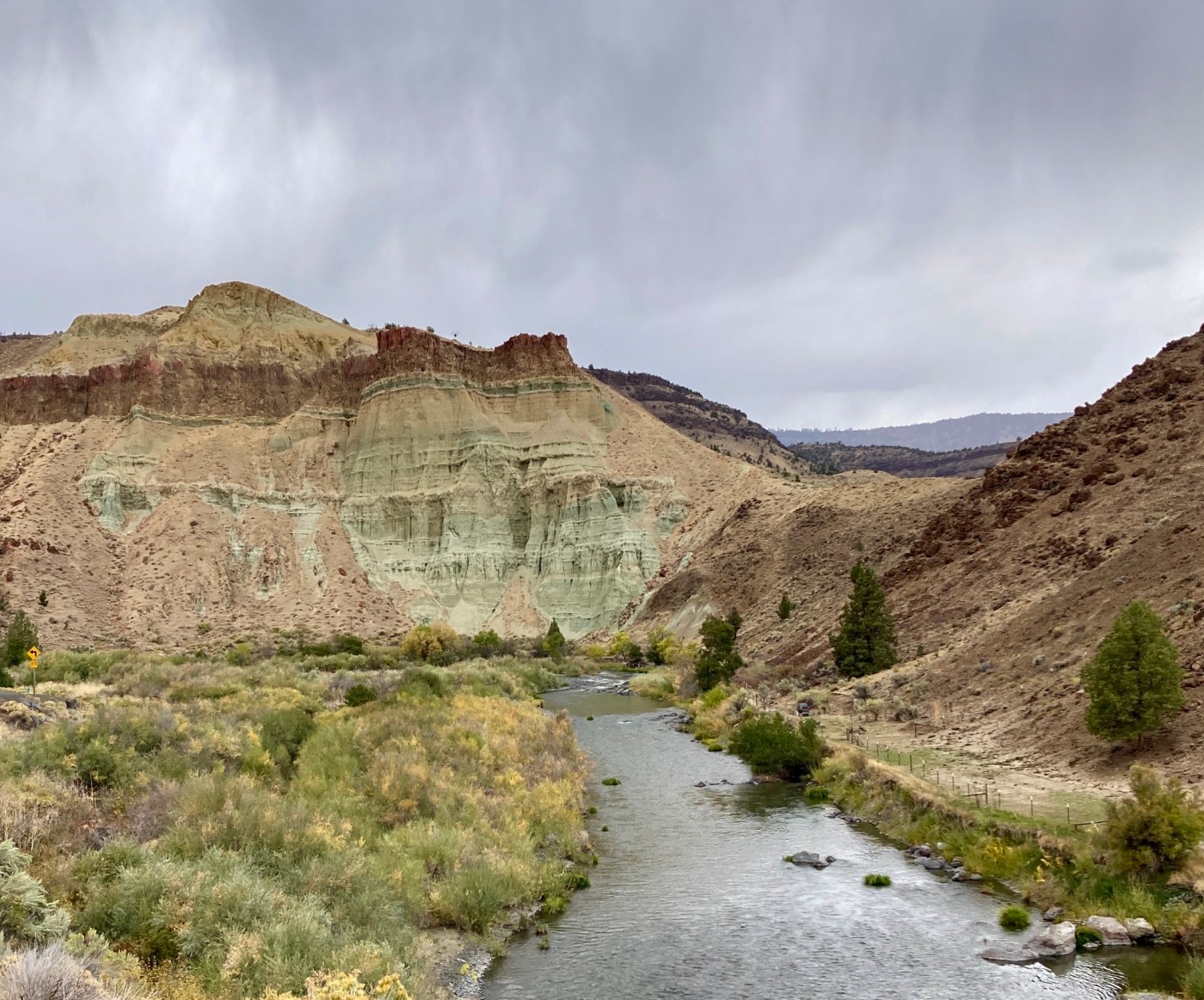
As mentioned in my Painted Hills post two weeks ago, the John Day Fossil Beds National Monument is divided into three separate areas referred to as “units”. These include the Painted Hills Unit, with the other two being the Sheep Rock Unit and the Clarno Unit. The monument includes close to 14,000 acres (5,600 hectares) and receives hundreds of thousands of visitors each year. We visited all three units during our time there which included lots of driving, but was well worth the effort.

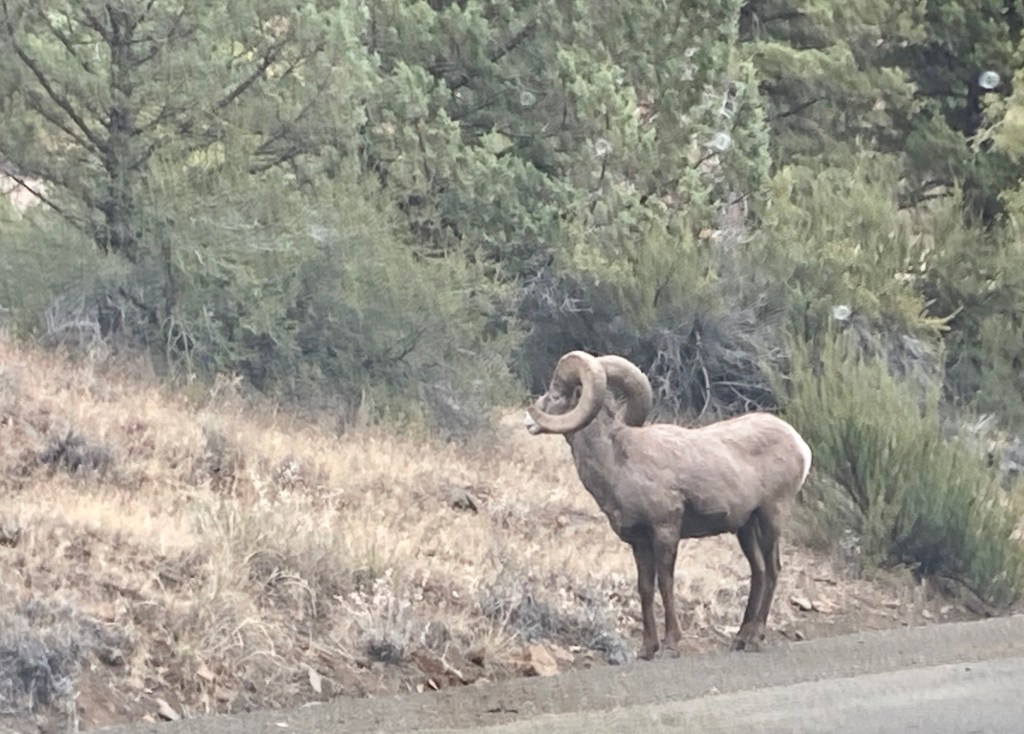
After visiting the Painted Hills, our next stop was the Sheep Rock Unit, about a 45 minute drive from the hills. It is named for the bighorn sheep that once populated the hillsides. We were fortunate to actually see one standing along the side of the road.


Here you’ll find the Thomas Condon Visitor Center which was unfortunately closed due to the current US Government shutdown. So, unfortunately, we could not see the fossils found in this area.
Thomas Condon was an Irish geologist who arrived in the area in the mid 1860s to study and dig for fossils. His discoveries created wide-spread interest, and soon scientists from Yale, Princeton and the Smithsonian Institute arrived and found a plentitude of specimens. In my humble opinion, it seems like the area should be named after Condon rather than John Day who was a hunter and trapper for the Pacific Fur Company in the early 1800s. Condon had a larger connection with the area, but that’s just my opinion. Click here if you’re interested in learning more about John Day.
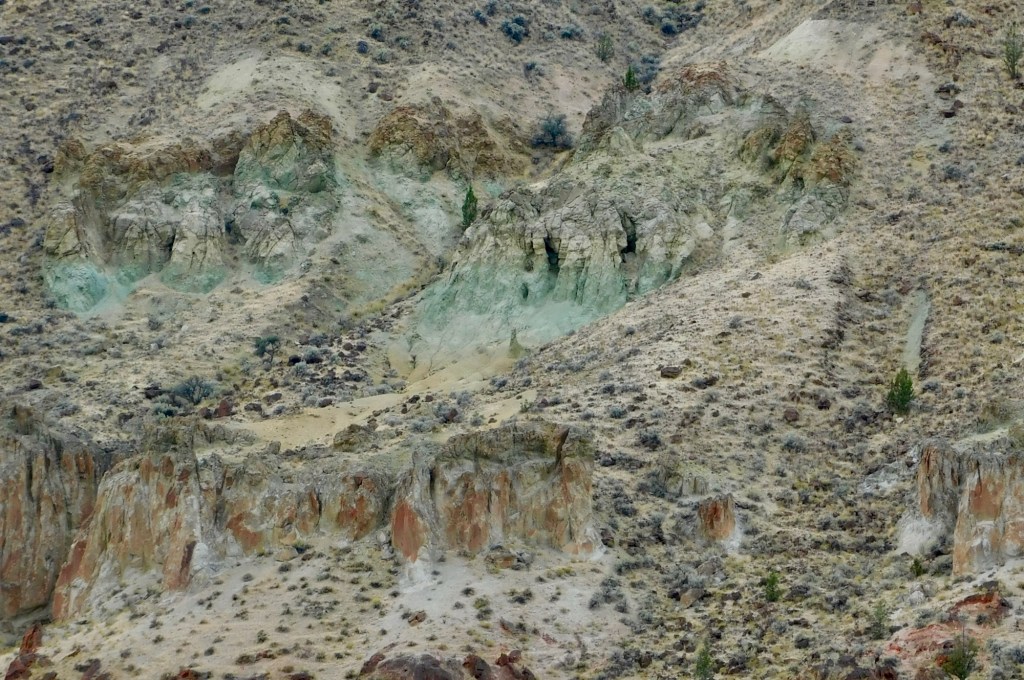
Sheep Rock is known for its intense, green strata in the hillsides.



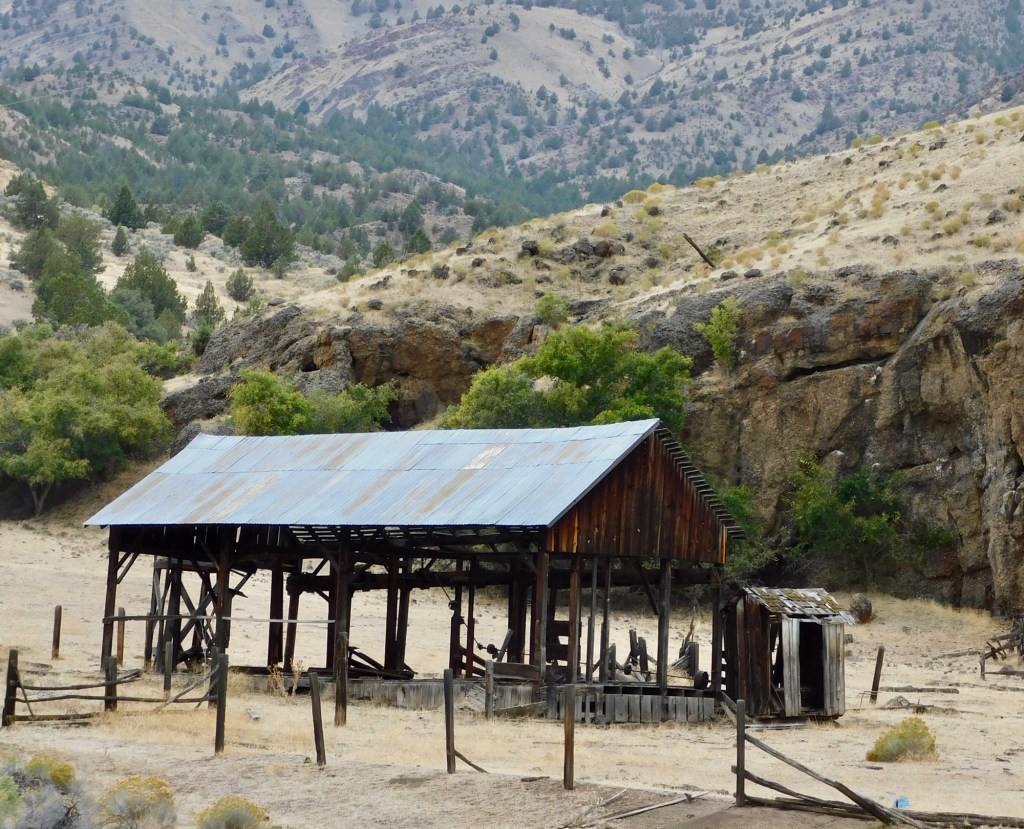
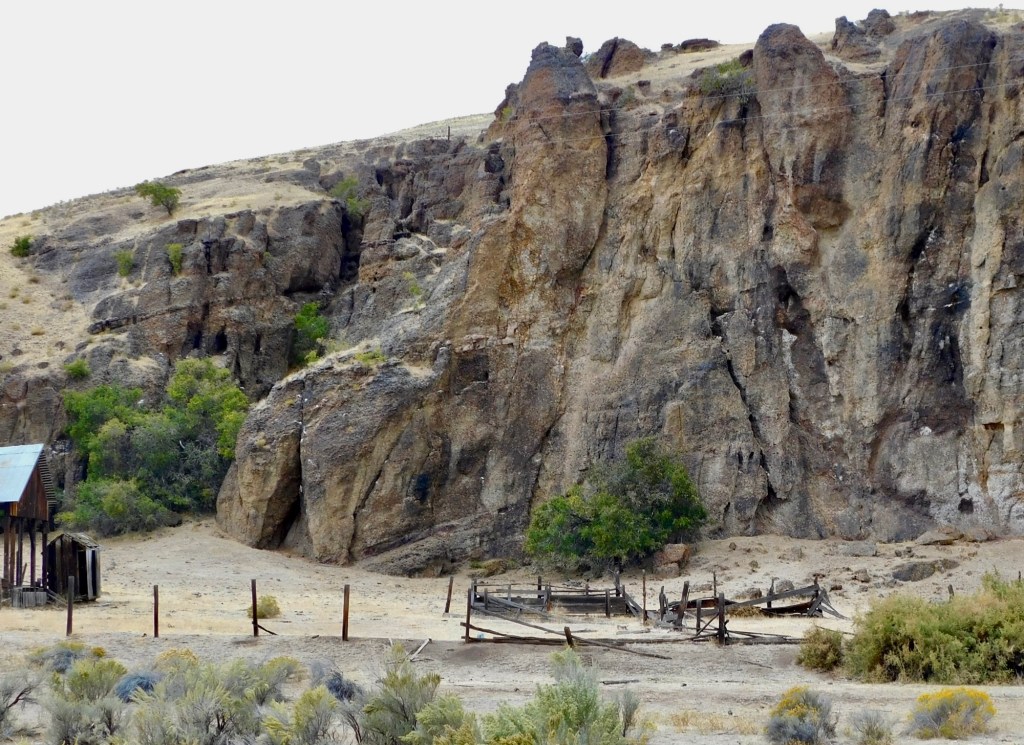
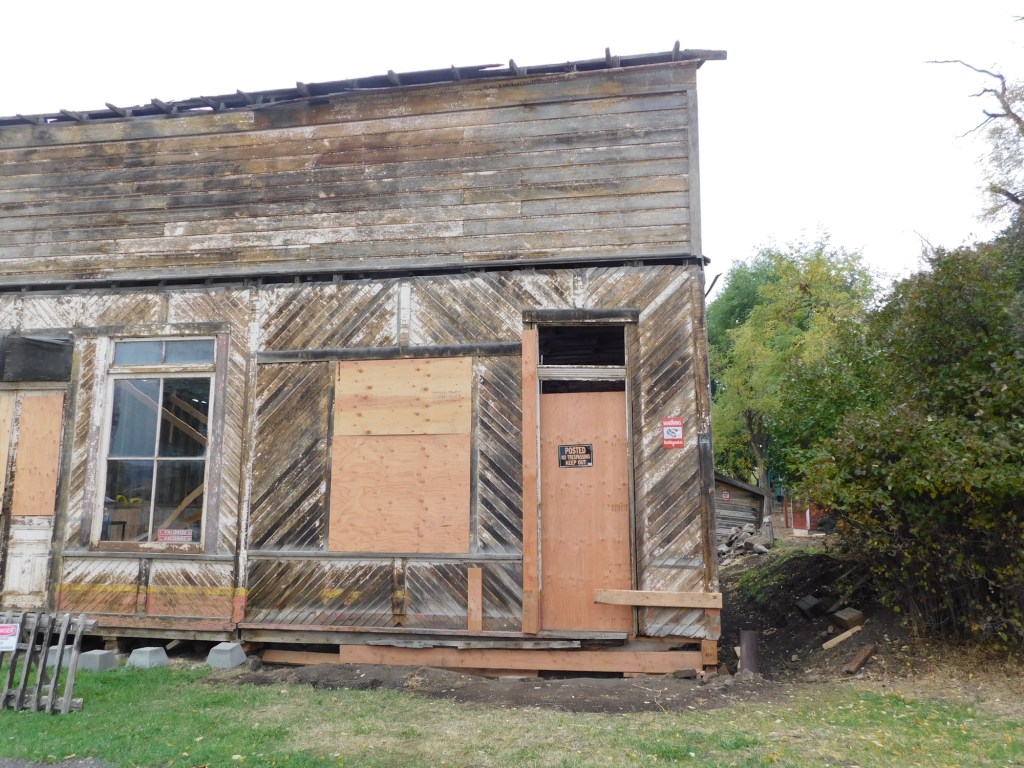
Our next stop was the Clarno Unit, named after Andrew Clarno, an early settler in the area. He married Eleanor Jones in Iowa in the early 1840s, and they later homesteaded in Oregon. Their closest neighbor was 20 miles (30.1 km) away. We saw many ruins of homesteads in the area and commented about how isolated the settlers must have felt.
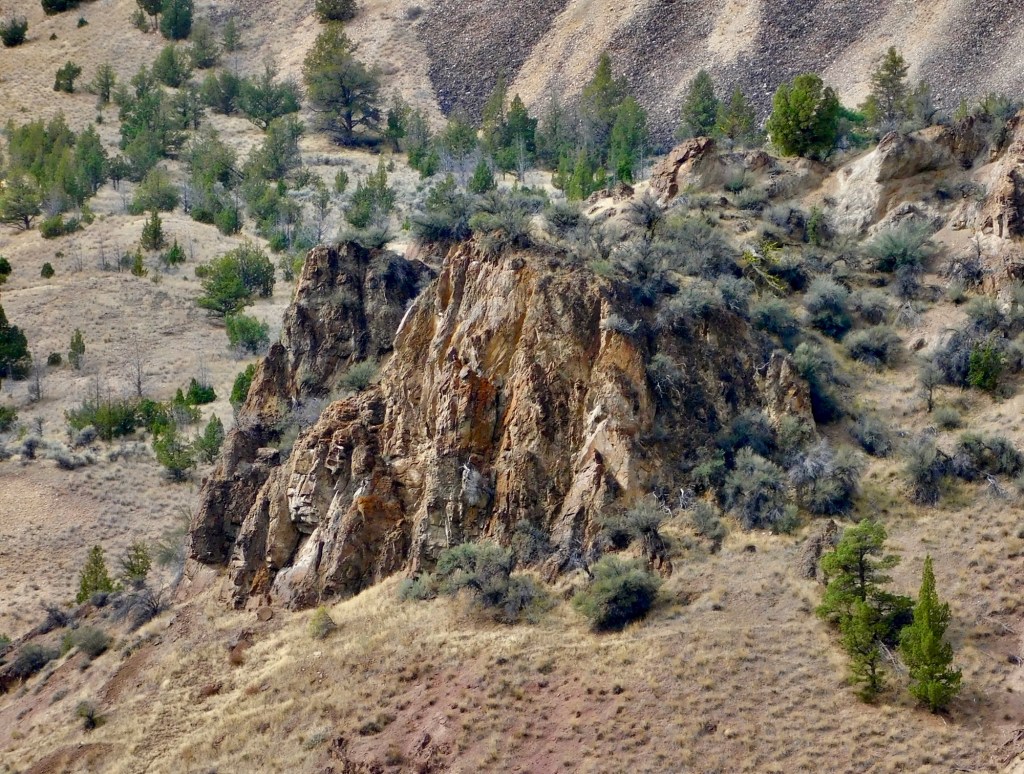
The Clarno Unit is the most remote area of the monument and is known for craggy, rugged hills and soaring pinacles.






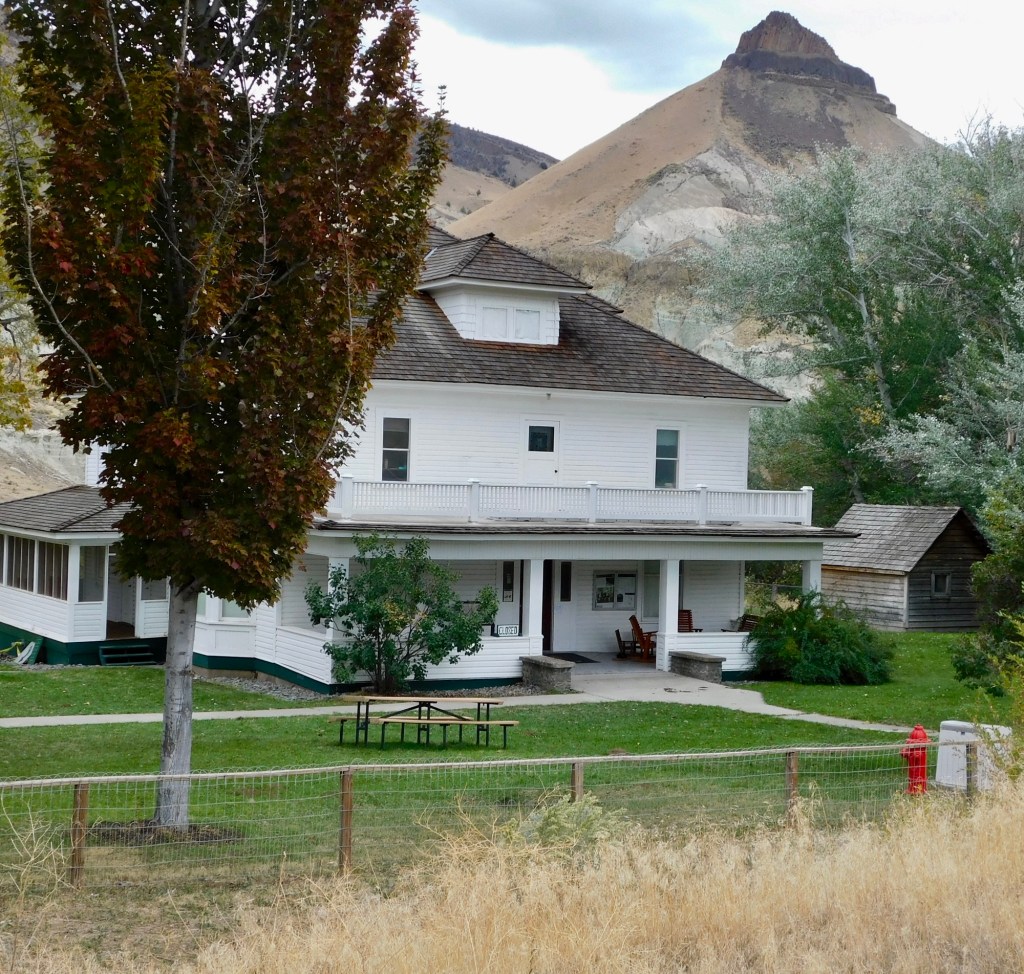
The Cant Family home is another interesting place to visit in the monument. James and Elizabeth Cant were Scottish immigrants who settled in the area in the early 1900s. Apparently the area’s dry climate provided ideal grazing land for their sheep and cattle. The house was purchased by the National Park Service in the 1970s and now serves as park headquarters.
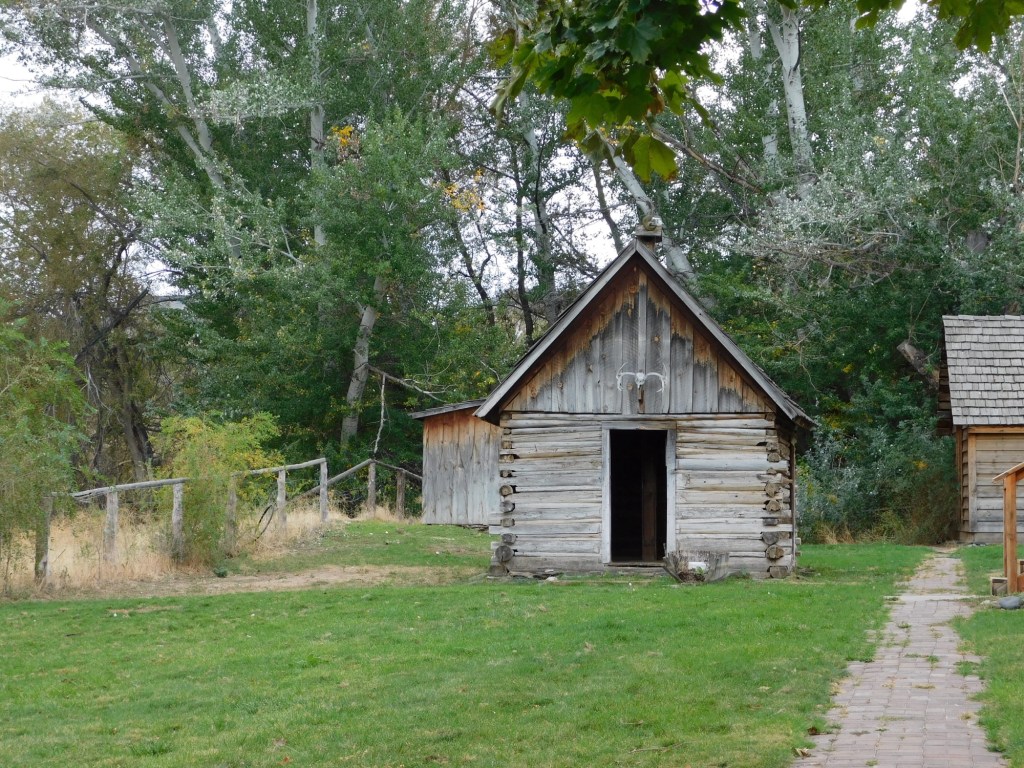


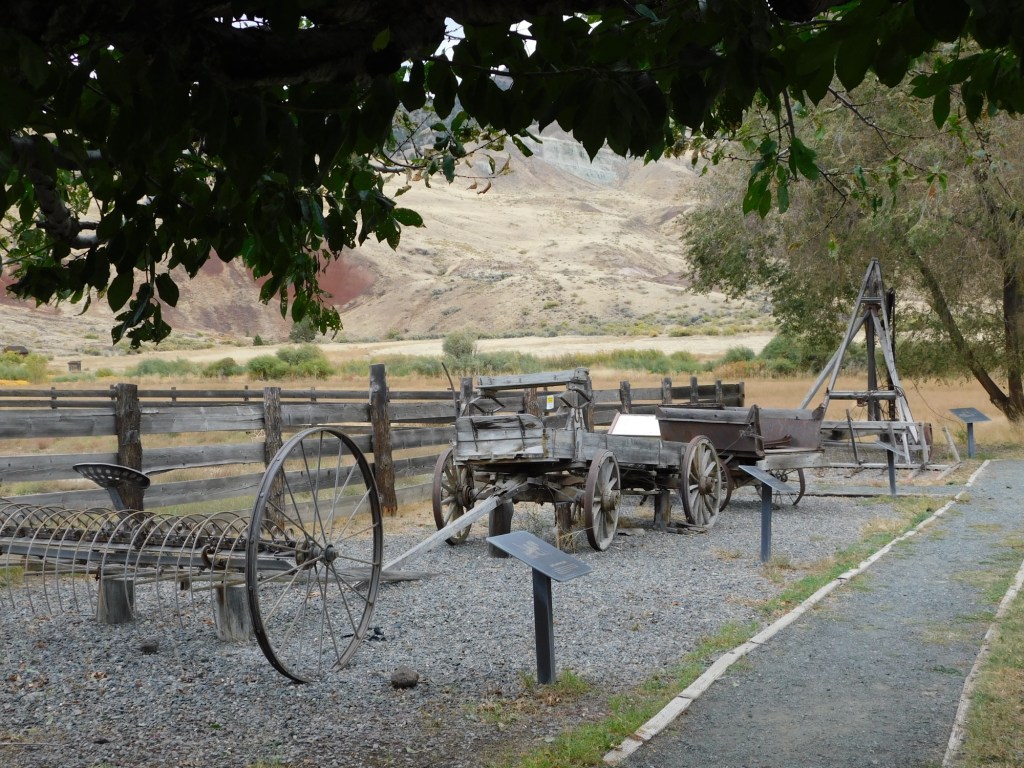
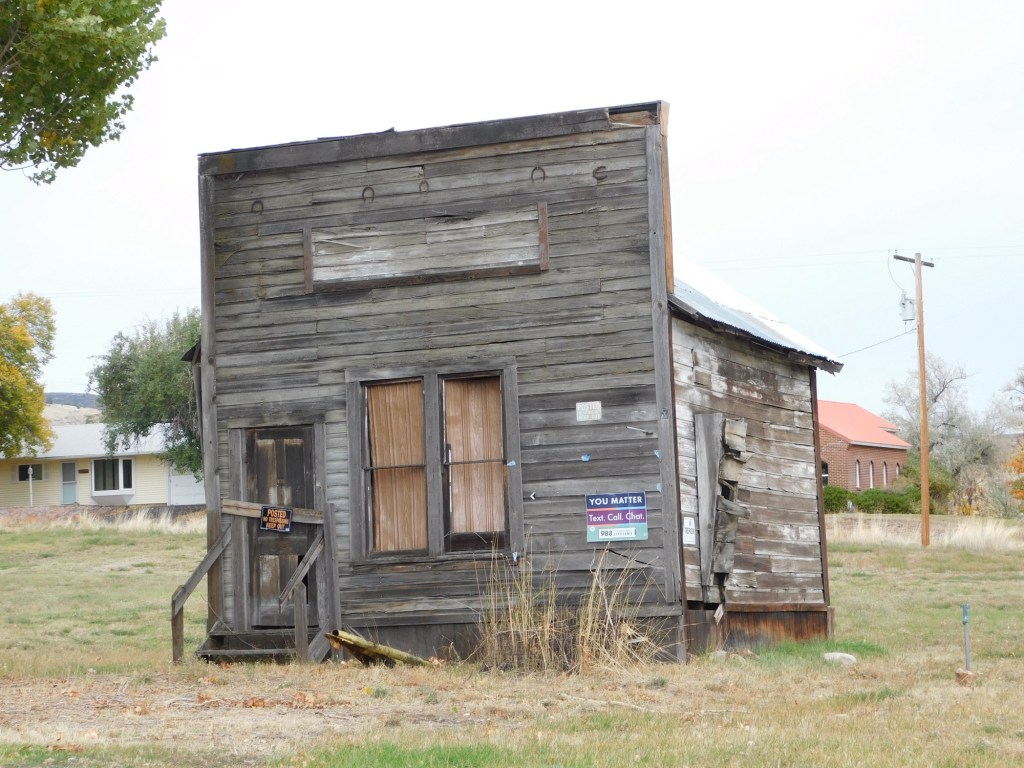
We saw lots of ruins of homesteads and buildings as we traveled through the area.



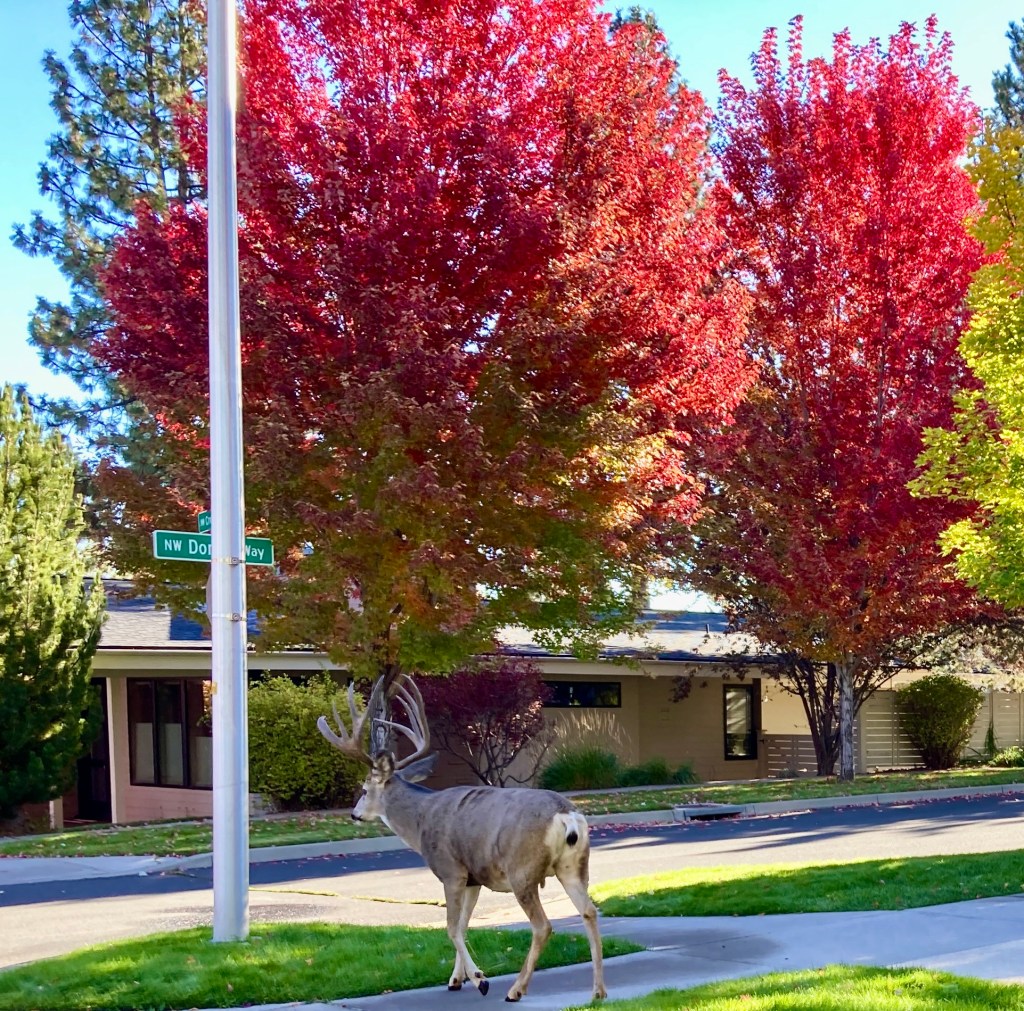
We saw lots of deer as well, interestingly, they were mostly in urban areas.

The John Day Fossil Beds National Monument is located in a remote part of the state, so accommodations are few and far between. We stayed in Prineville, which left a lot to be desired, but at least provided a few amenities. Be prepared to do a lot of driving if you visit.
We thoroughly enjoyed our visit to the different units in the monument and highly suggest a visit there if you’re in Oregon. Spring and autumn are the best times to visit, as summer temperatures are sweltering and the winter months are freezing.
What do you think of this part of Oregon? As always, I would love to hear from you so leave a comment if you’d like.
Wishing you grand adventures,
Tricia
 Travels Through My Lens
This is such a beautiful part of Oregon to explore and photograph, an ideal place for those interested in palaeontology, geology, and scenic beauty. The autumn colours are quite spectacular, and so is the opportunity to see wildlife. I also love the sketch by the Travelsketcher and how wonderful the painting of the big horn sheep turned out to be. Thanks for sharing, and have a good day 🙂 We are heading out for trick or treating tonight with the girls, it’s that time of the year again 🙂 Aiva xx
LikeLiked by 1 person
Thanks so much, Aiva; yes, central Oregon is an amazingly beautiful place. I also love Terry’s sketch, he captured the big horn sheep perfectly. I hope you and the girls have a wonderful and safe Halloween.
LikeLiked by 1 person
🥰🥰🥰
LikeLiked by 1 person
Fabulous description and you have definitely piqued my interest in going there. Amazing scenery.
LikeLiked by 1 person
Thanks so much, Dave! It’s a gorgeous place!
LikeLike
The Clarno Unit is stunning! Those rugged cliff pinnacles look like fairy-tale castle towers. An interesting area, Tricia but as you point out, it must have been very isolating and difficult there. Great that that period of history has been preserved. Cheers.
LikeLiked by 1 person
Isn’t it though? Agreed; the pinnacles are stunning. I can’t imagine living there back in the day; what a difficult life that would have been. Thanks so much, Lynette, for commenting and I hope you’re having a lovely evening.
LikeLiked by 1 person
I am sorry that you couldn’t visit the fossil museum, but you paint a lovely picture of the area with your words and pictures.
LikeLike
I can’t thank you enough for this ‘geography’ lesson. So much natural history to be learnt! So much beauty! Drama! At a time we all need to remember the very varied real grandeur of the US of A! Must admit I love the photos of the bighorn sheep alongside your husband’s beautiful drawing . . . methinks this post does have to go back into the ether for others to enjoy . . .
LikeLiked by 1 person
Thanks so much, Eha, it truly is a spectacular area. The USA is a huge country (like Australia), with many different climatic areas. Thus the diversity is quite amazing. Thanks for commenting!
LikeLiked by 1 person
Love the Clarno Unit pinnacles. I wonder if the rock is good enough for climbing. I’ve never heard of this area. Maggie
LikeLiked by 1 person
They are spectacular. I did a quick internet search and found that rock climbing is not allowed. I hope you visit someday; I’m sure you’d enjoy it. Thanks, Maggie!
LikeLiked by 1 person
Oh, too bad, they look like they were created to climb. 😊
LikeLiked by 1 person
True. Smith Rock State Park is a rock climbers paradise though. My brother-in-law loved climbing there. Here’s a link if you’re interested. https://www.smithrock.com/climb
LikeLiked by 1 person
I’ve heard of Smith Rock, but never climbed there.
LikeLiked by 1 person
I’ve not heard of John Day Fossil Beds National Monument, but wow, what a beautiful gem in your state! From bighorn sheep sightings to the Clarno Unit, it looks like it was a great time spent!
LikeLiked by 1 person
I hope you get to visit someday; it’s an amazing place. It was a thrill to see the bighorn too. Thanks, Rebecca!
LikeLiked by 1 person
The scenery is fabulous. This is going on the list. Great animal encounters as well.
LikeLiked by 1 person
It would be a great place to take Bobby 2.0 (is that his correct name?). Thanks for commenting!
LikeLiked by 1 person
That’s how I would be inclined to spell it, but since our first one was officially “Bobbie” with an “ie” at the end, that’s how we’re keeping it. The owner used to name them after his children and apparently that’s how he spelled it. It was an actual decal on our former trailer.
LikeLiked by 1 person
Rugged but beautiful…some of the rock formations look like castle ruins.
LikeLiked by 1 person
It certainly is. Agreed; some do look like ruins. Thanks for commenting!
LikeLiked by 1 person
What an amazing and fascinating place – I so love these peaks at new places – so much to discover!
LikeLiked by 1 person
It is an amazing place; thanks!
LikeLike
This looks like a really distinctive park, Tricia. Unusually beautiful and with great history to boot. Deer sightings always lift the spirits, but did you catch a glimpse of any rattlesnakes? And what was the deal with Prineville, a bit rough?
LikeLiked by 1 person
Thankfully, we didn’t see any snakes, they are quite reclusive. Prineville is very conservative, and the majority are Trump supporters. We actually experienced an uncomfortable situation when someone in a restaurant asked where we’re from. They actually believe Trump’s rhetoric that Portland is a “burning hell hole”. The park however, is an amazing place to visit. Thanks again for your comments!
LikeLiked by 1 person
Sounds like a spot we’d enjoy, especially since it’s located in a remote area away from the crowds. The landscape looks beautiful, especially those rugged rock pinnacles. And how fun to spot some wildlife.
LikeLiked by 2 people
Yes, I think you would enjoy the hiking in John Day. It is a stunning place. Thanks for commenting!
LikeLiked by 1 person
What a neat place! According to my mom, I’ve actually been here but was too young to remember, so I appreciate the tour. Now I know what I saw when I was a baby haha!
LikeLiked by 2 people
Oh wow, how cool! You’ll have to visit again and enjoy the hiking. Thanks for stopping by!
LikeLiked by 1 person
How beautiful! And added bonus of seeing big horn sheep there just seems like the icing on the cake 🙂
LikeLiked by 1 person
It is a ruggedly beautiful area, and seeing the big horn was an absolute thrill. Thanks!
LikeLiked by 1 person
I love Terry’s sketch of the big horn sheep! How amazing to see one 🙂 It looks like a beautiful area to explore.
LikeLiked by 1 person
I do too; it captured the big horn perfectly. It is an amazing place to see. Thanks, Hannah!
LikeLike
Wow, I can see where the bighorn sheep gets its name from (maybe it appeared especially so Terry could draw it 😉). The green colour in the hills is beautiful – it looks as if Terry might have been there with his paintbrush too! You took beautiful photos, Tricia – those red autumn-colored trees are particularly lovely.
LikeLiked by 1 person
Yes! I bet that’s the reason he appeared before us. 😊 The area is a paradise for artists and photographers. Thanks so much, Corna, we both appreciate your kind words.
LikeLiked by 1 person
What a fun “assignment” you and theTravelsketcher set for yourself to see Oregon’s 7 Wonders. It looks like you are having a great time, and your posts have shown that the 7 Wonders are, indeed, wonderful. Thank you for sharing them with us through your beautiful photos.
LikeLiked by 1 person
It was a fun adventure, and seeing so many beautiful places was wonderful. Thanks for coming along on our adventures, Lisa!
LikeLiked by 1 person