Here’s another post from The Paris Corespondent, Shirley Riley. I’m sure you’ll enjoy it as much as I do. Take it away Shirley!
While there is no question Paris is an incredibly special place, the quality of being special is not the context to this commentary. My focus is on the interesting, creative, and sometimes confounding use of space throughout the city which often translates into tight spaces. Very tight spaces. The dictionary defines spatial awareness as the ability to understand one’s relationship to objects, allowing one to move through spaces without bumping into things. This skill involves knowing how to interact with objects in front of, behind, on top of, or inside them. This can present a challenge in Paris—(and sometimes an amusing one).
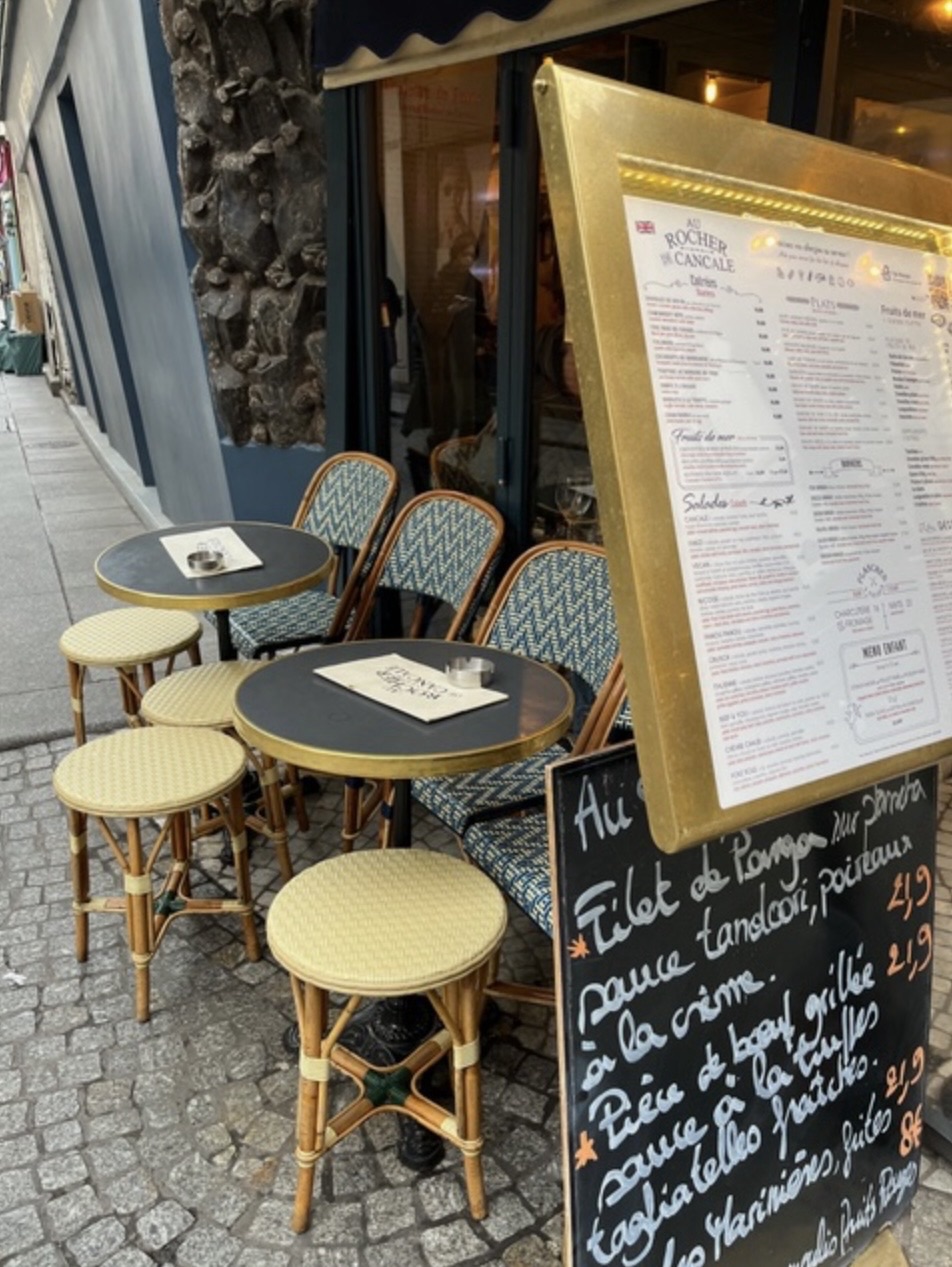
Case in point: Parisian Cafes. Tables placed insanely close together lead to an oft repeated routine: waiter whips small table into even smaller aisle with cooperation of adjoining tables, new diners sidle in to be seated, table is swiftly repositioned and all is normal. While in close proximity, cafe patrons maintain their private space. Conversations are low and rarely overlap—(although visitors from some countries appear oblivious to that; you know who you are…) The endless routine of ‘table in/table out’ organized cafe chaos continues through the day. Departing diners engage in cautiously swift sideways exit from between tables—which are quickly returned to position awaiting the next round.
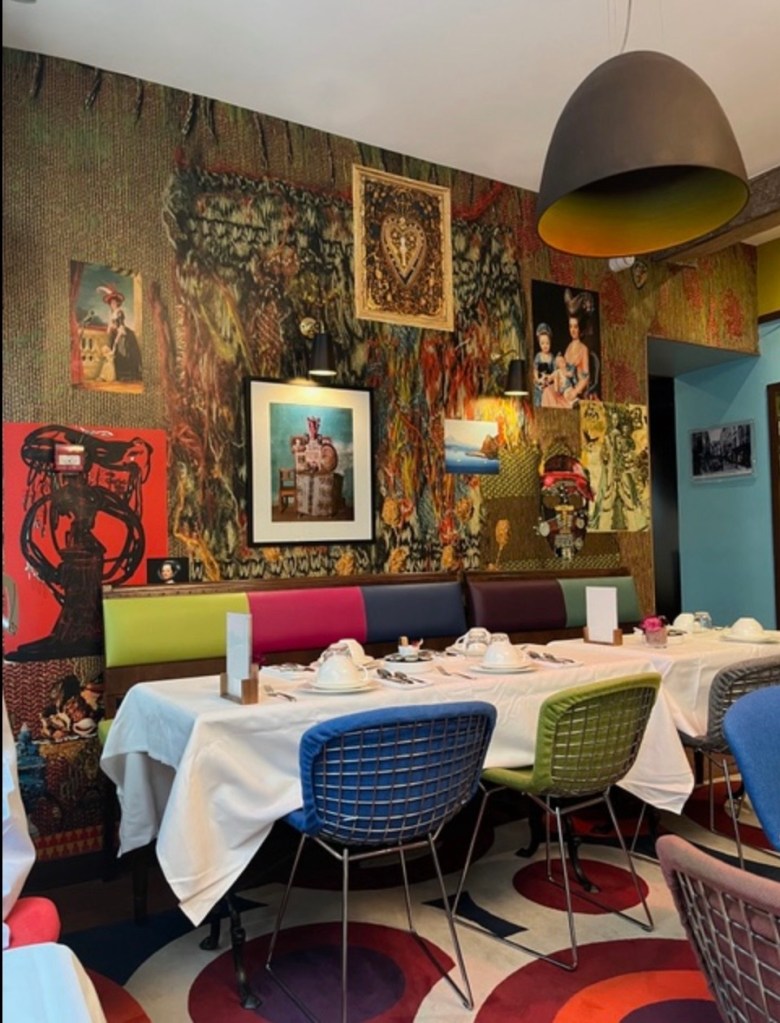
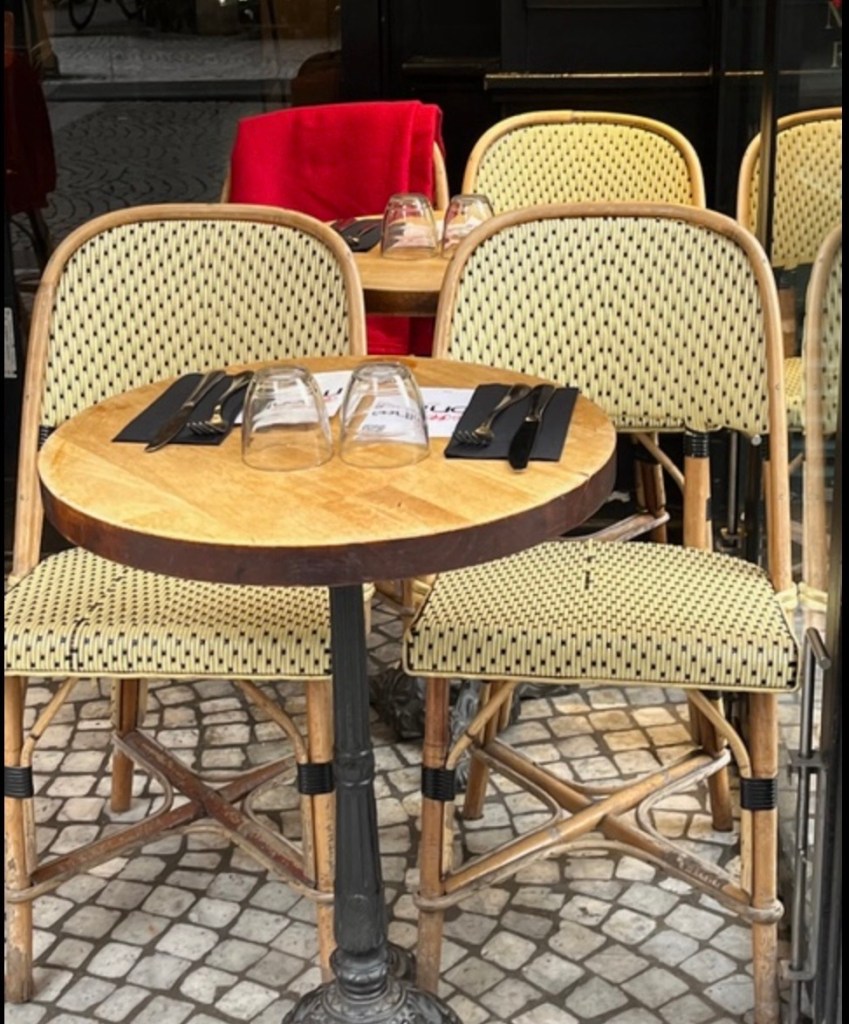
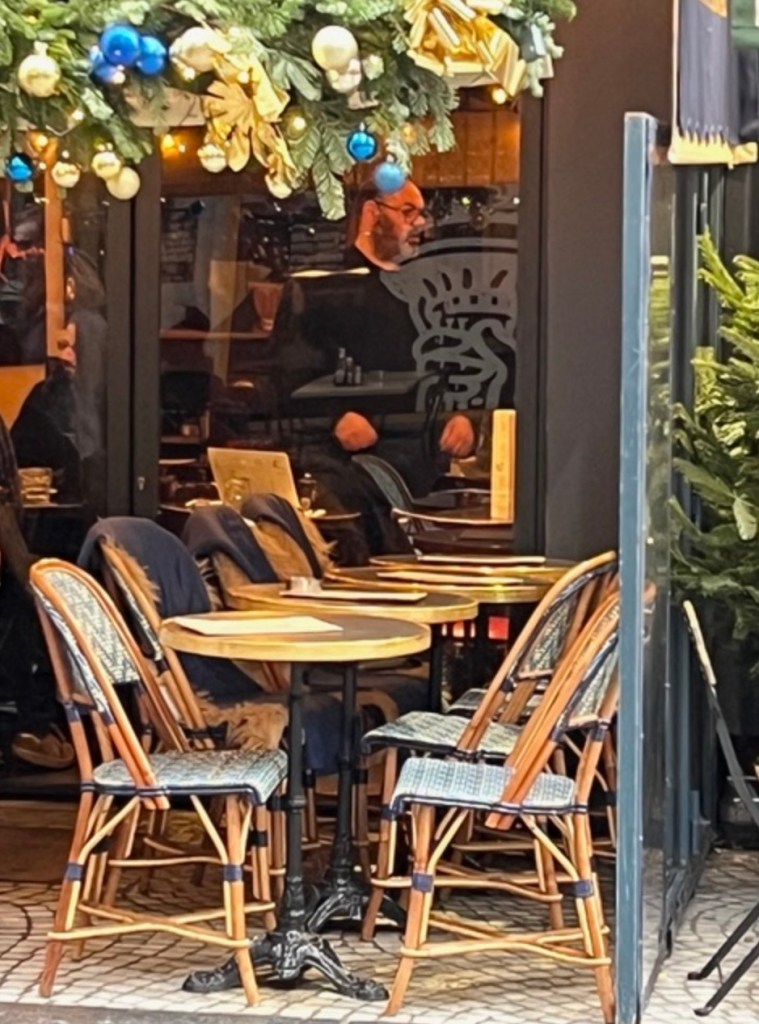
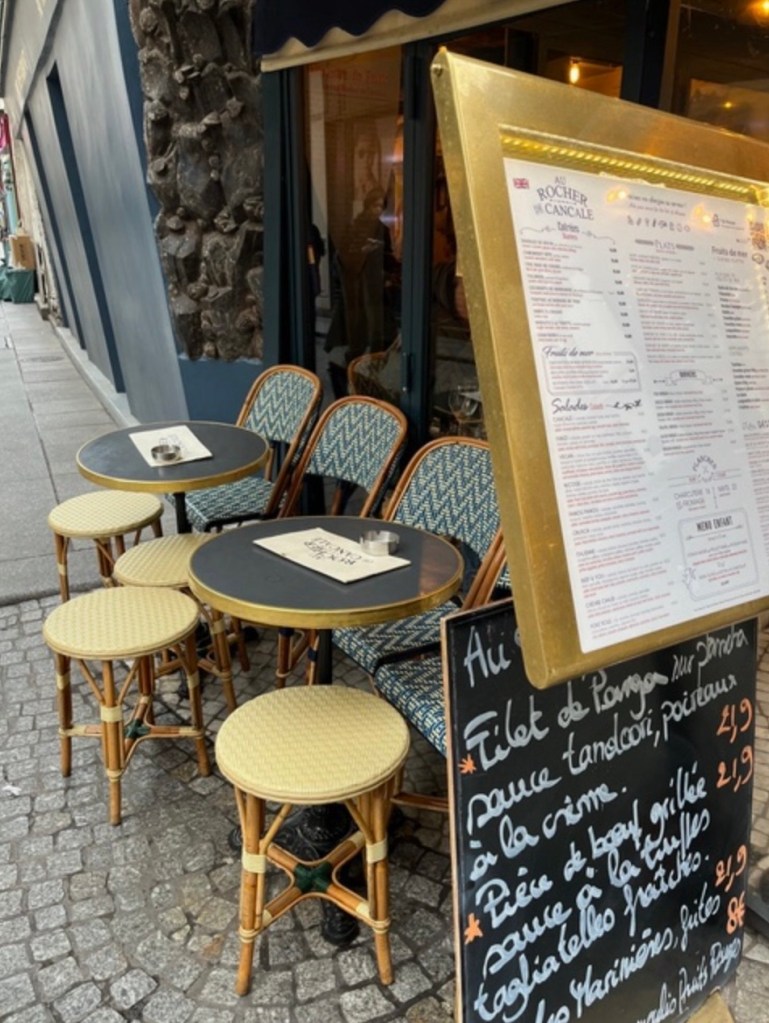
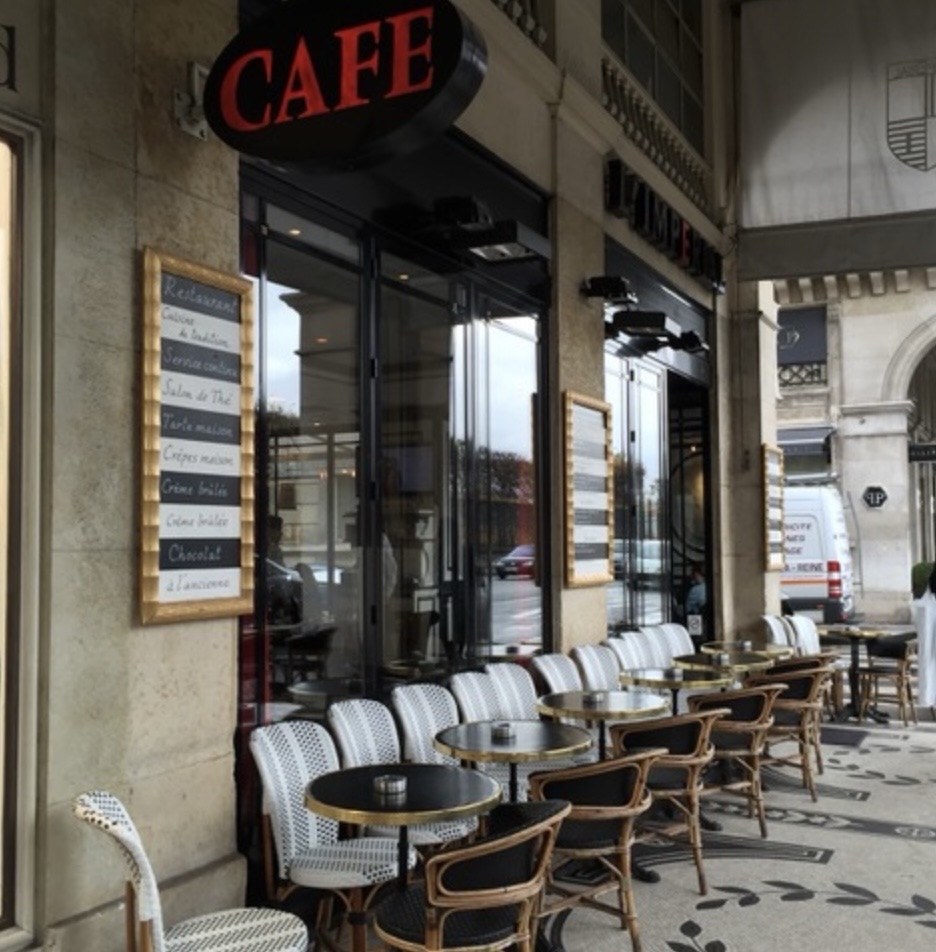
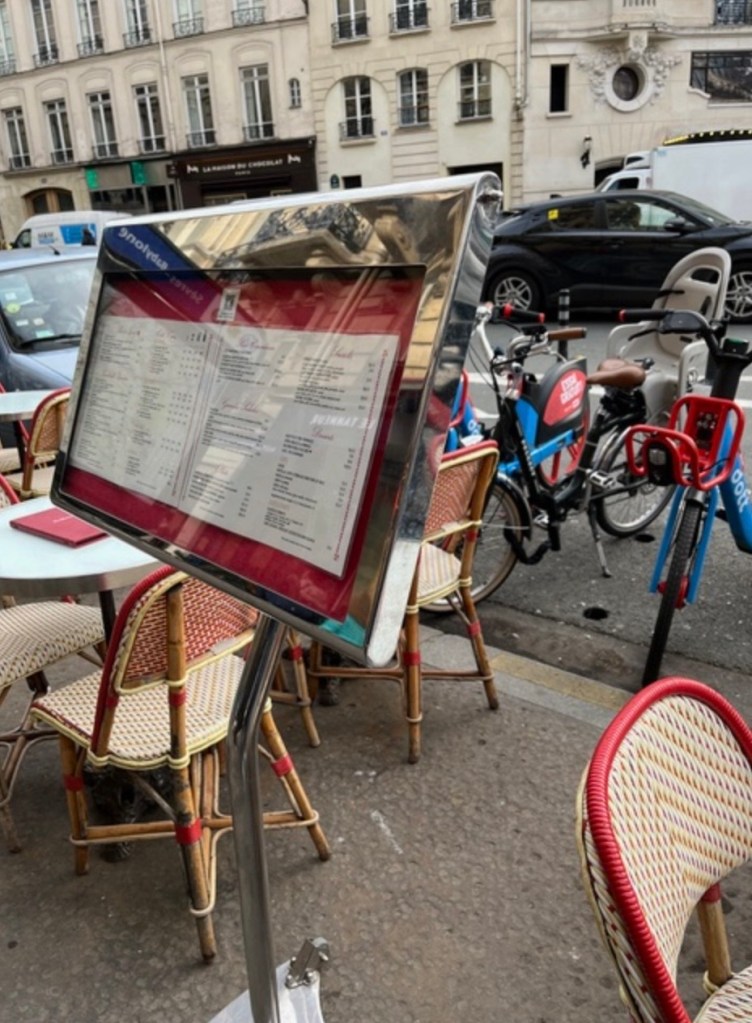
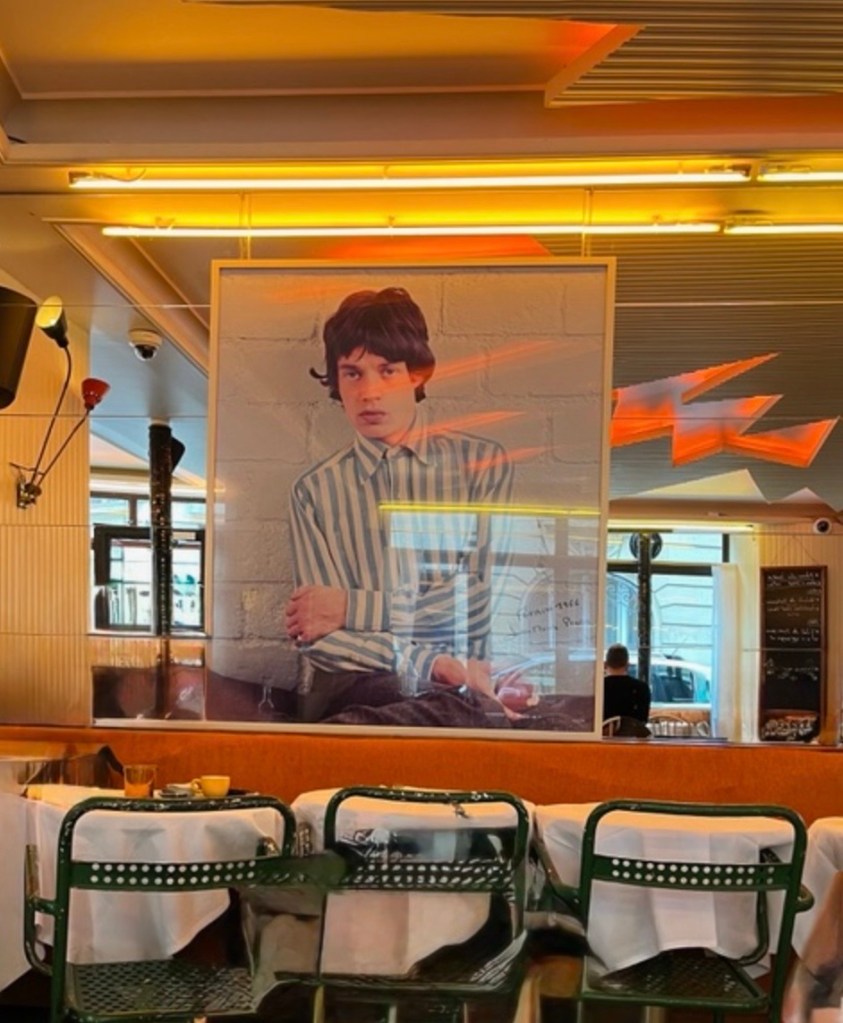
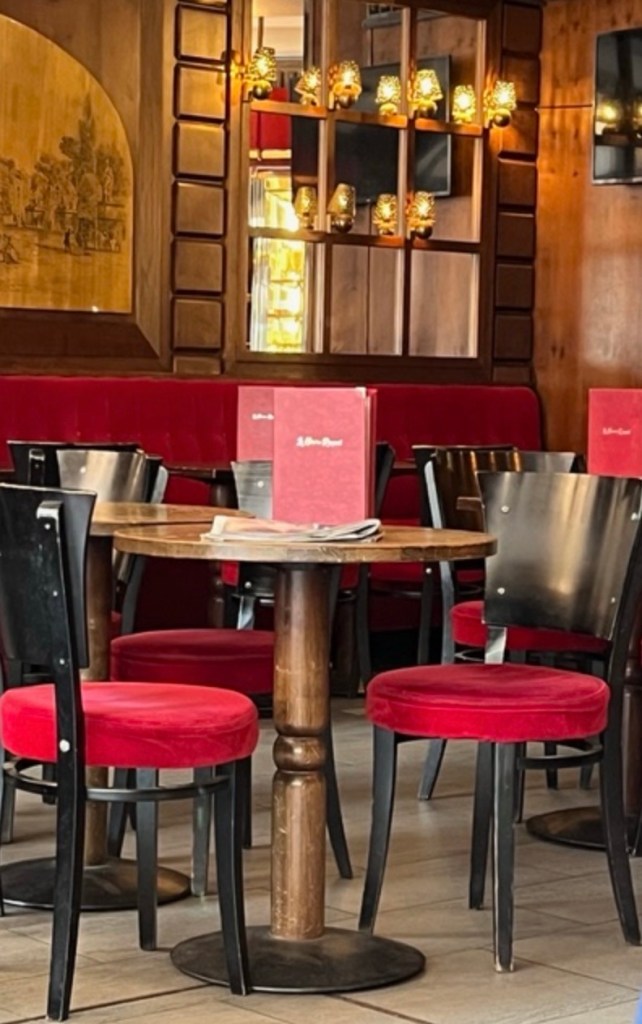
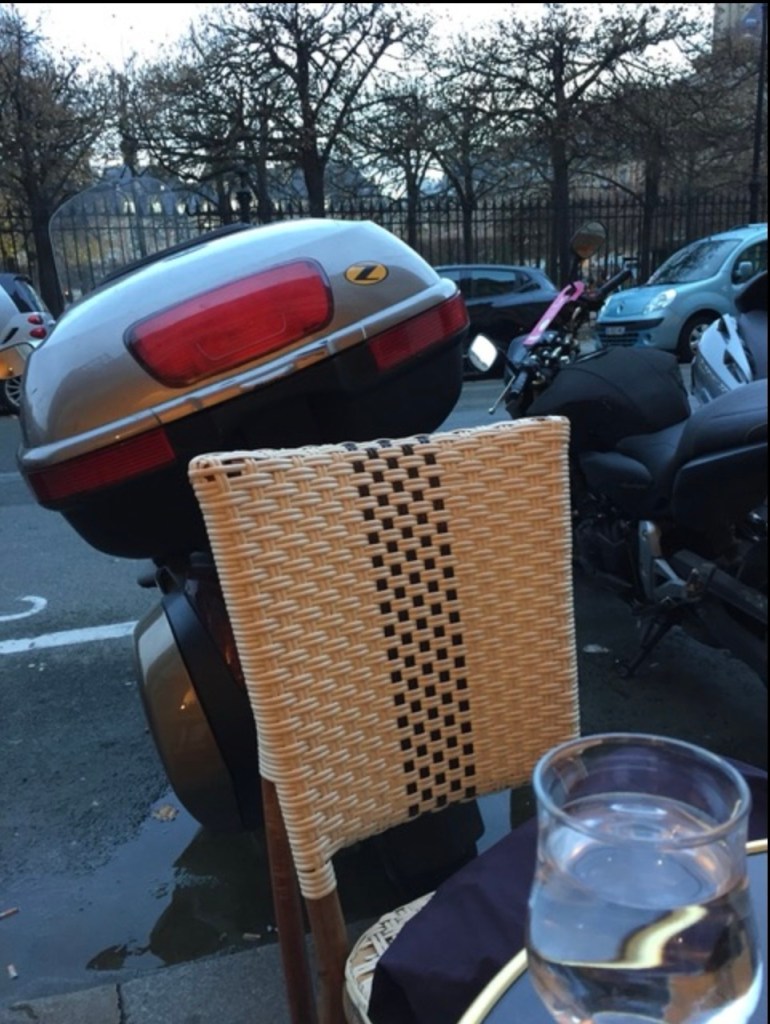
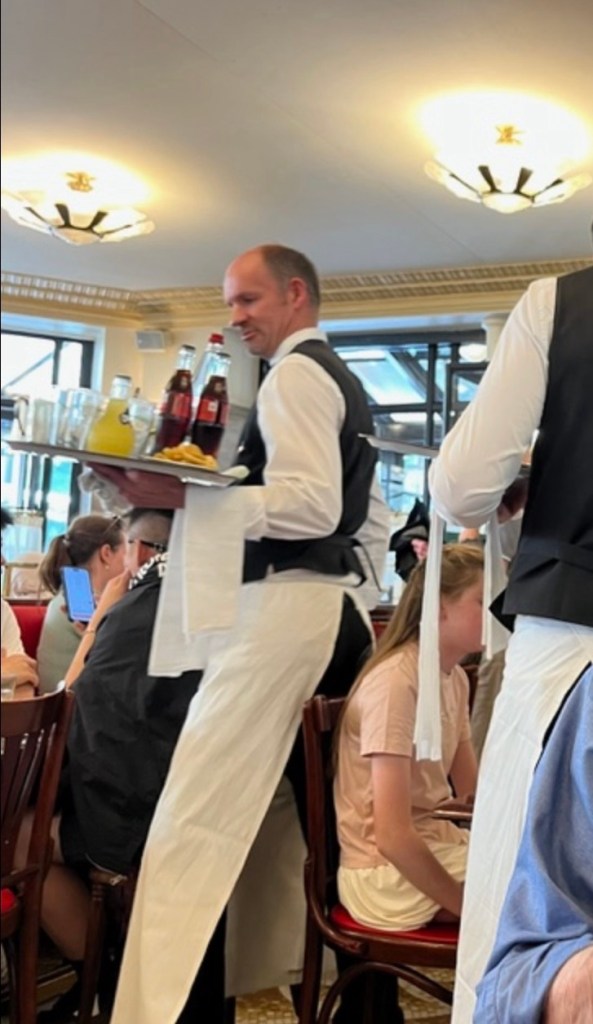
The scene in many Parisian cafes is of narrow aisles and multiple waiters garbed in long white aprons balancing full trays all engaged in a constant ballet-like dance — a show in itself. This constant to-ing and fro-ing of waiters like a group of storks engaged in their mating dance adds to the show as well as contributing to the total congestion of space. There is always something or someone in the way….and yet—it works.
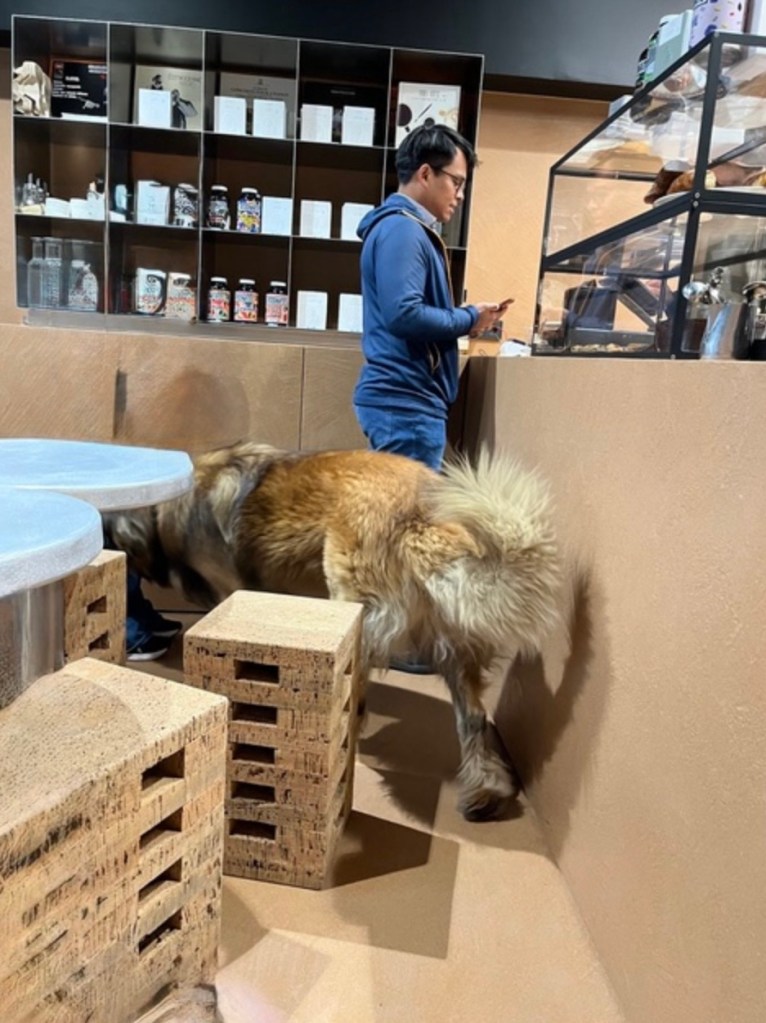
One final observation with regard to cafes and space—real estate is a precious commodity in Paris, and most cafes are challenged to use every inch of space. This often means utilizing a lower level for storage, and sometimes for food preparation. Buildings are old—and all have a ‘basement’ usually made up of stone passages or carved niches and various nooks and crannies—every inch of which is utilized.
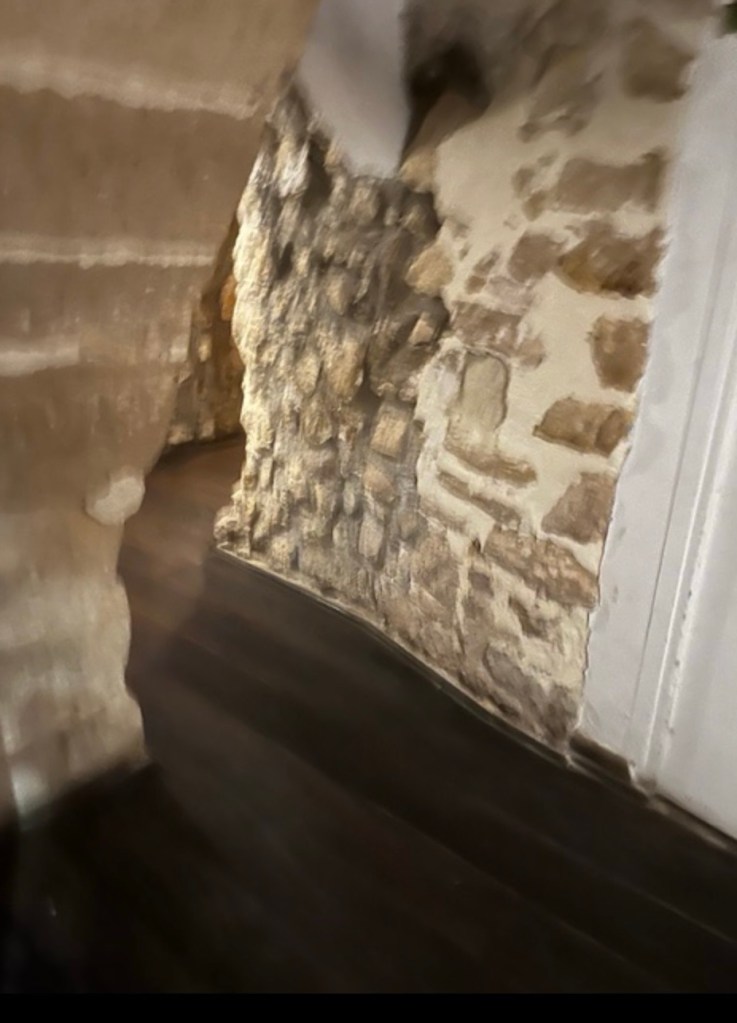
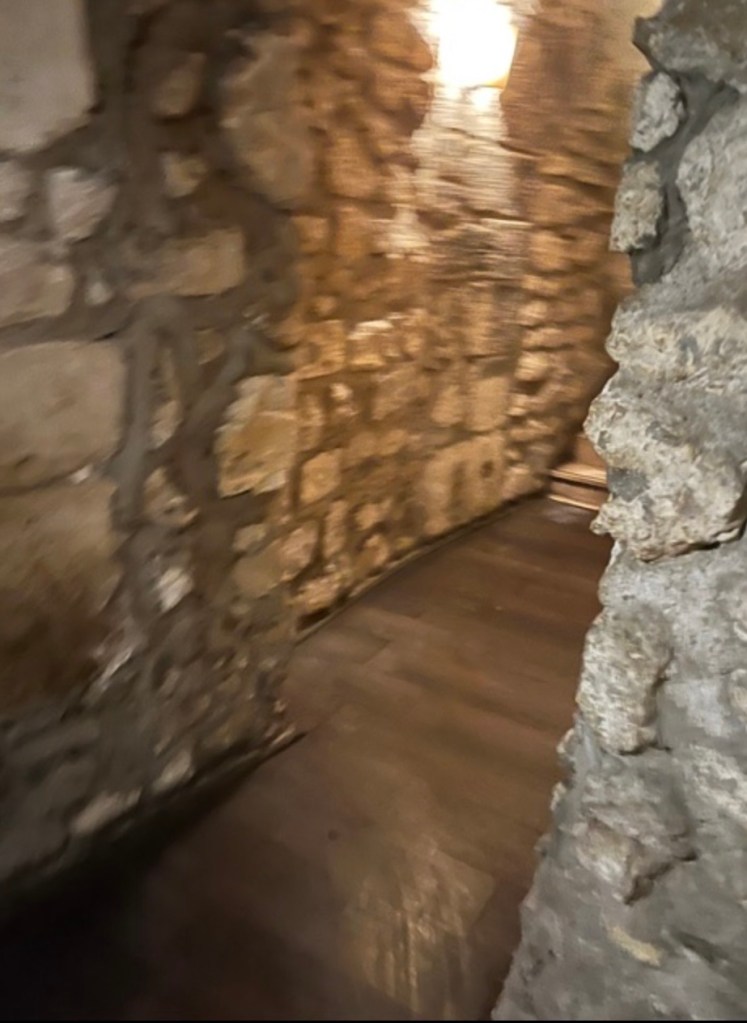
We live quite near Belise, a casual cafe that was a big deal with musicians and budding politicians in the 1960’s. While the cafe is a compact space, I was taken by surprise one day when a movement caught my eye and I looked up to see a hunched over member of the kitchen staff literally emerge from a half size door at end of the bar. It seems their food storage is under the cafe with the only entry/exit built into the bar.
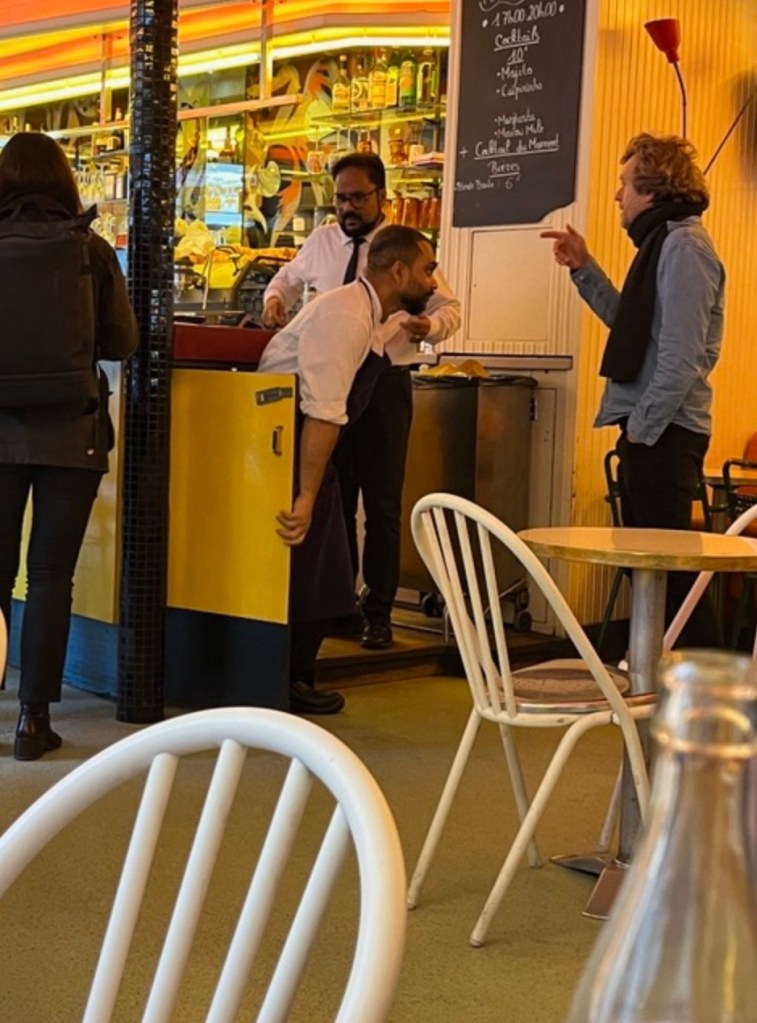
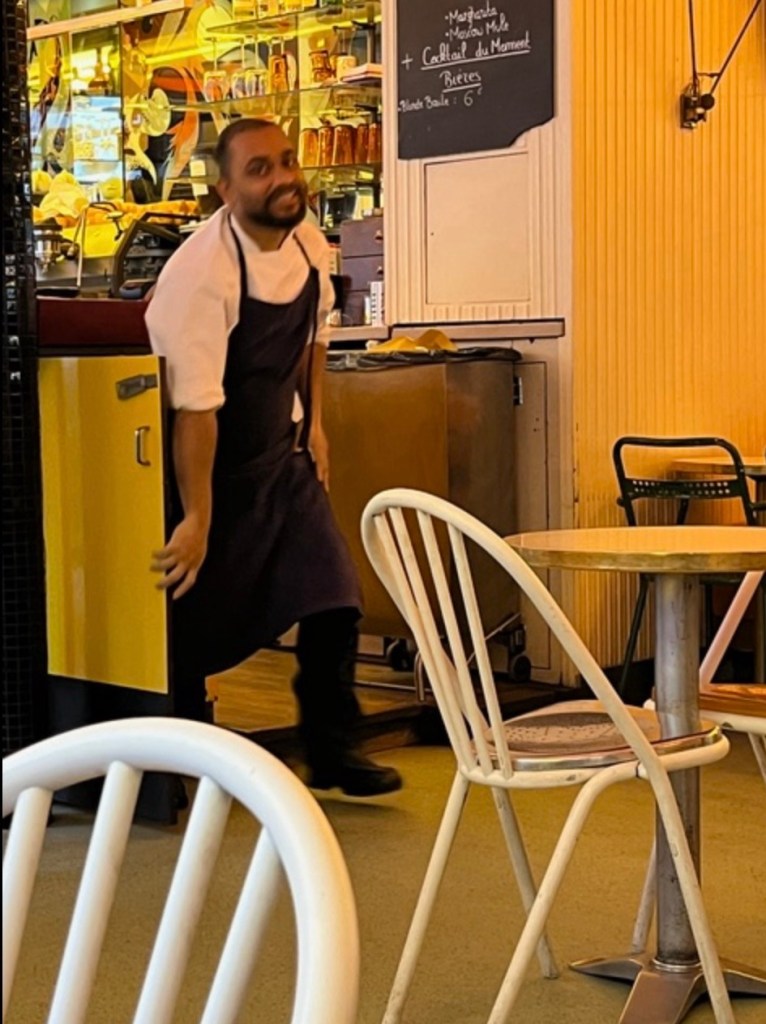
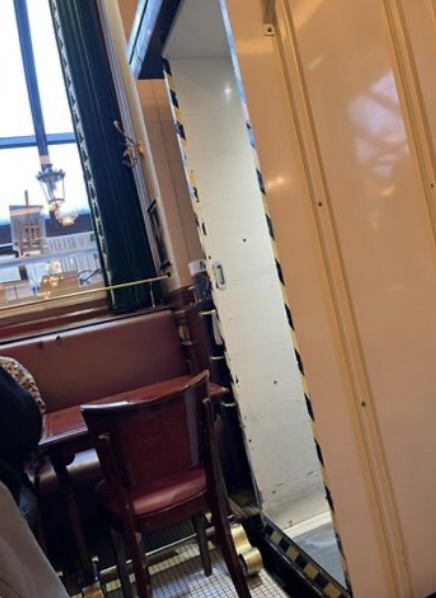
And today, we observed a three foot square suddenly ‘open’ then rise from the floor right next to the table across from us. The elevator (ostensibly from the underworld) was swiftly loaded with a recent food delivery and quickly lowered and disappeared as though it had never happened. No one missed a beat, but it would have definitely startled me if I had been sitting right there!
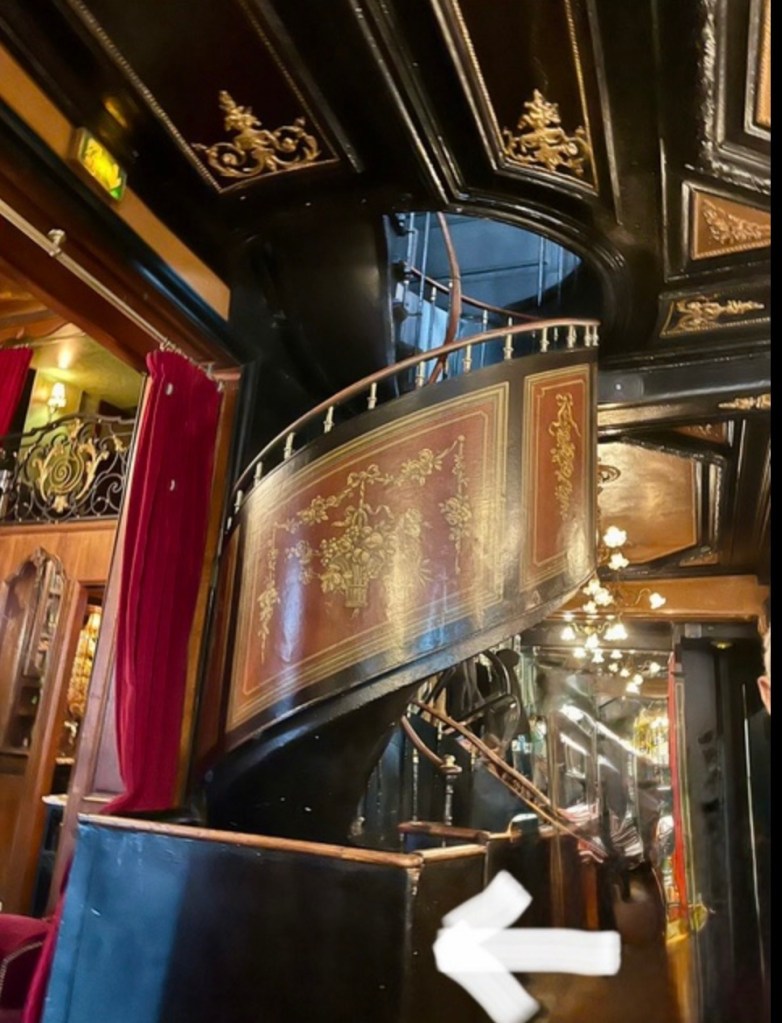
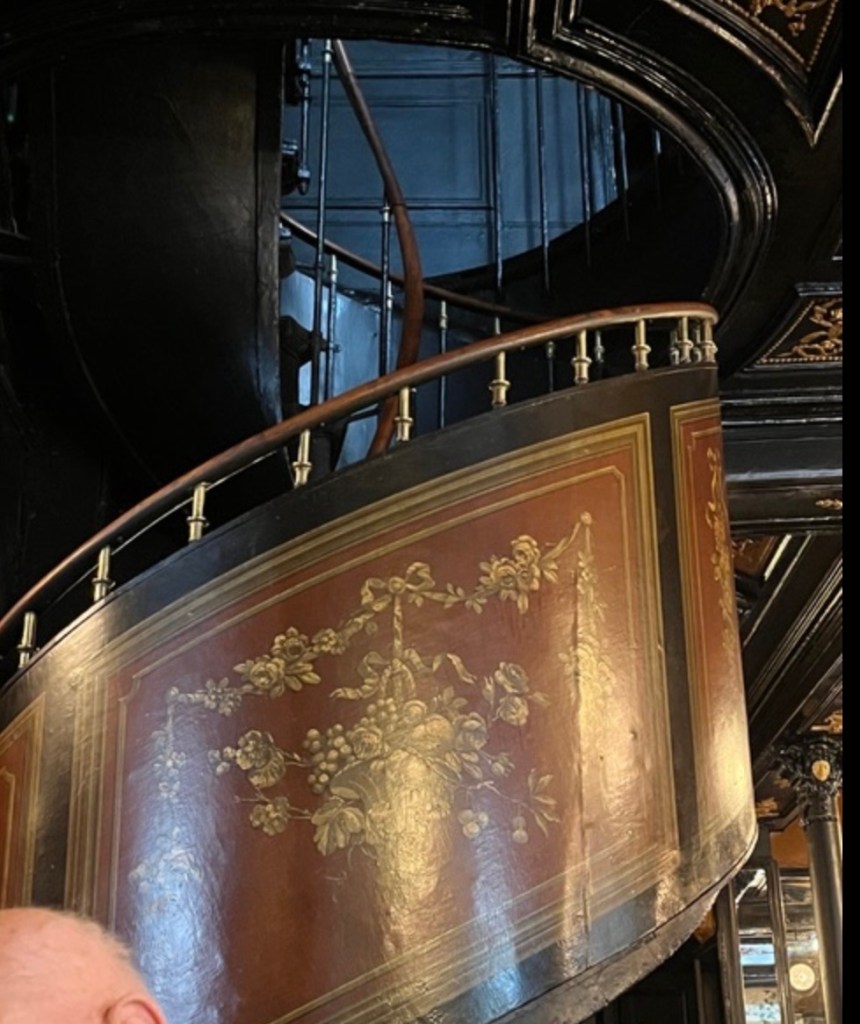
Cafe L’Escargot in Montorgueil—an upscale spot that has been around since the early 19th century—also demonstrates optimal use of space. Winding staircases are common in cafes in Paris; sometimes used to seat guests on an upper floor or lead them to Les Toilettes downstairs. However, a very narrow winding staircase in the main dining room at L’Escargot is the route by which kitchen staff take downstairs large boxes of dish-ware or sizable plastic cartons of washed and sterilized escargot (snail) shells. A sight to behold which I have yet to capture on camera is that of a white aproned worker balancing a heavy carton backing his way down the winding staircase. I’ve observed this several times, but these photos of the staircase will have to suffice. I would have to forgo eating and keep my camera in front of my face to capture this deftly executed exit of heavily laden staff backing down the stairs…(I’m not sure I could go down facing forward while holding a banister..!)
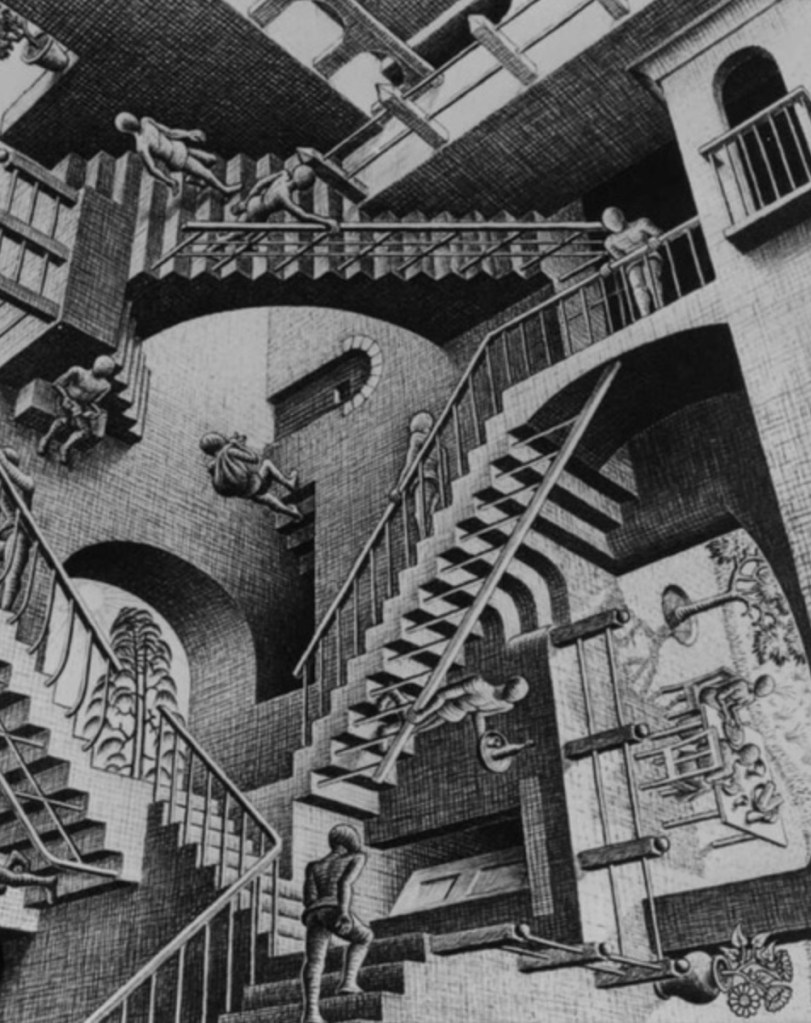
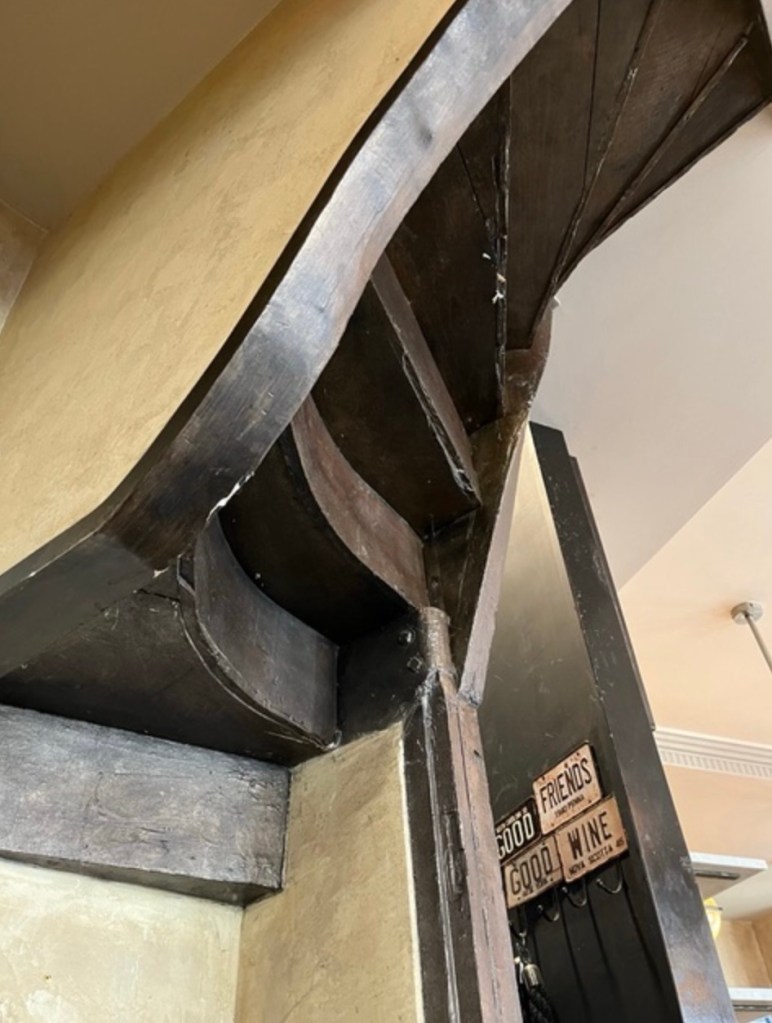
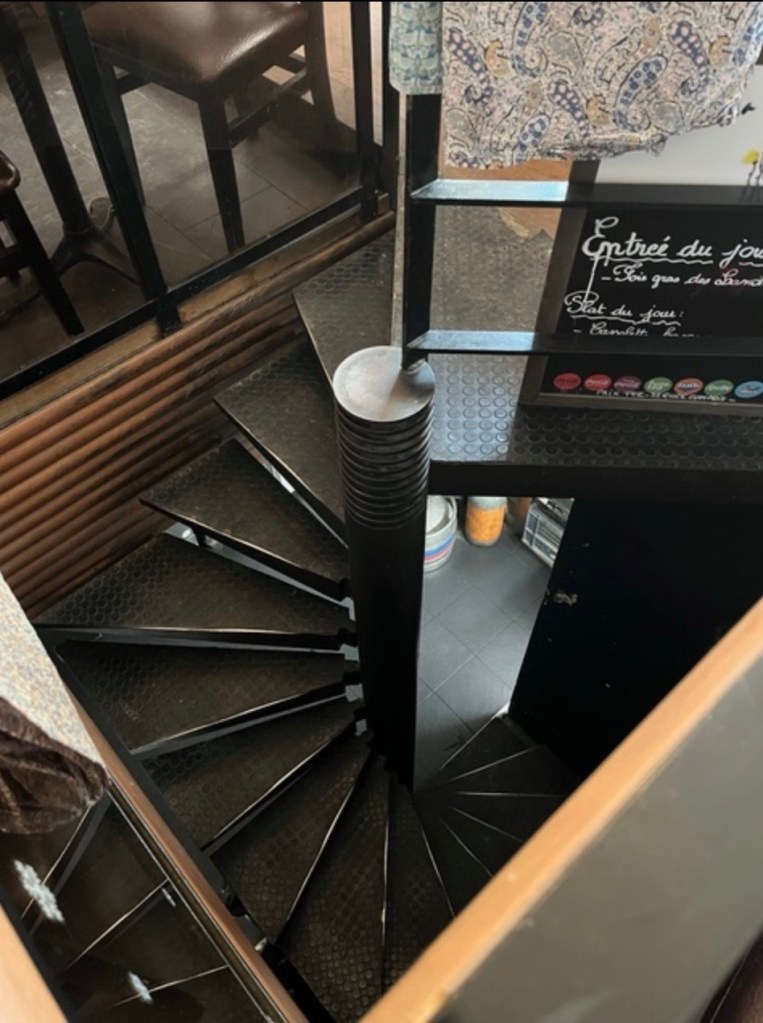
You can’t make observations with regard to ‘tight spaces’ in Paris without a brief mention of elevators and terraces. For the most part, elevators (l’ascenseur in French) are very, very —very—compact, hypersensitive, and somewhat claustrophobic. They literally had to be retro-fitted into existing spaces as installation occurred after buildings were completed and before elevators invented.
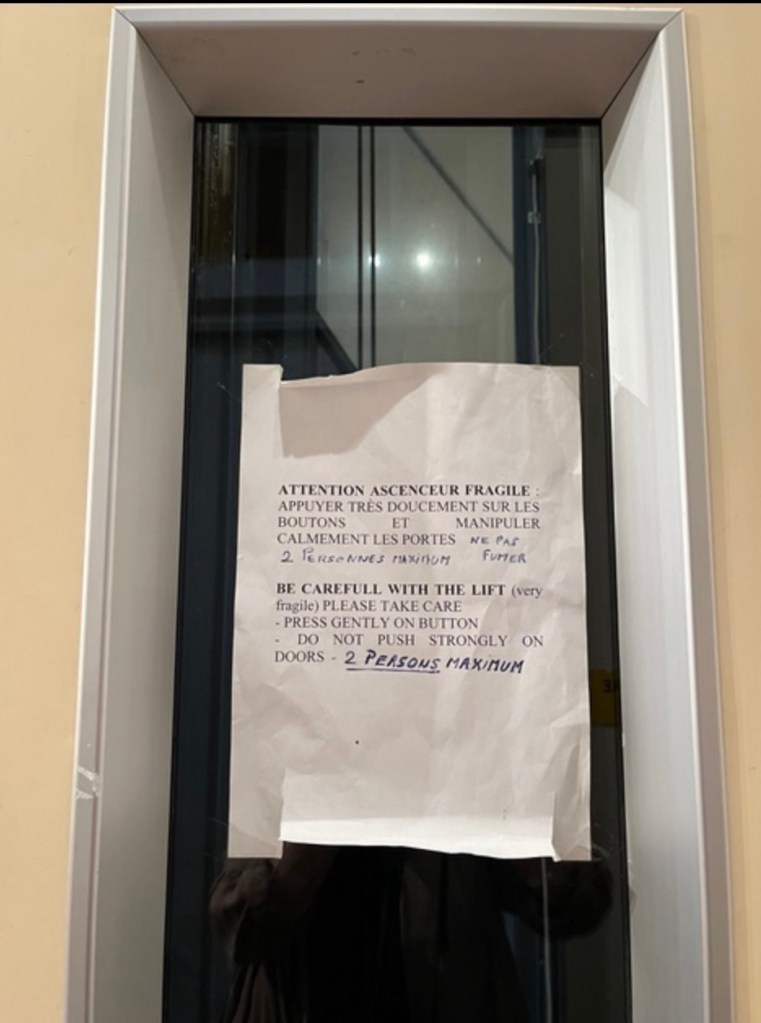
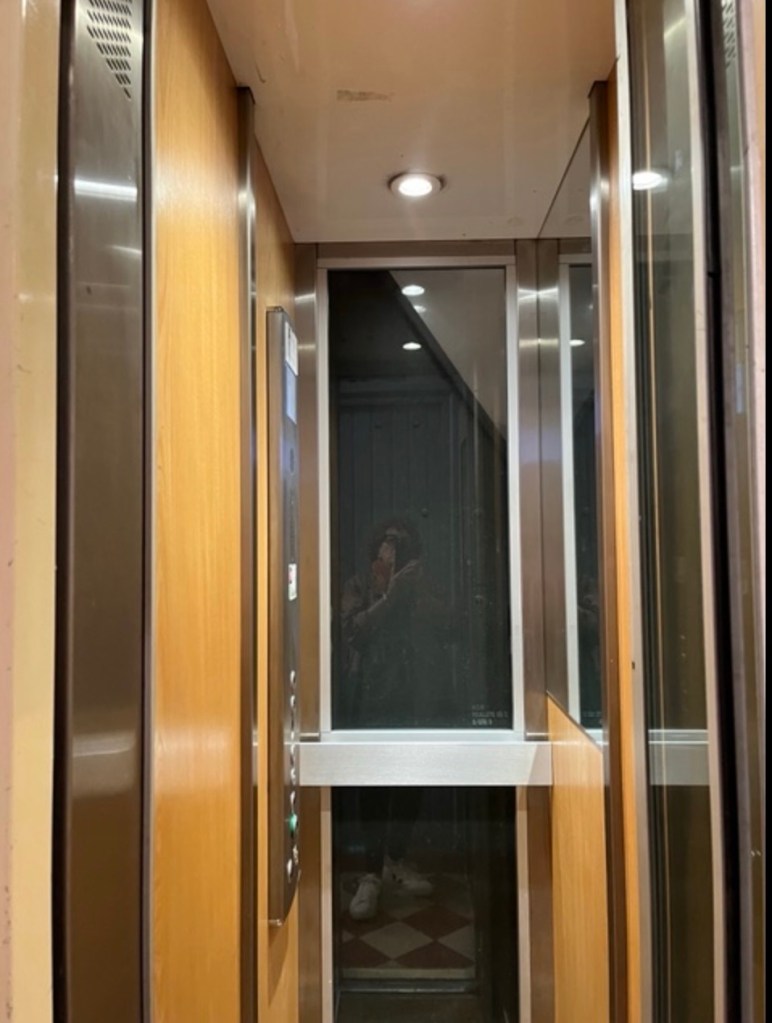
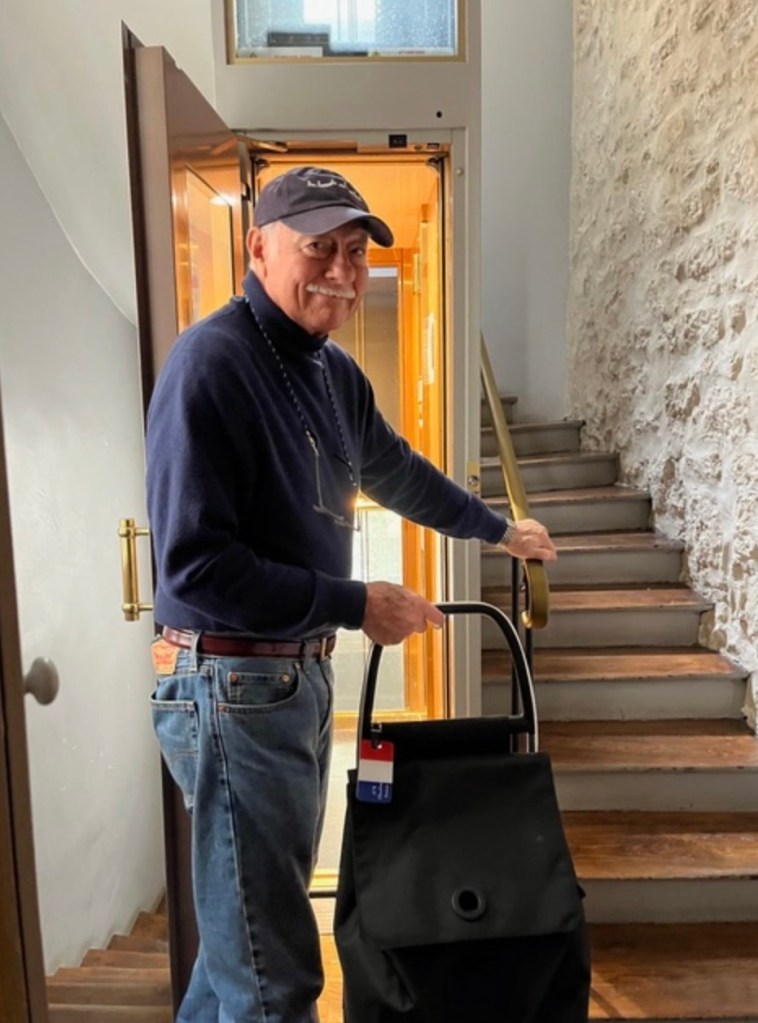
If you observe rules and treat l’ascenseurs with respect, a tiny elevator will take you up and take you down on command. Just don’t push your luck. This is my husband waiting to enter the one patiently waiting outside our apartment door.
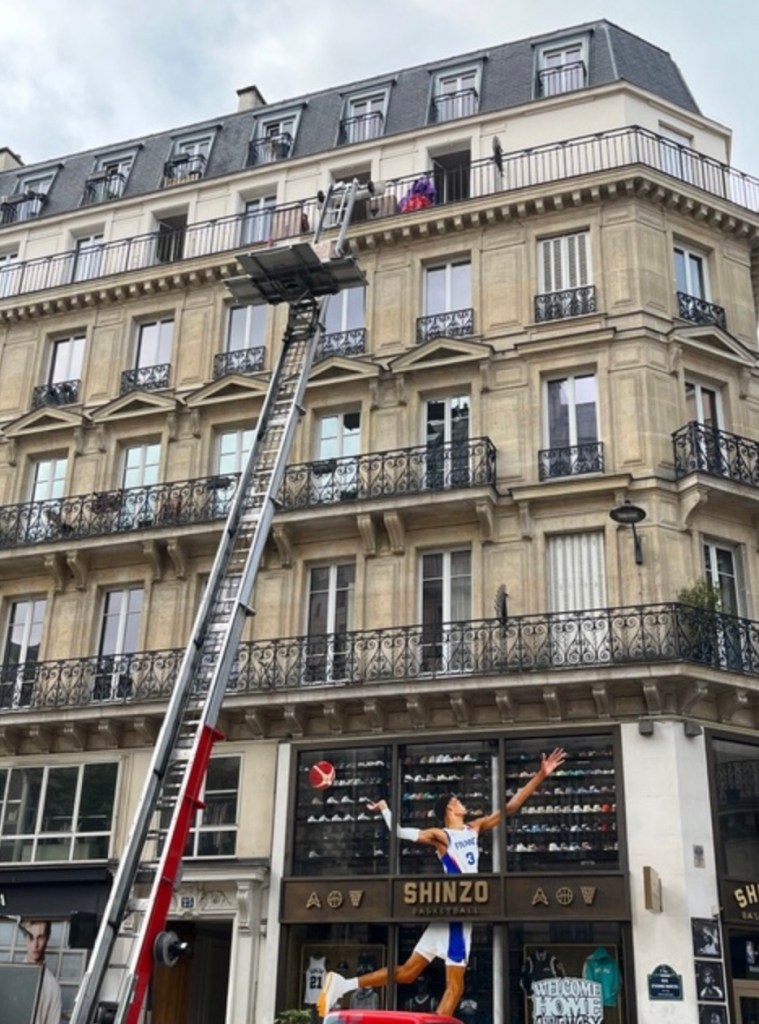
A unique example of how moving and delivery companies in Paris have adapted to the ‘tight spaces’ aspect of staircases and narrow elevators is the way furniture delivery is accomplished, usually if you are in an apartment above the 2nd Etage (third floor). Beyond amazing to watch.

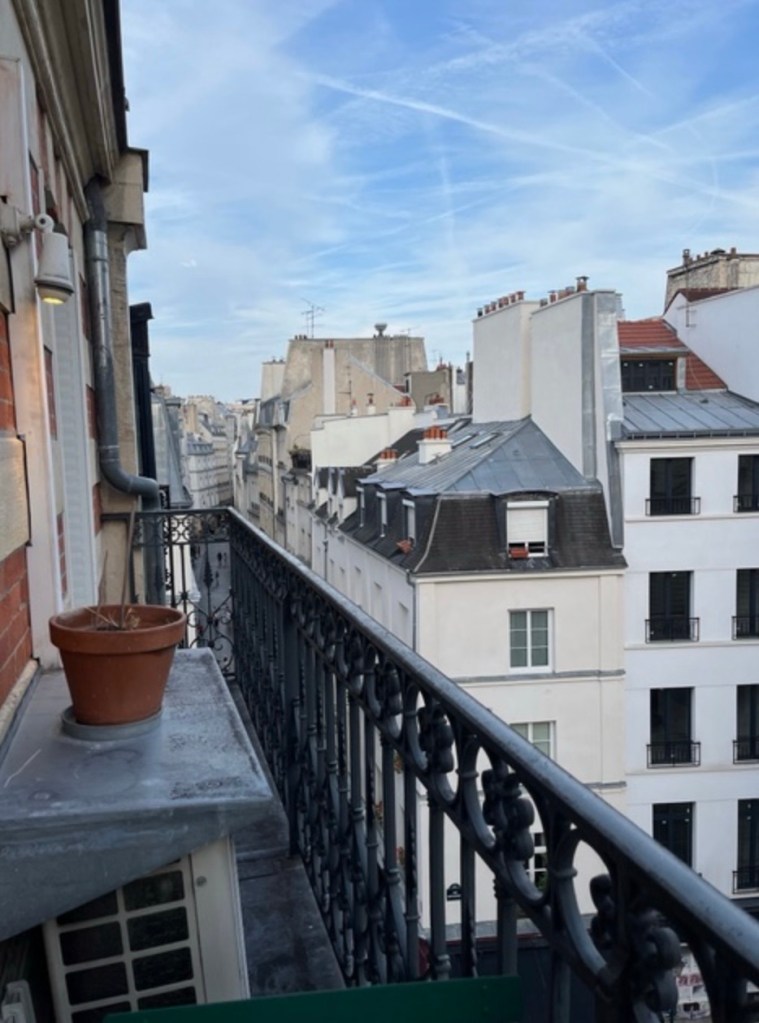
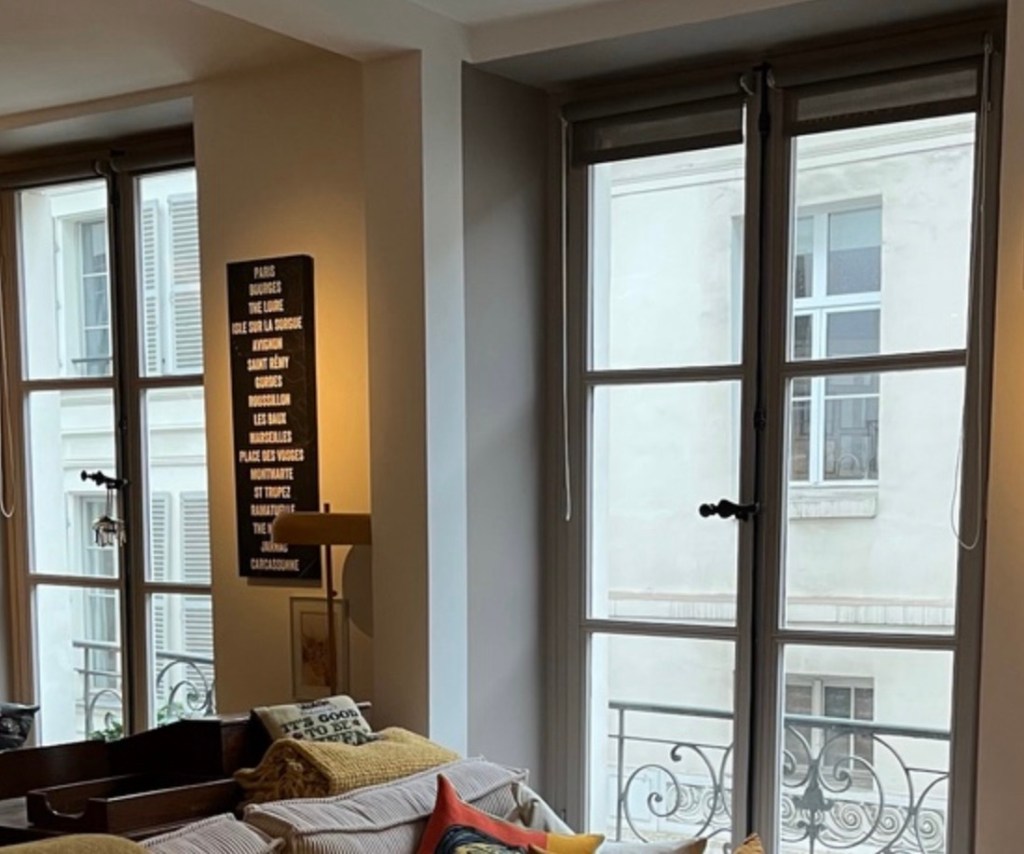
Should you benefit from an unlimited bank account, you will find terraces in Paris both spacious and beautiful. However, for those lucky enough to even have an outdoor terrace or balcony in Paris without the monetary support—this is the typical size to expect. With some creativity, those of us lacking terraces—large or small—can still enjoy opening huge Parisian floor to ceiling windows and get the same vibe.
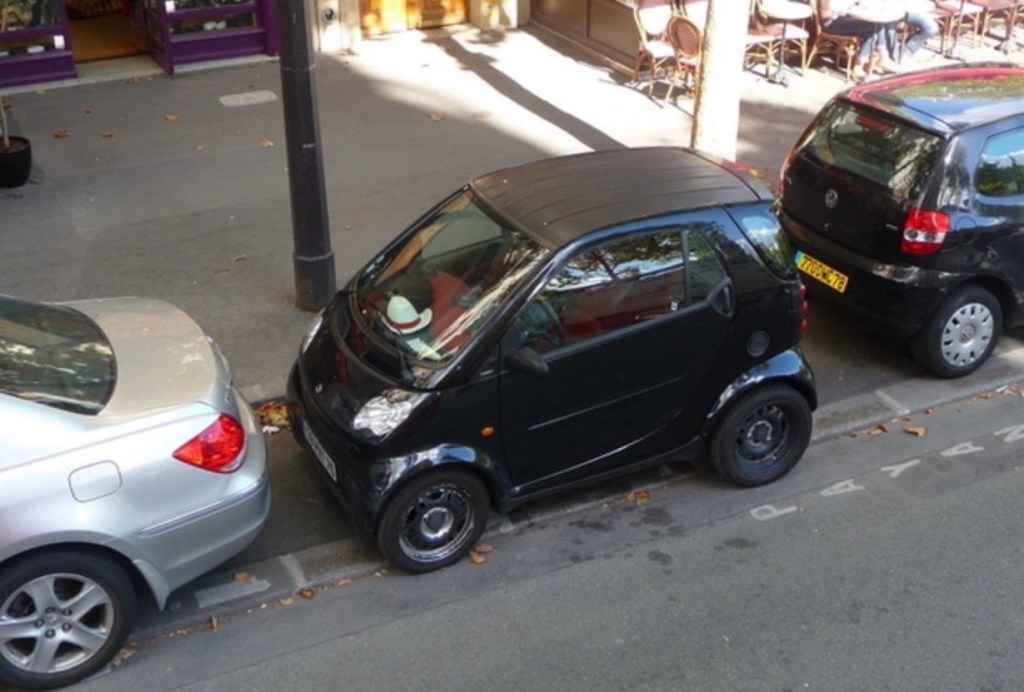
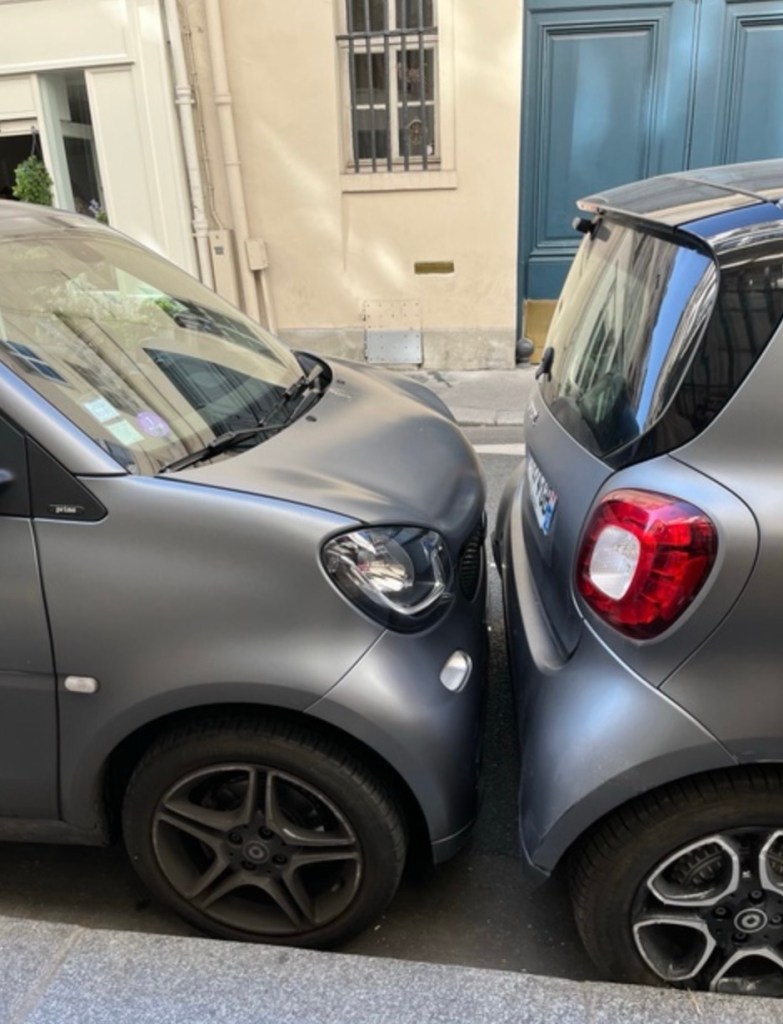
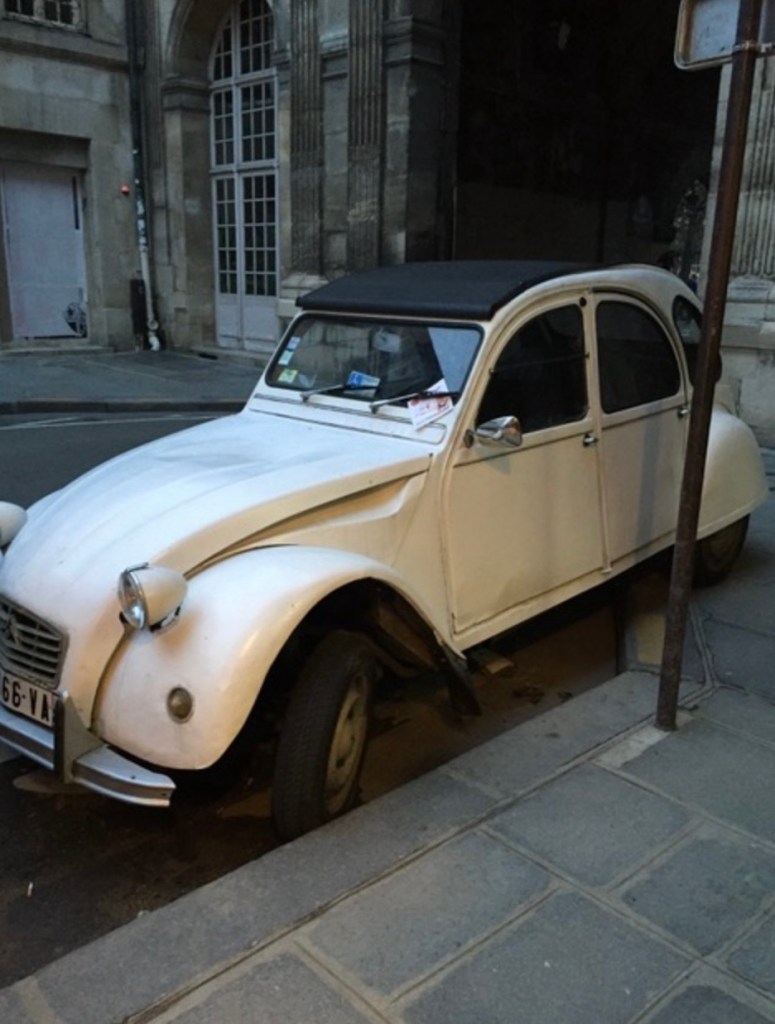
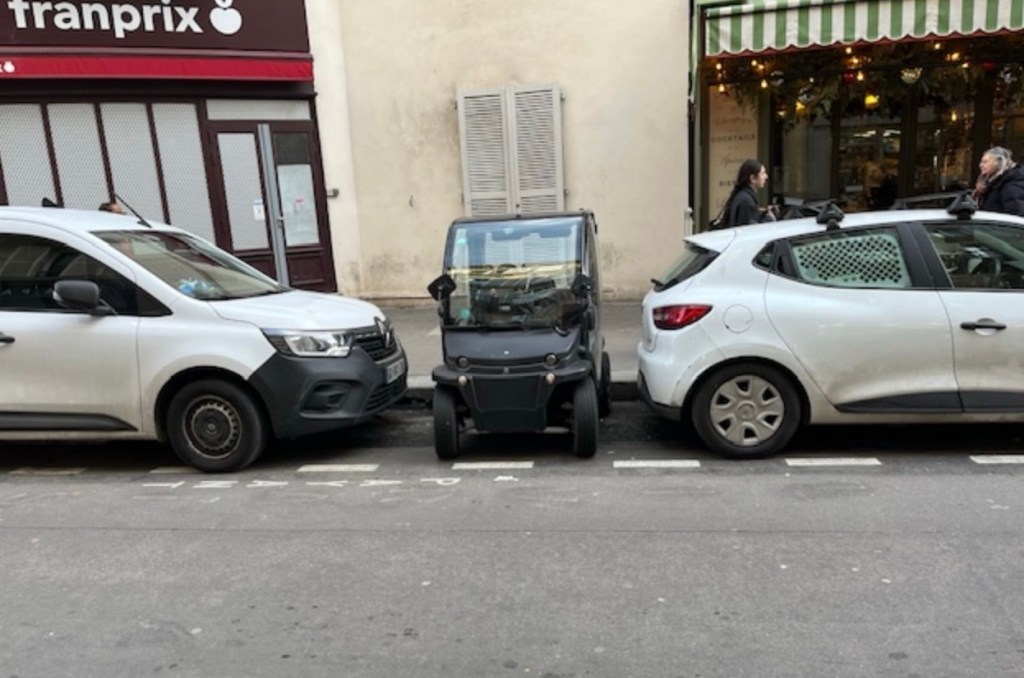
Paris is also an incredibly ‘spatial’ (and chaotic) place if you are driving a car (which we are not). Parking spaces are precious, and many who need to or have chosen to drive opt for small size cars—of which there are many. Whatever the size of the vehicle, driving in Paris requires great patience, knowledge of myriad streets, and an ability to maneuver into tight parking spaces. As shown in these photos, some people have met that last challenge successfully. The questions remains—with one exception, how on earth do the others get out of those parking spaces…?
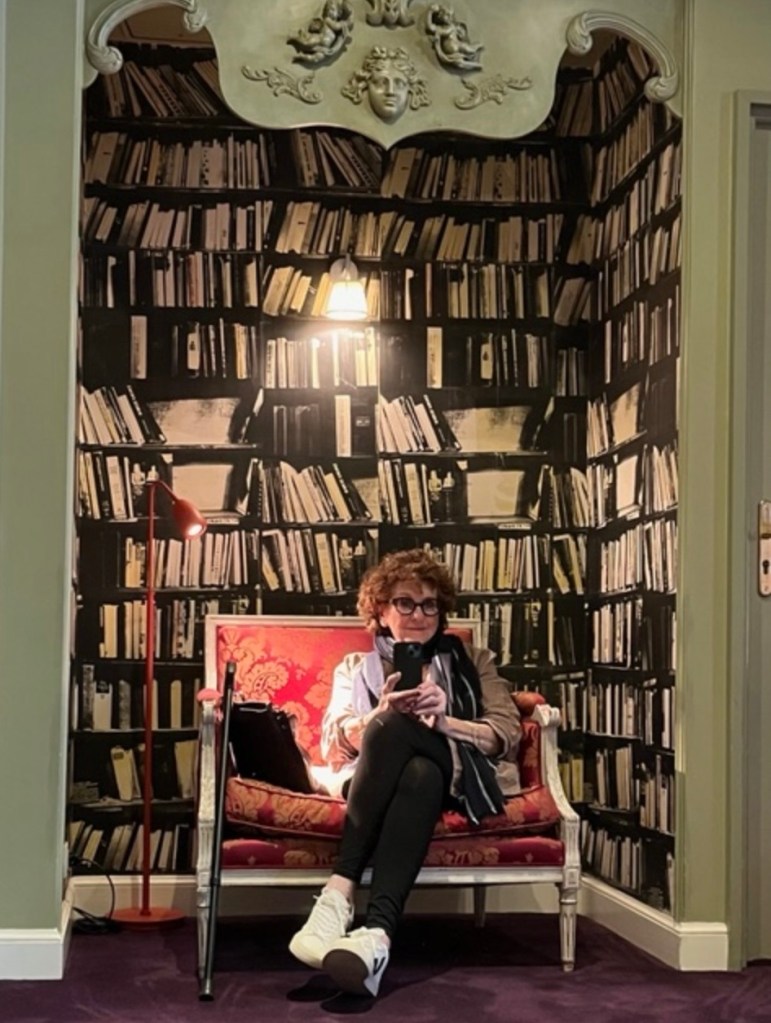
A fitting end to this blog on Paris as a ‘spatial’ place of tight places is a photo of the lobby of a small hotel that was our home for a few days when we arrived in Paris last year. Hôtel du Petit Moulin is a delightful small hotel in Le Marais. It seems appropriate to share a photo of their ‘petite’ lobby as an exclamation mark to my commentary.
Thank you so much Shirley, for this wonderfully delightful post. Paris is indeed a ‘spatial’ place.
As always, we’d love to hear from you so leave a message if you’d like.
 Travels Through My Lens
I love this post and the pictures, especially of the car parked vertically! I’m thinking it’s small enough to have been picked up and placed there. 😊 I used to live in Europe and remember well the spatial balancing that occurs everywhere and does mean that people have to be in many ways more respectful of each other. A very enjoyable read. Cheers.
LikeLiked by 1 person
I love Shirley’s post too; so creative and spot on about Paris’ tight spaces. Thanks, Lynette, for your comment!
LikeLiked by 1 person
Have been to Paris a number of times – too briefly to see how it can be methinks! What an interesting repost which will also be reposted and for which a big ‘thank you’ to both!
LikeLiked by 1 person
Maybe this is the real reason Parisians are so thin! 😉
LikeLiked by 1 person
Lol!! That thought crossed my mind too!
LikeLiked by 1 person
Great post. Love the different views of places and spaces. I love that Escher picture- I had a print of that in my room for many years
LikeLiked by 1 person
Isn’t it though? Shirley is a talented writer.
LikeLiked by 1 person
What a great piece – looking at the spaces in a city.
LikeLiked by 1 person
I agree; it’s a wonderful blog. Thanks for your comment!
LikeLike
fabulous!!
LikeLiked by 1 person
The concept of space is so different in Europe compared to North America! Everything is much more compact in Europe – houses, cars, roads, cafes. I’m always so amazed at how they make it work, especially with parking!!
LikeLiked by 1 person
I agree! Somehow they manage to make it work. Thanks for commenting!
LikeLiked by 1 person
Oh my, but those tables are very close to each other – it would feel as if one could join the conversations of strangers at the table next to you 😁! We are very used to space here in South Africa (also in Cape Town) … but then, space here is not as limited as in Paris. And I don’t think our 4×4 ‘bakkie’ would fit in any of the parking bays in Paris!!
LikeLiked by 1 person
Yes, they certainly are close together. One almost needs to be a contortionist to fit in! That’s true, Corna, you’d have a hard time trying to find parking for your bakkie. Thanks for your comment!
LikeLiked by 1 person
Thanks to all for the very nice comments. I would like to respond to the comment that maybe–due to tight spaces–“it’s the reason why Parisians are so thin.” Um…I wish….
LikeLiked by 1 person
Shirley, you are such a compellingly visual writer. Your table in/table out, to-ing and fro-ing by the stork waiter ballet transports me to lunch over wine at a Parisian cafe. Thank you so much for that experience.
LikeLiked by 1 person
This is spot on! Most European cities are hundreds or thousands of years old, designed long before the automobile. They grew organically around walking, horse-drawn carriages, and, later, public transport. Europe also has a higher population density and more limited space for sprawl, which encourages building up rather than out, and that’s why everything feels more compact in Europe compared to regions like North America. Thanks for sharing, and have a good day 🙂 Aiva xx
LikeLiked by 1 person
Yes, you’re spot on there. One advantage to the tight spaces is that you’ll find more pedestrian only areas; which are always a bonus. Thanks for commenting!
LikeLiked by 1 person
😊😊😊
LikeLiked by 1 person