
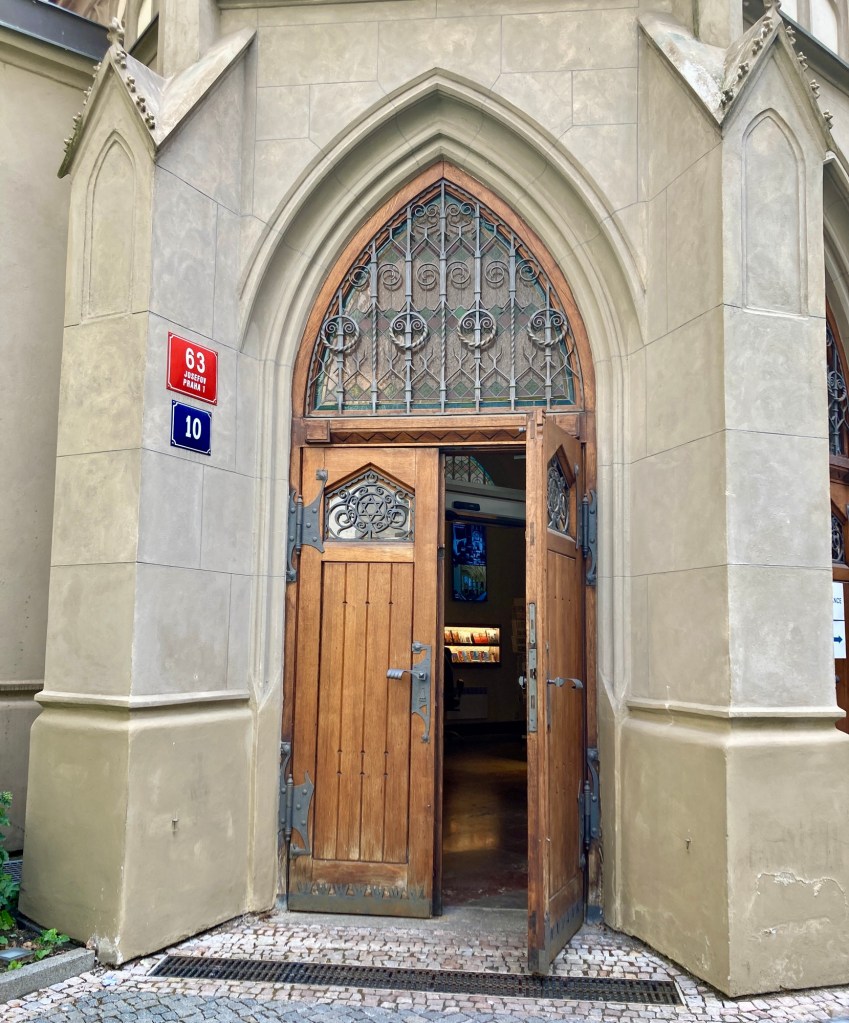
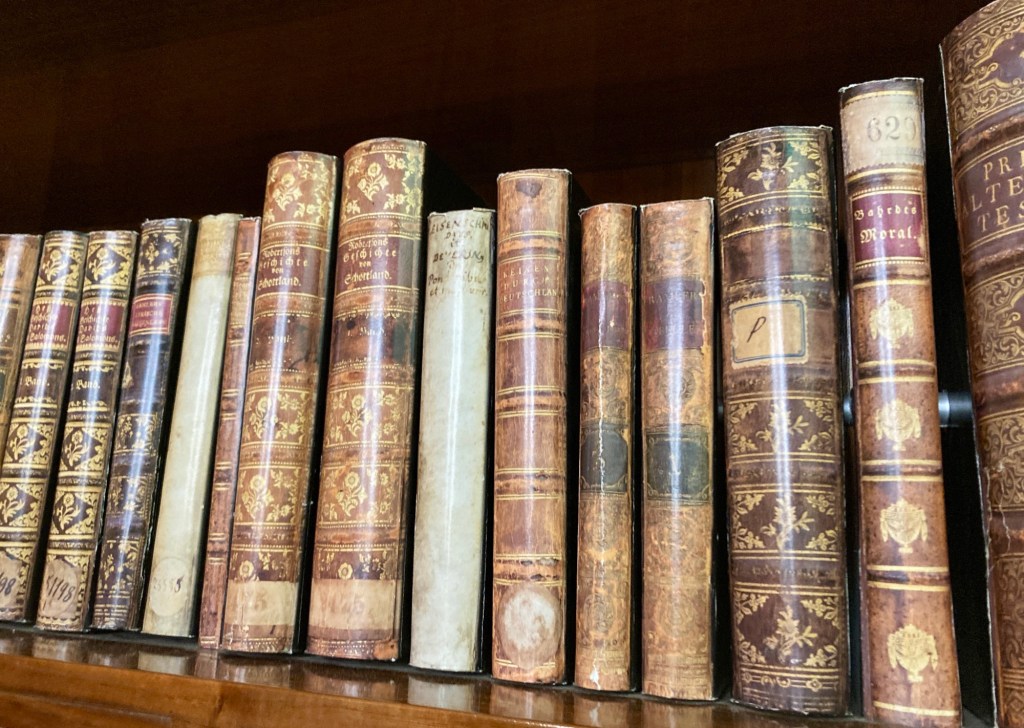
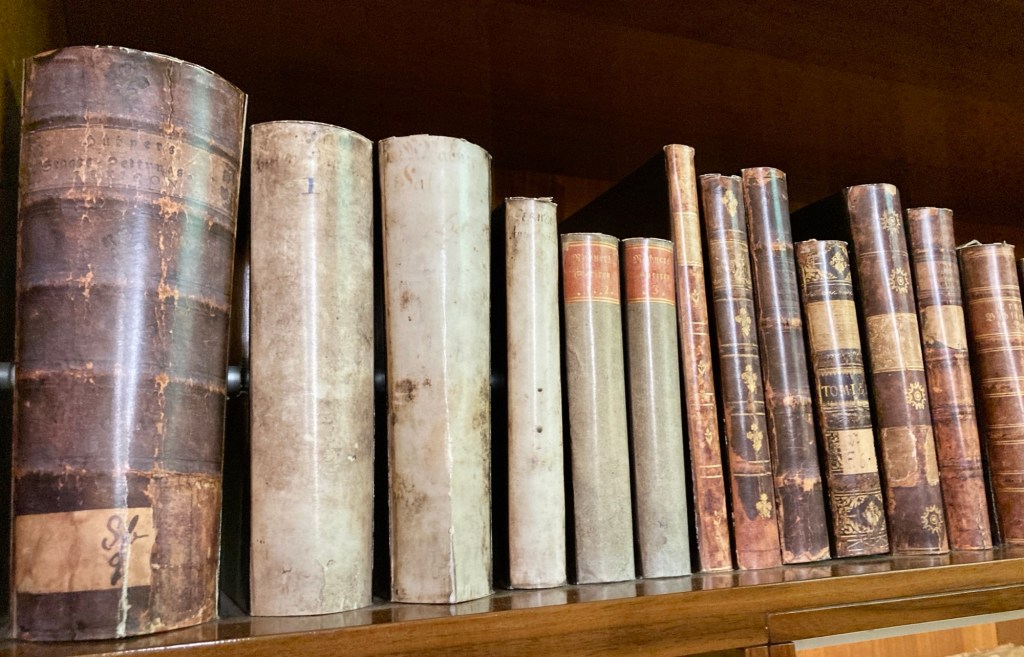
Located in the former Jewish Quarter of Prague, is the Jewish Museum, a collection of synagogues, monuments and an old cemetery, all spread out over several city blocks. It contains approximately 40,000 objects and 100,000 books making it one of the largest collections of Judaica in the world.
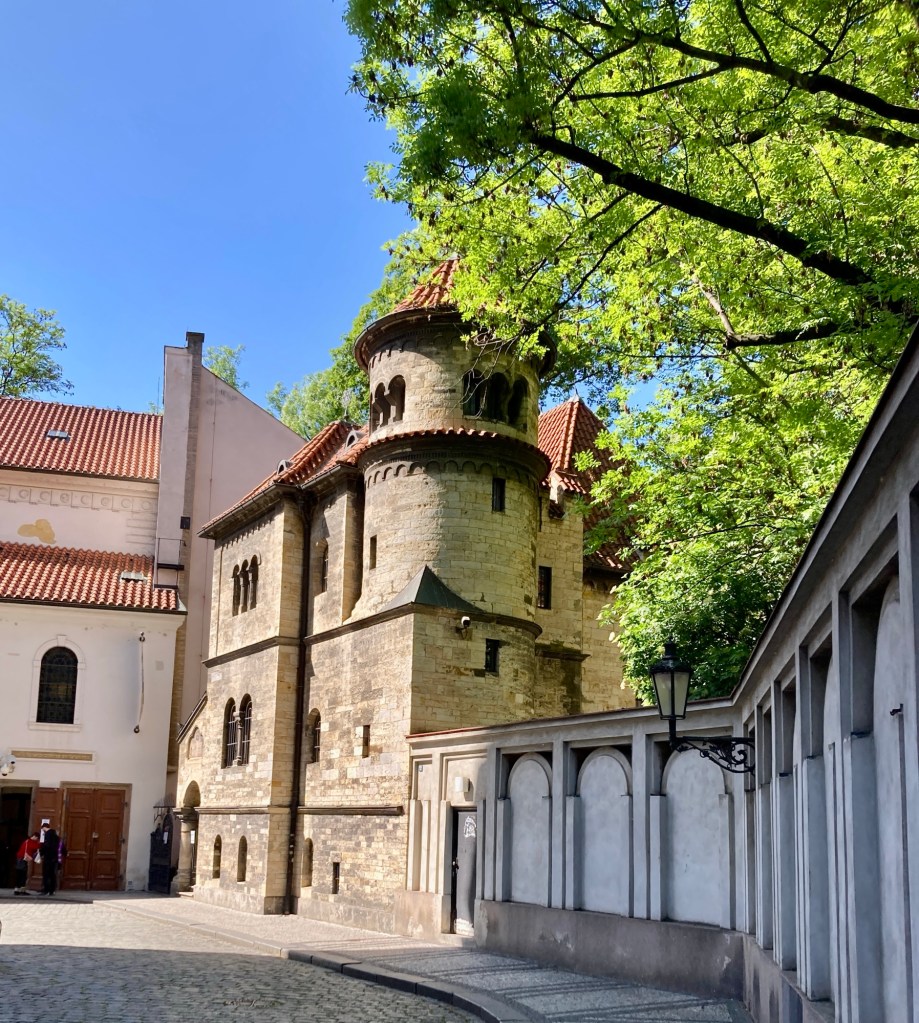
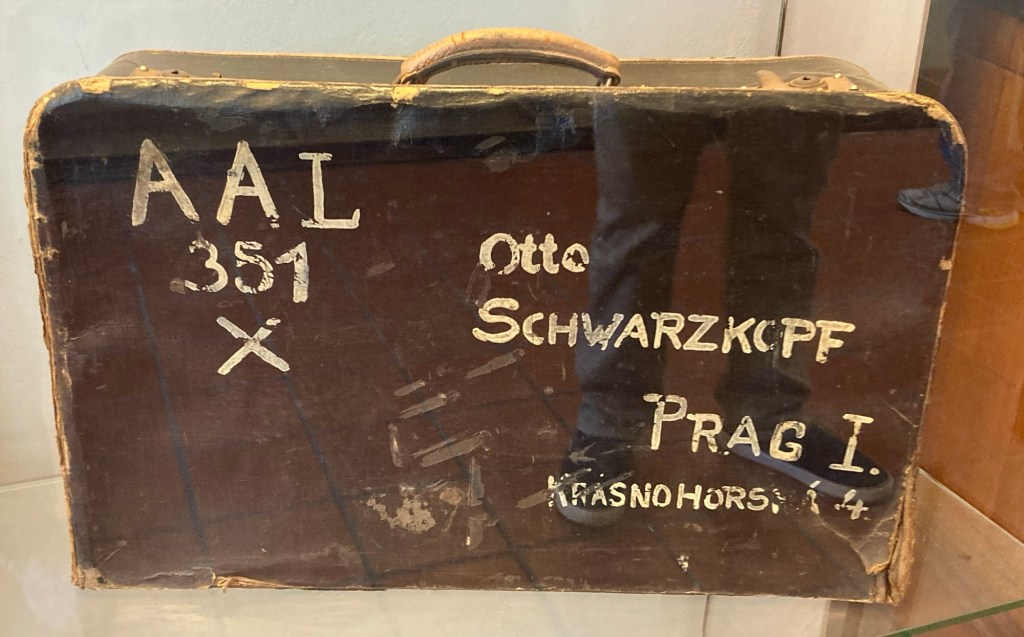
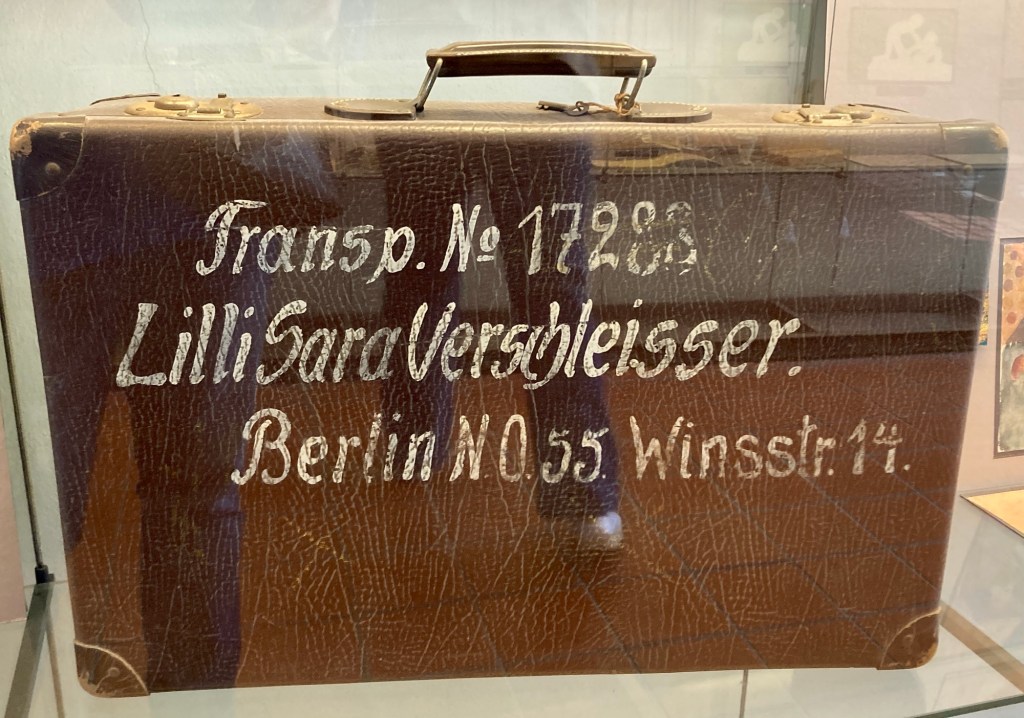
It was founded in 1906 by Augustin Stein and Hugo Lieben with the intention of preserving artifacts and documentation of the history of the Jewish community in Prague. During the Nazi occupation of Prague, the museum was used to store items of the individual Jewish people who were taken to concentration camps by the Nazis.
As you enter the museum, you’ll see multiple walls covered with the names of the Jewish families who were taken to concentration camps. It’s hard to fathom that so much venom can live in people’s hearts, resulting in the slaughter of millions of innocent people.
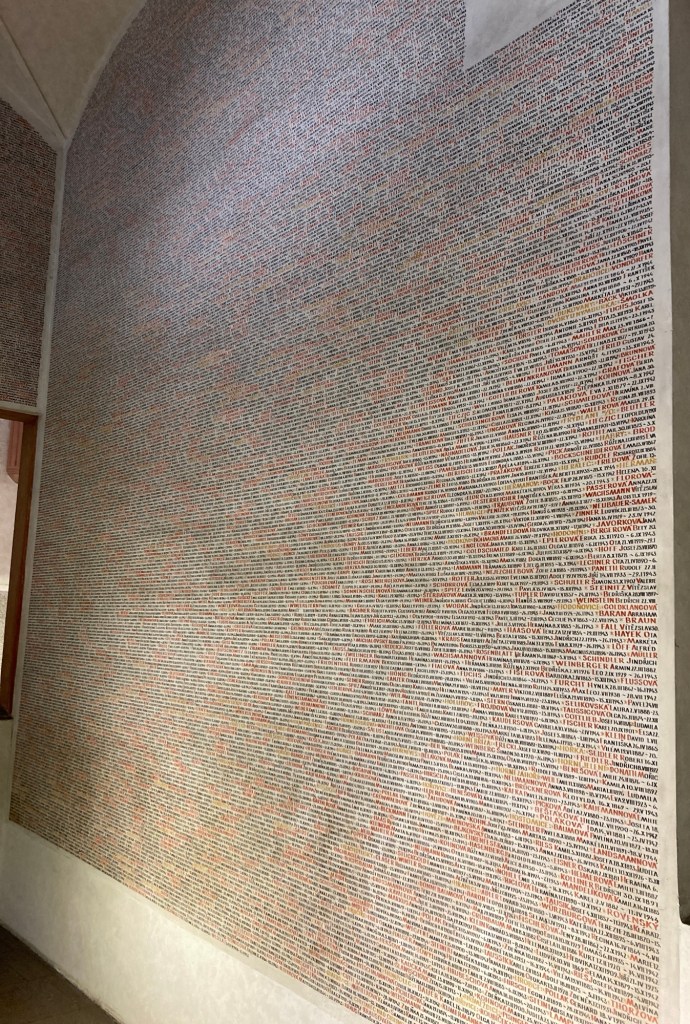

After the war, in which 77,297 Jews from Prague were murdered by Nazi thugs, the items went unclaimed. In May, 1945, Hana Volavková assumed leadership of the museum and the confiscated items. The first exhibition occurred just one month later, in June, 1945. There’s much more to the story; click here to learn more about the museum’s history.
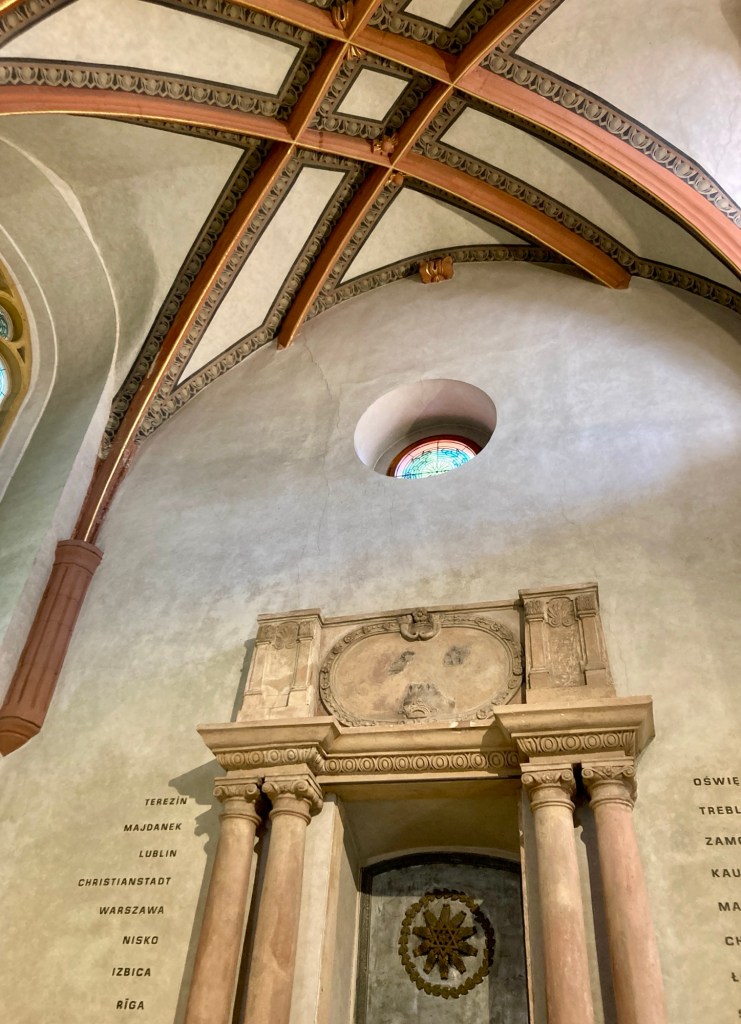
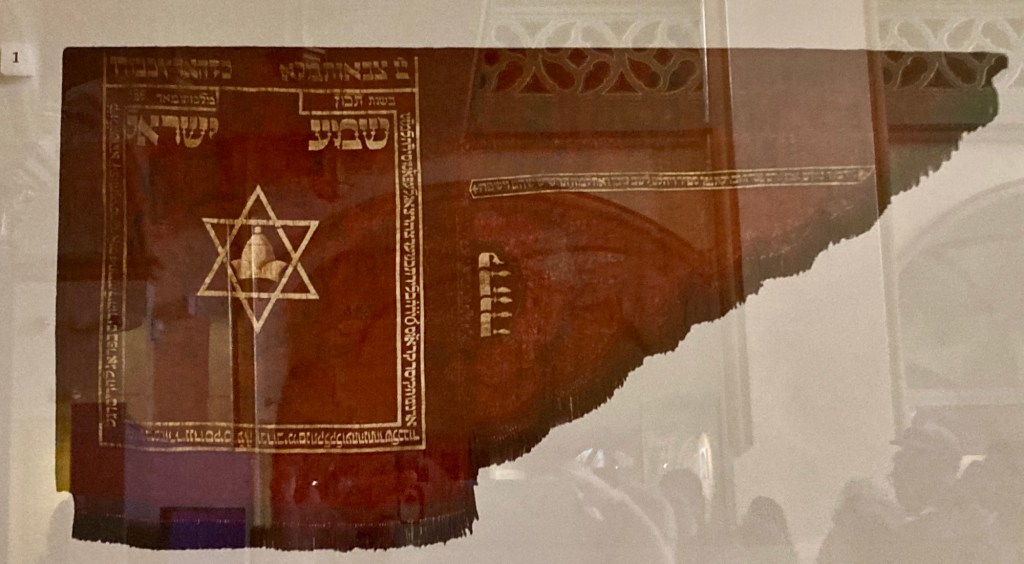
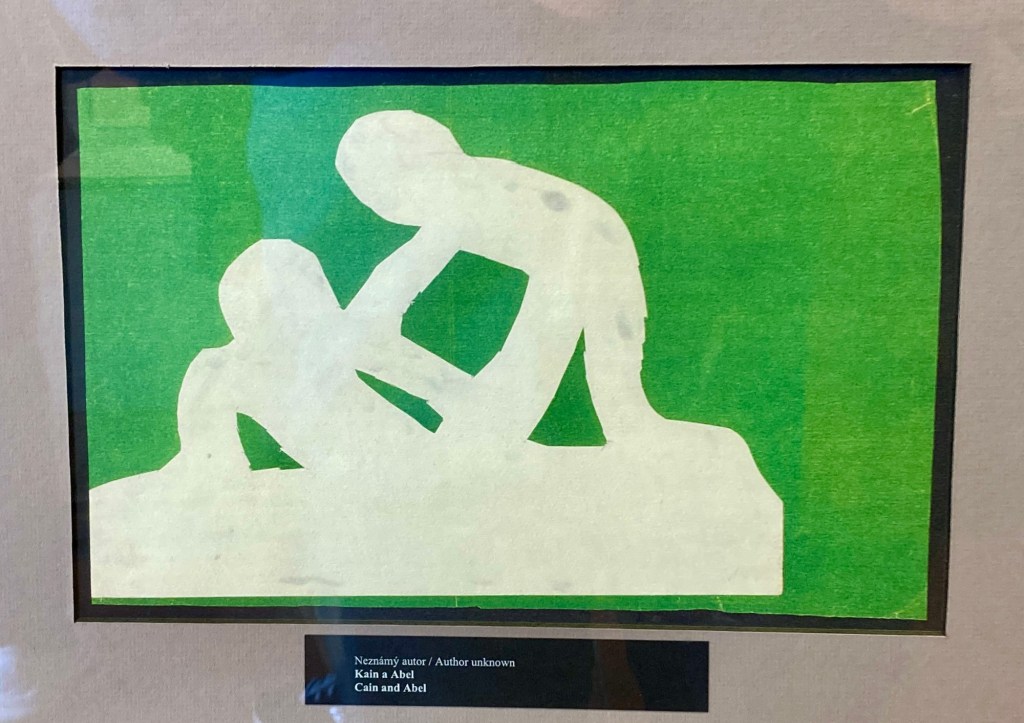
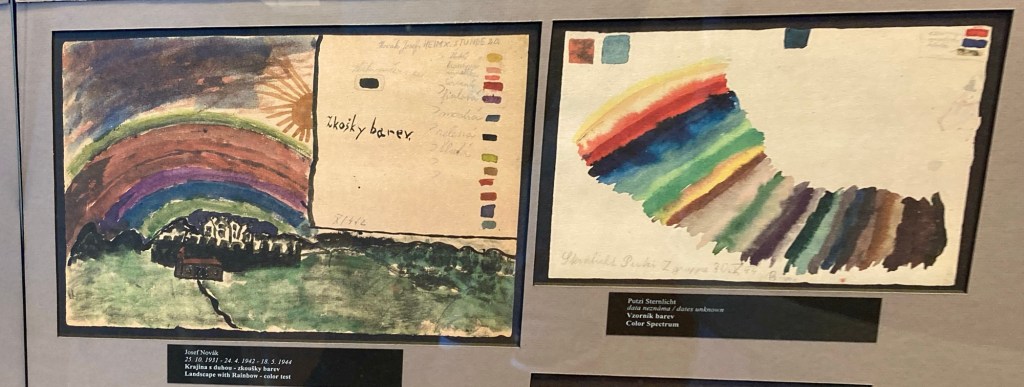
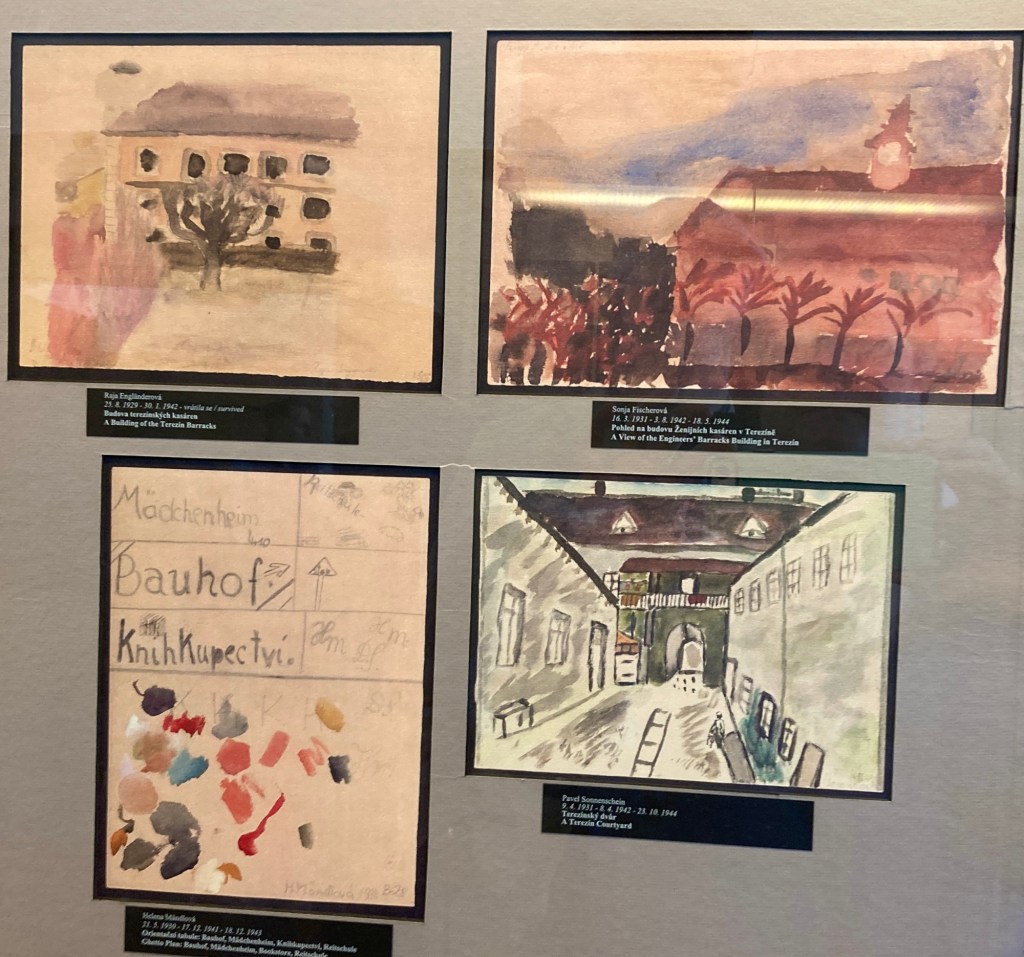
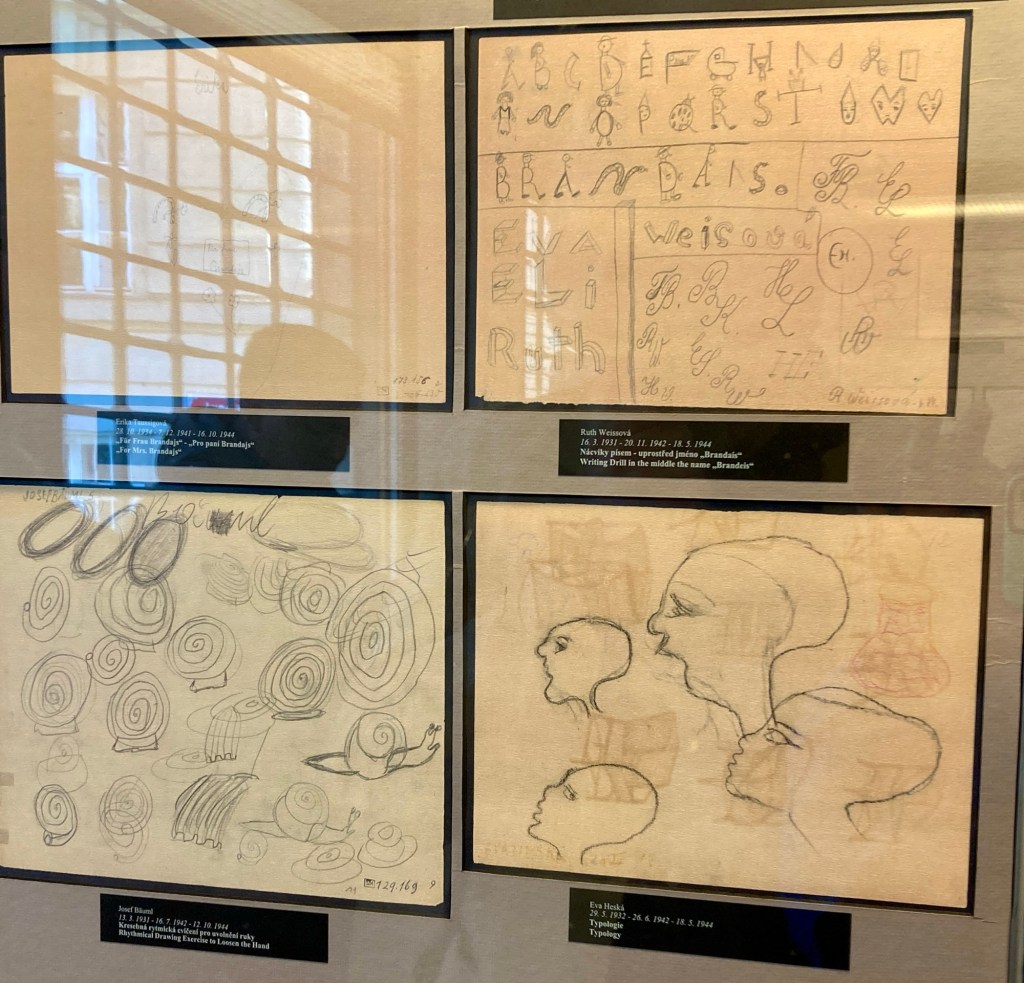
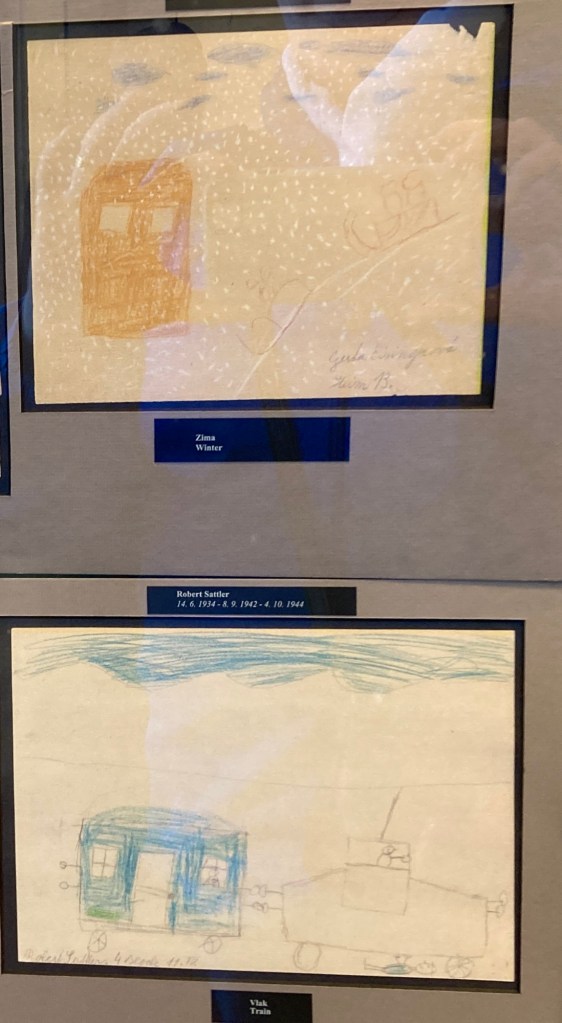
Friedl Dicker-Brandeis was a woman interned at Terezin who gave drawing lessons to children there. She studied art at Weimar Bauhaus and worked tirelessly to obtain art materials for the children. She was eventually transferred to Auschwitz where she was murdered by Nazis. Click here to learn more about this incredible woman. Some of the children’s works are on display in the museum.
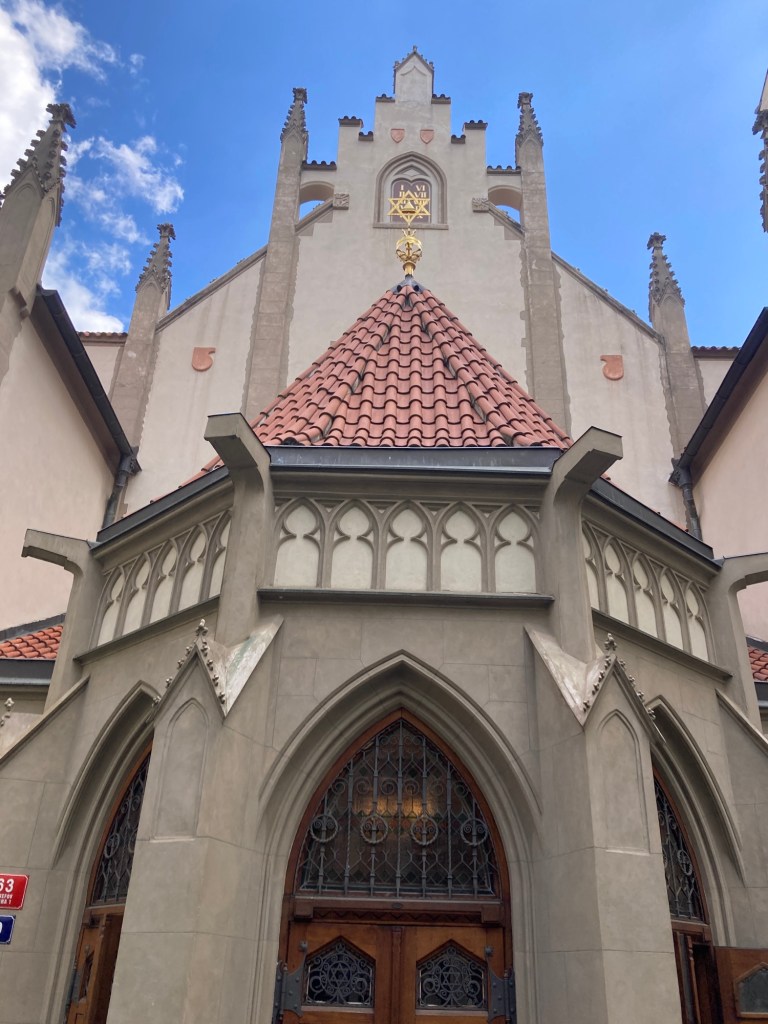
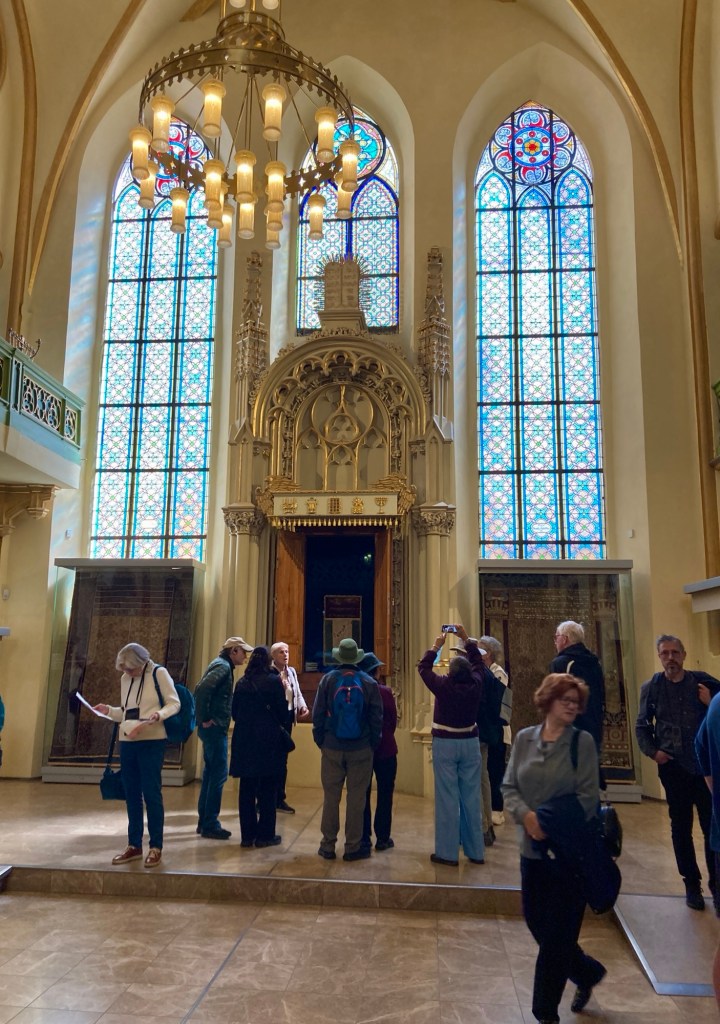
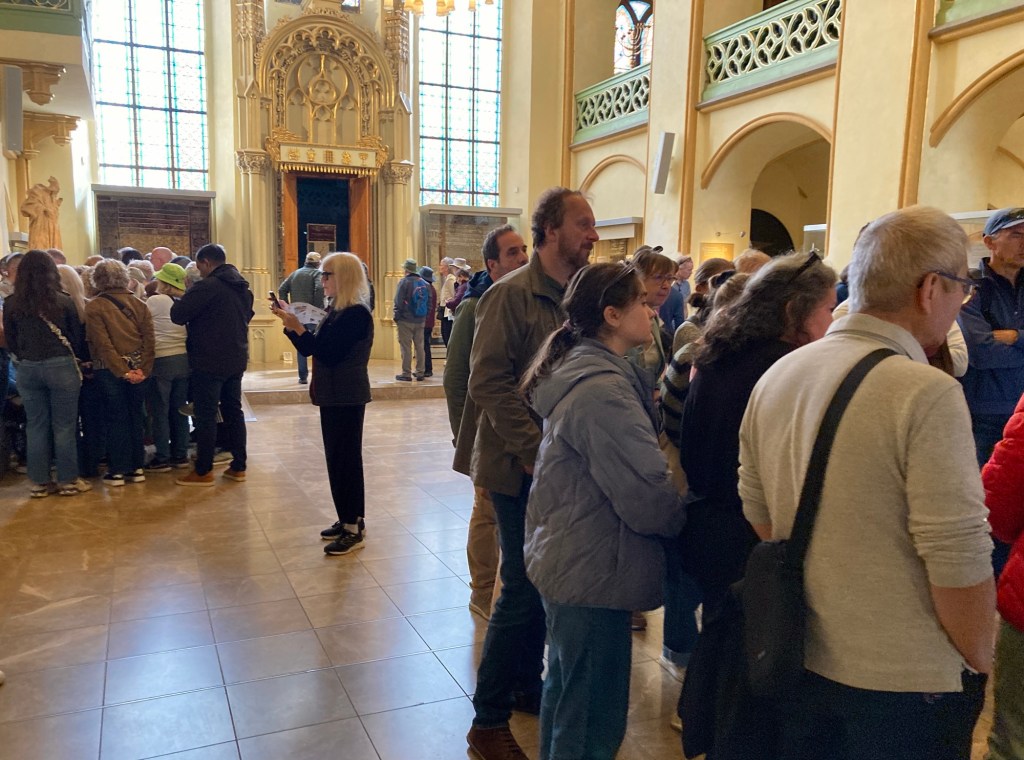
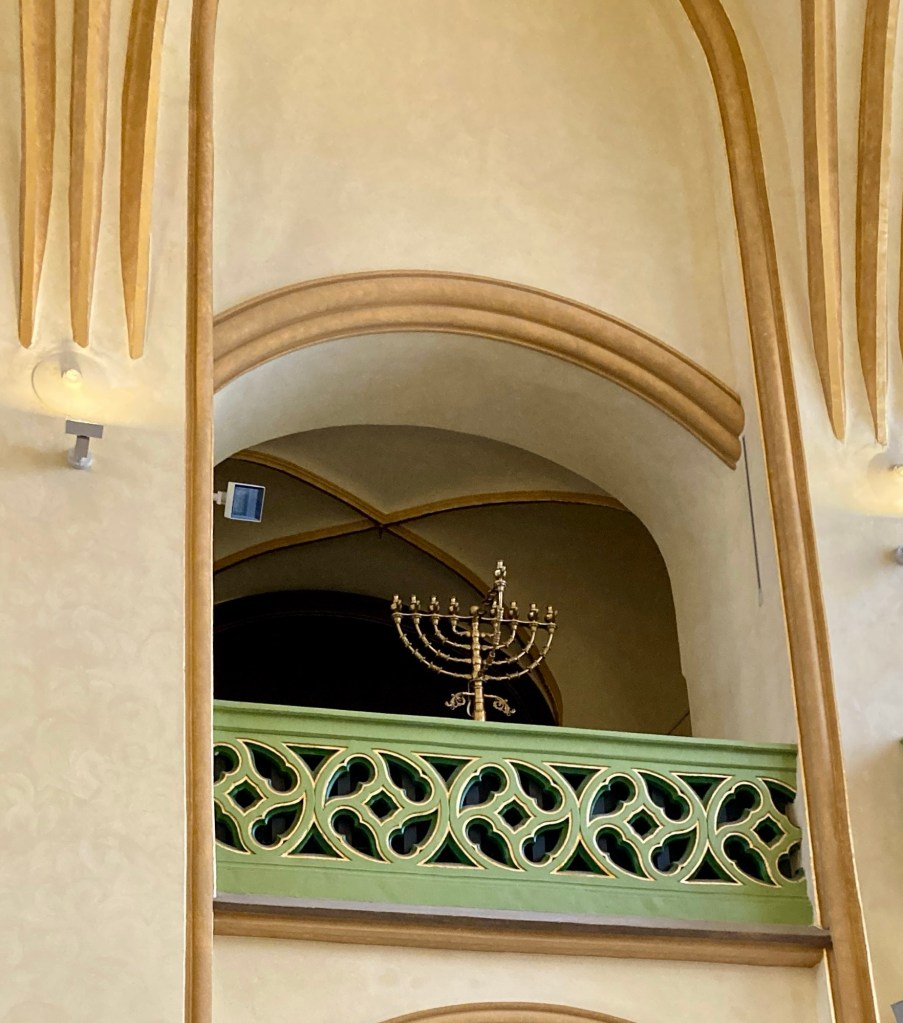
Maisel Synagogue was one of the synagogues on the tour. Like most of the city, it was quite crowded with visitors.
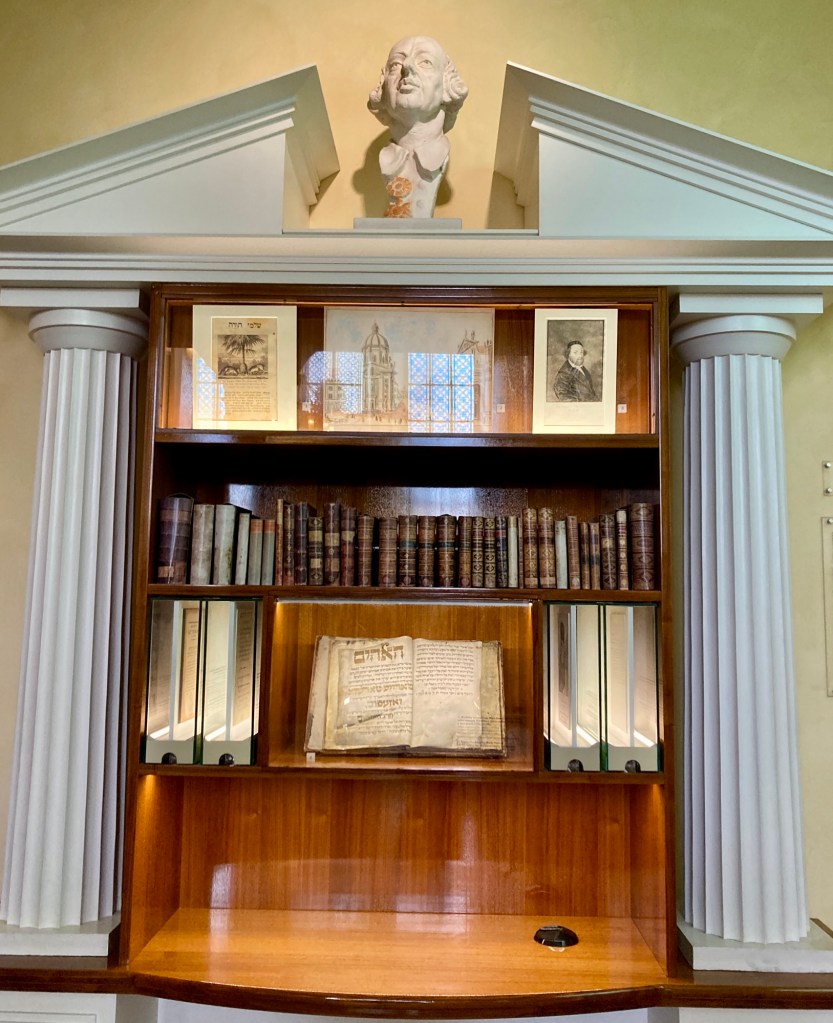
The cemetery is particularly significant. Dating to the 15th century, the first grave here belongs to rabbi and poet, Avigdor Kara, buried in 1439. The graves were stacked on top of each other due to Jewish customs and lack of space, thus the elevated structure of the cemetery. Emperor Joseph II banned burials within the city walls in 1787, when the last person was buried here.
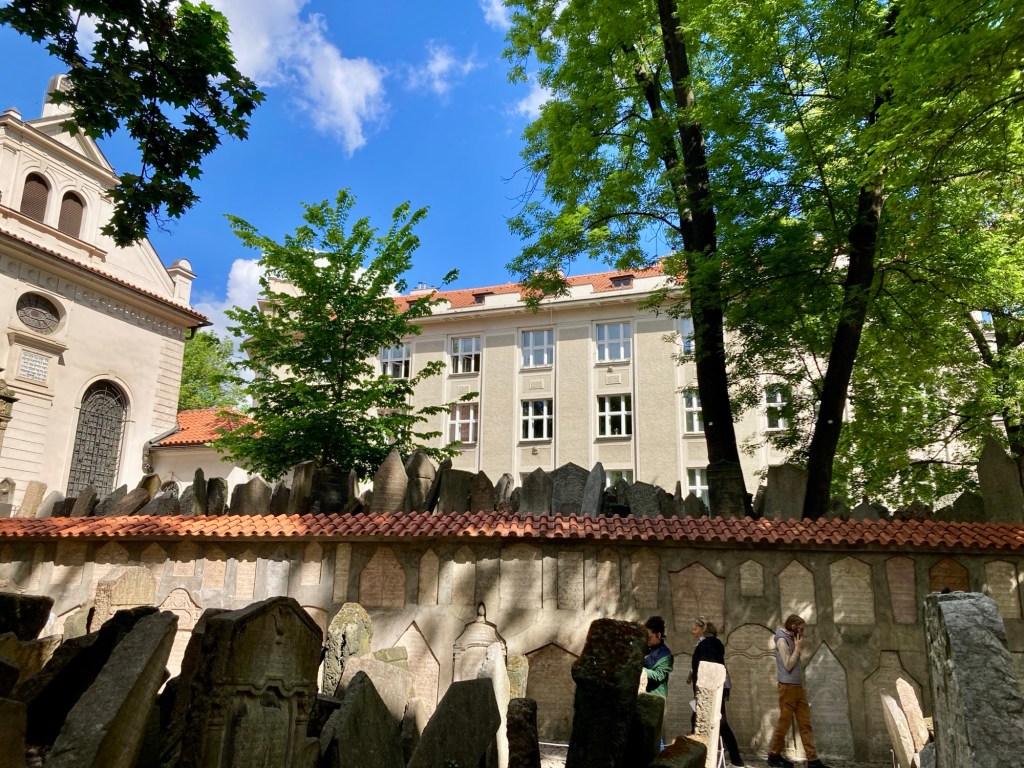
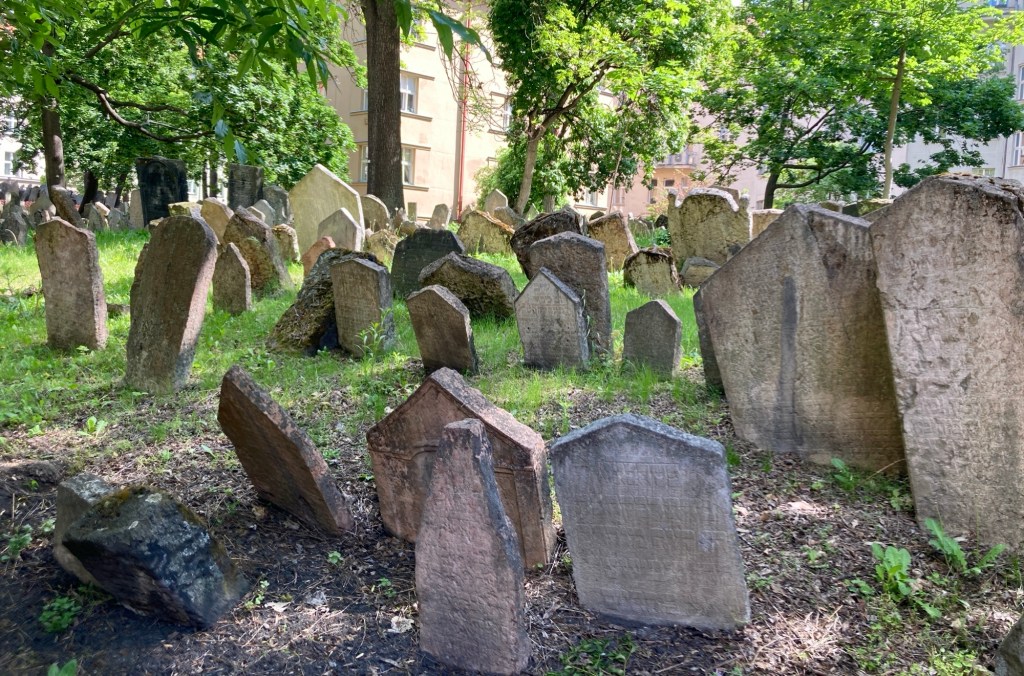
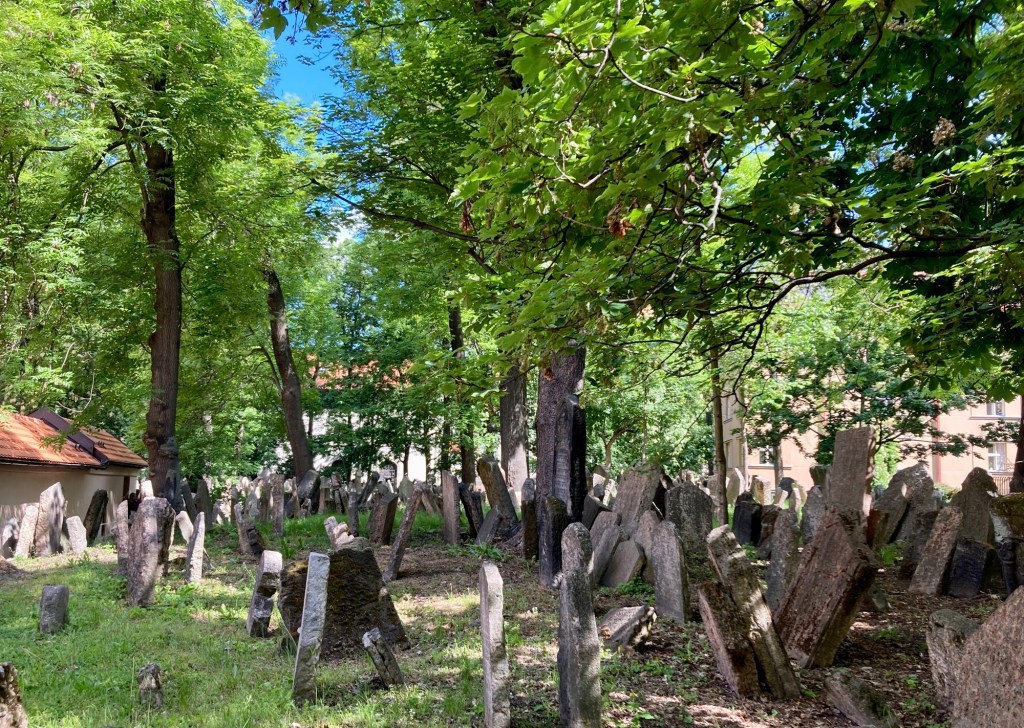
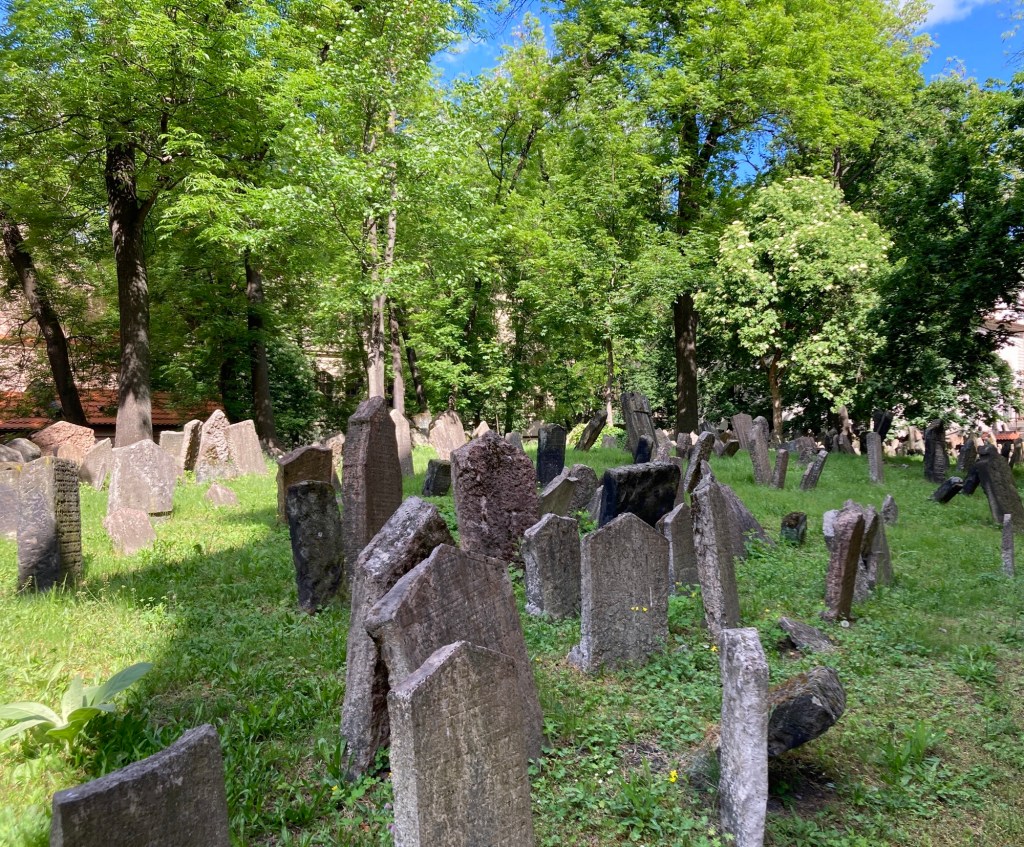
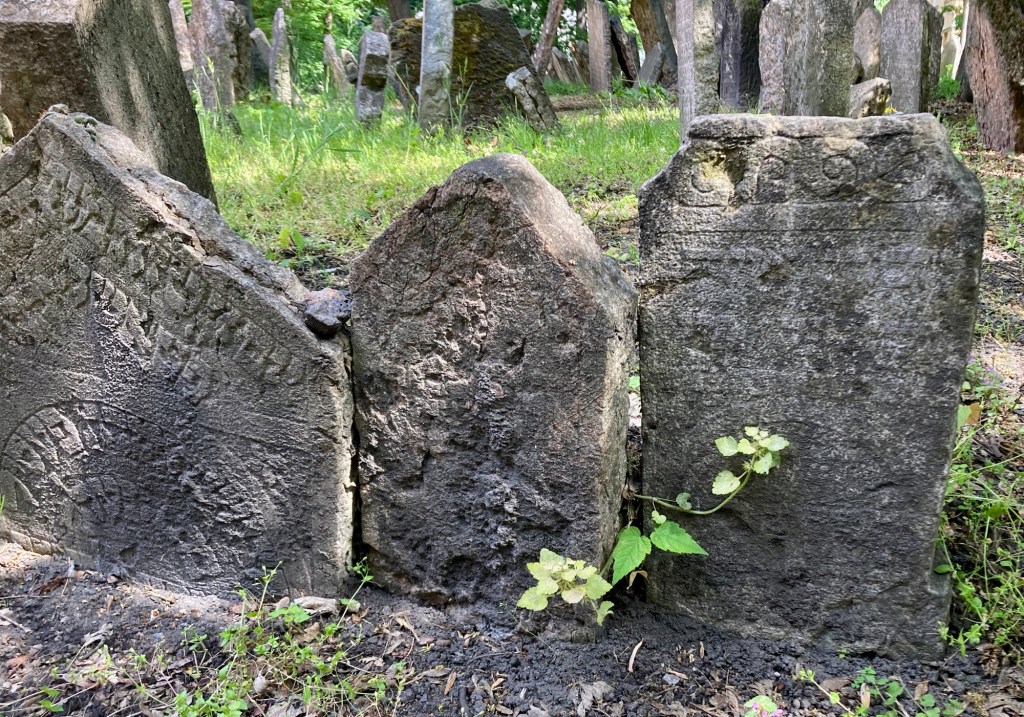
We noticed many graves had pebbles or small stones on them. We learned later that this indicates someone has visited, thus showing respect for the family legacy.
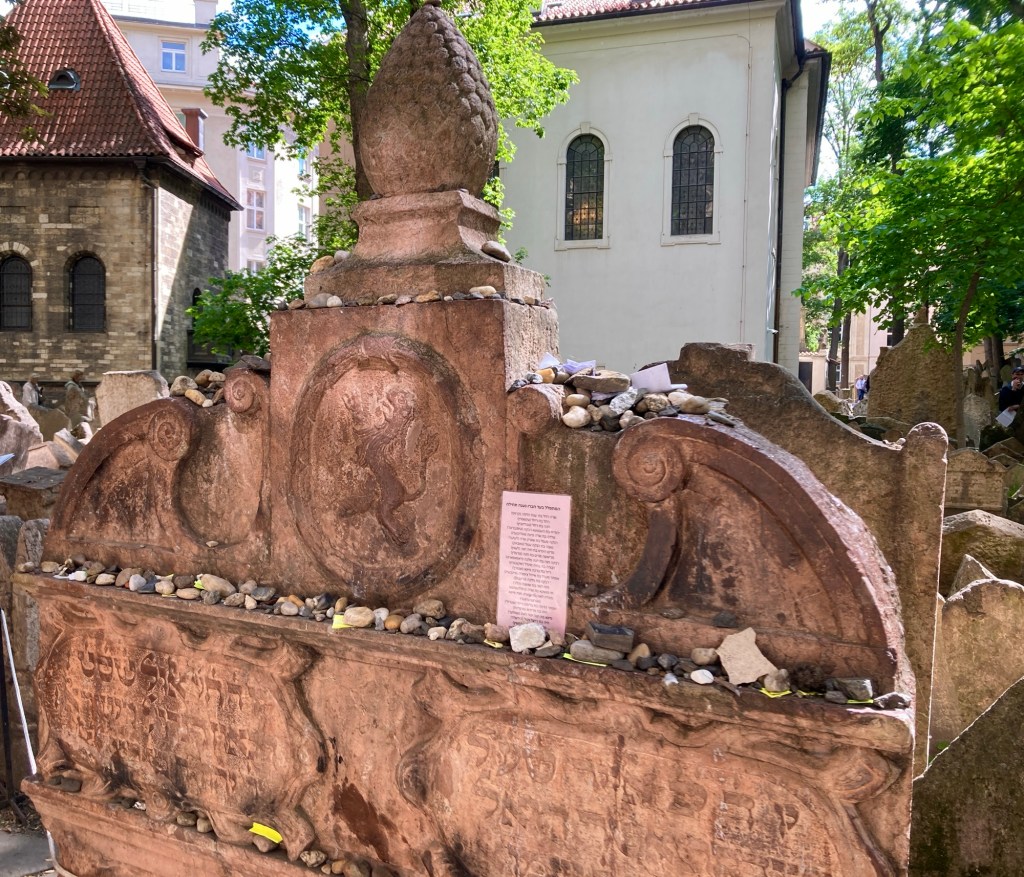
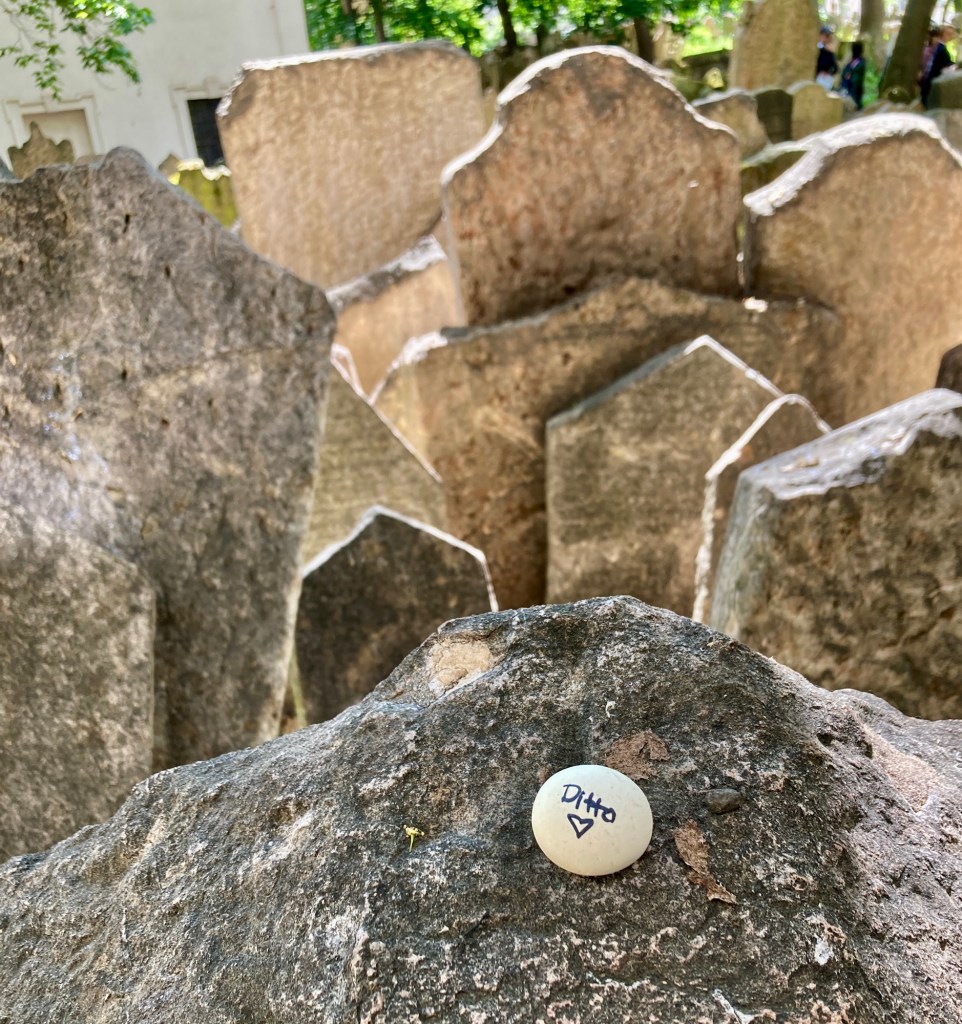
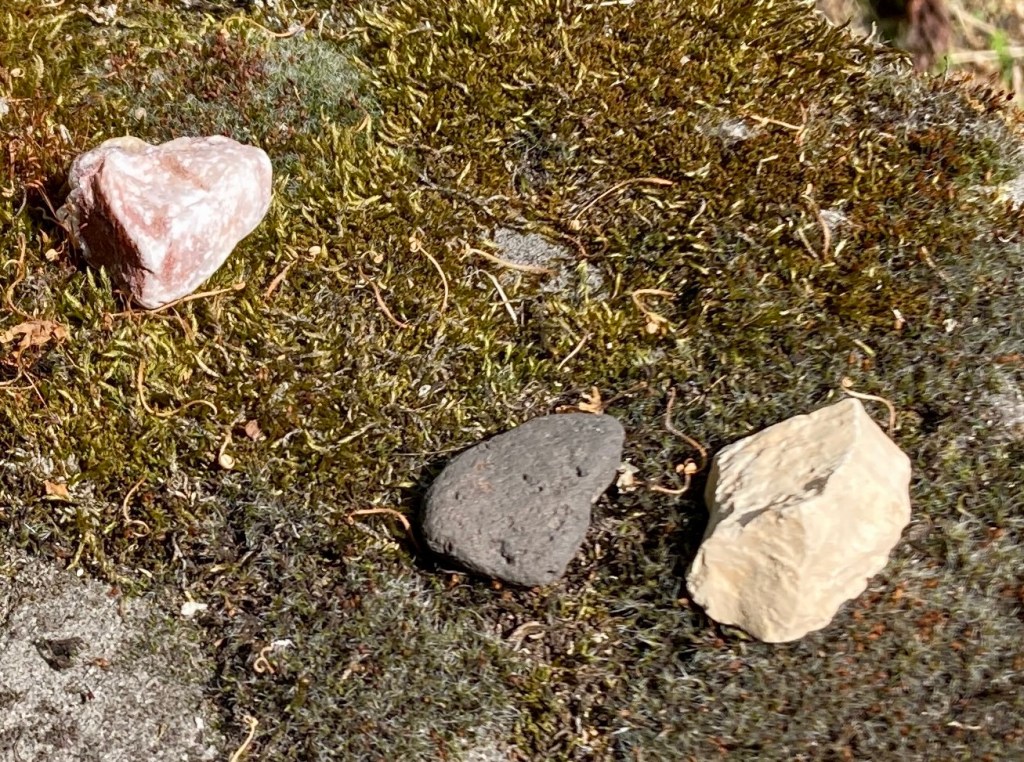
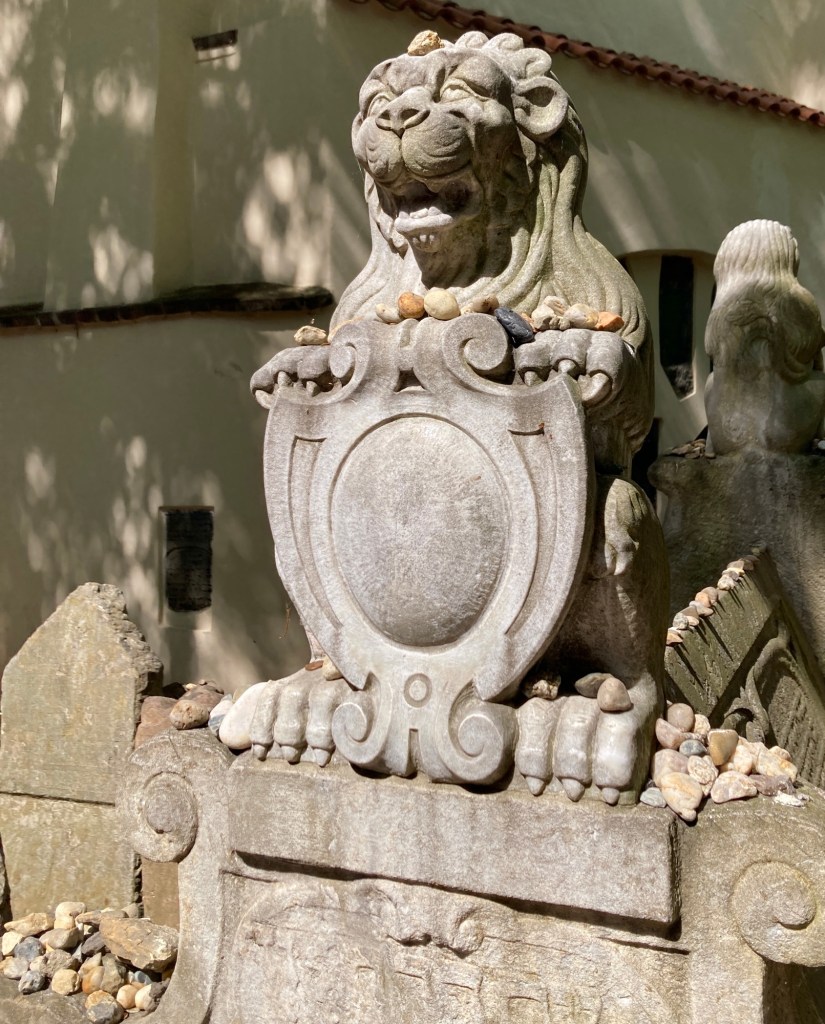
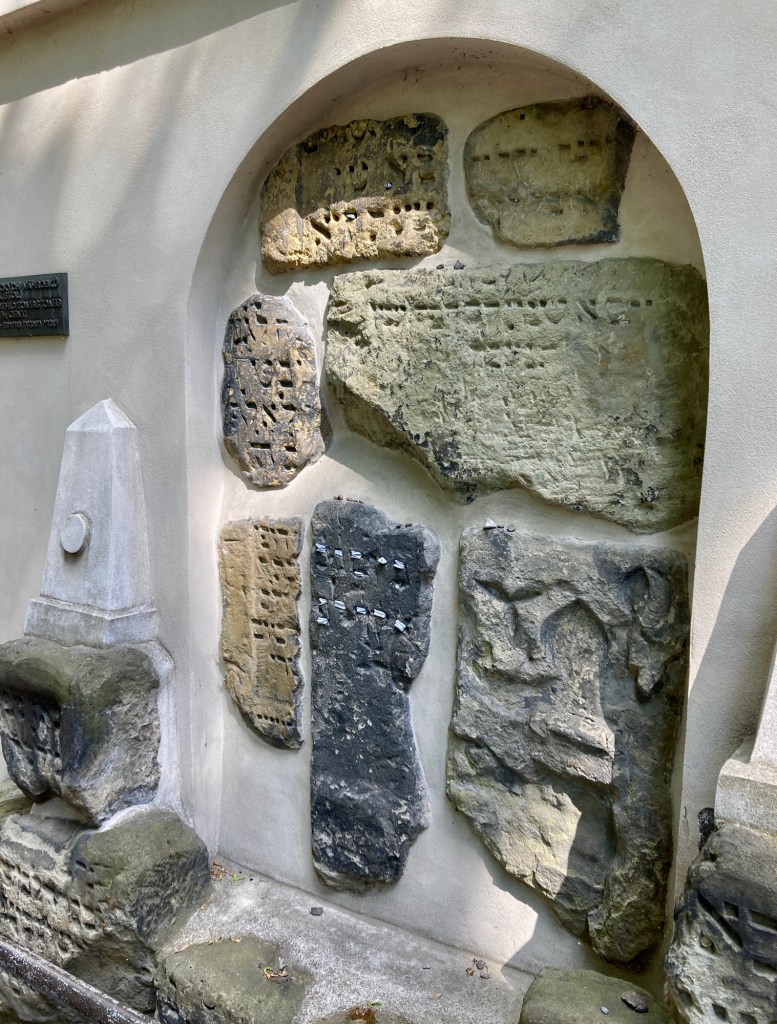
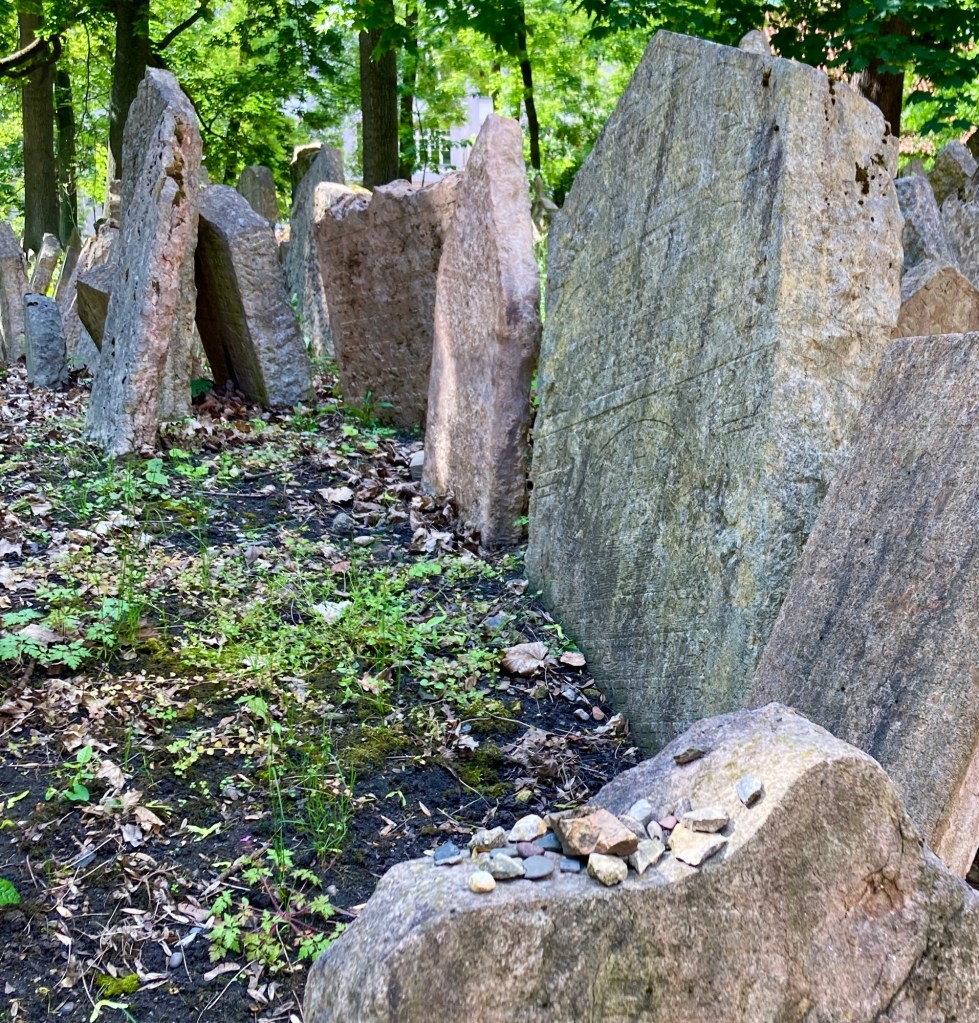
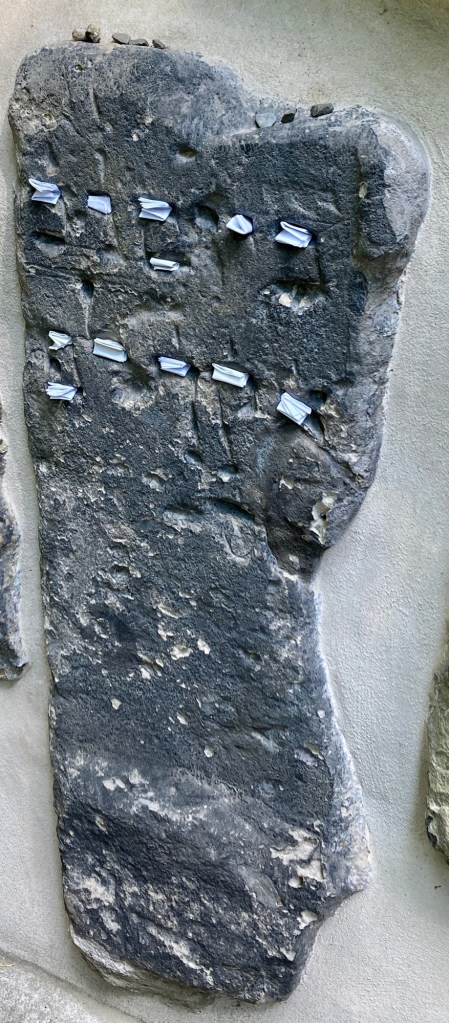
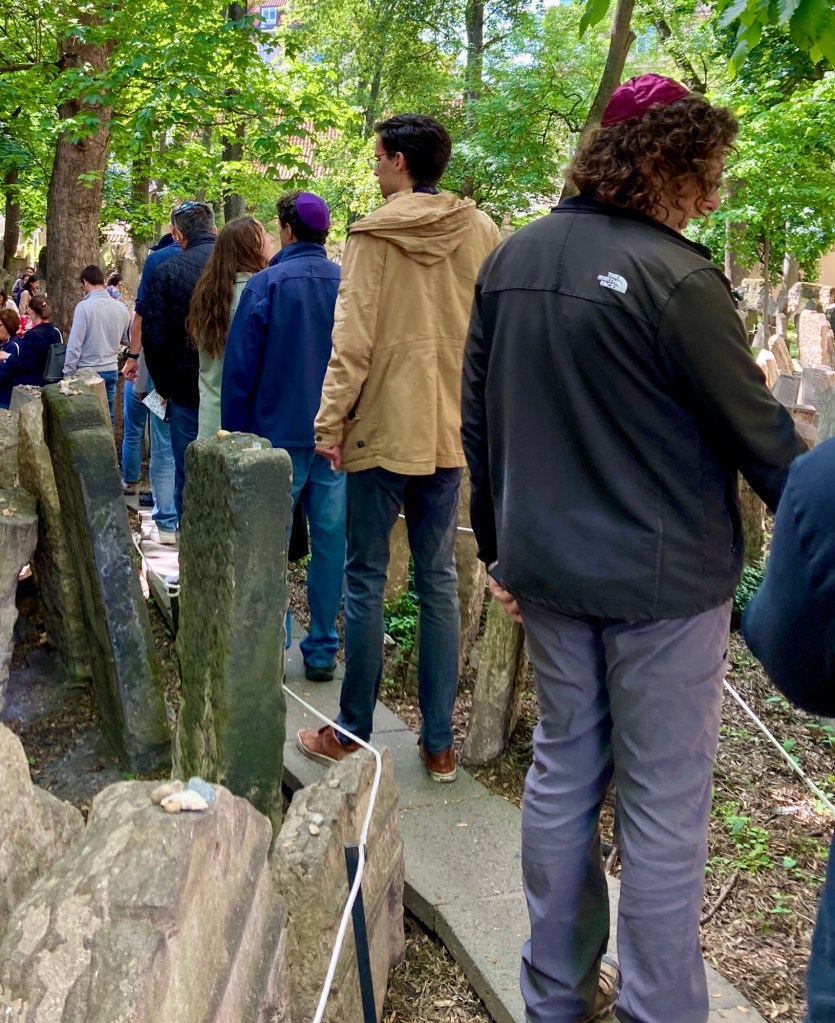
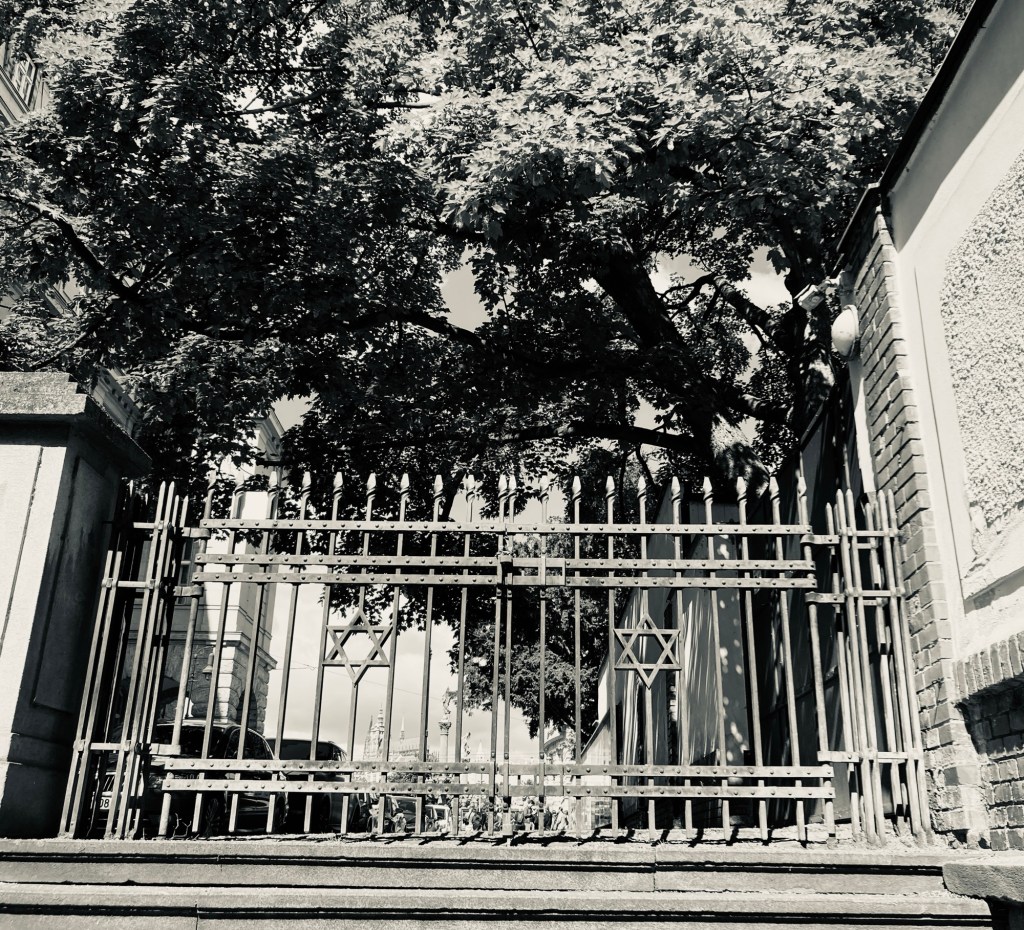
The museum was particularly poignant and terribly mournful. A sobering reminder of the devastation hatred and ignorance has on communities when specific ethnic or religious groups are targeted.
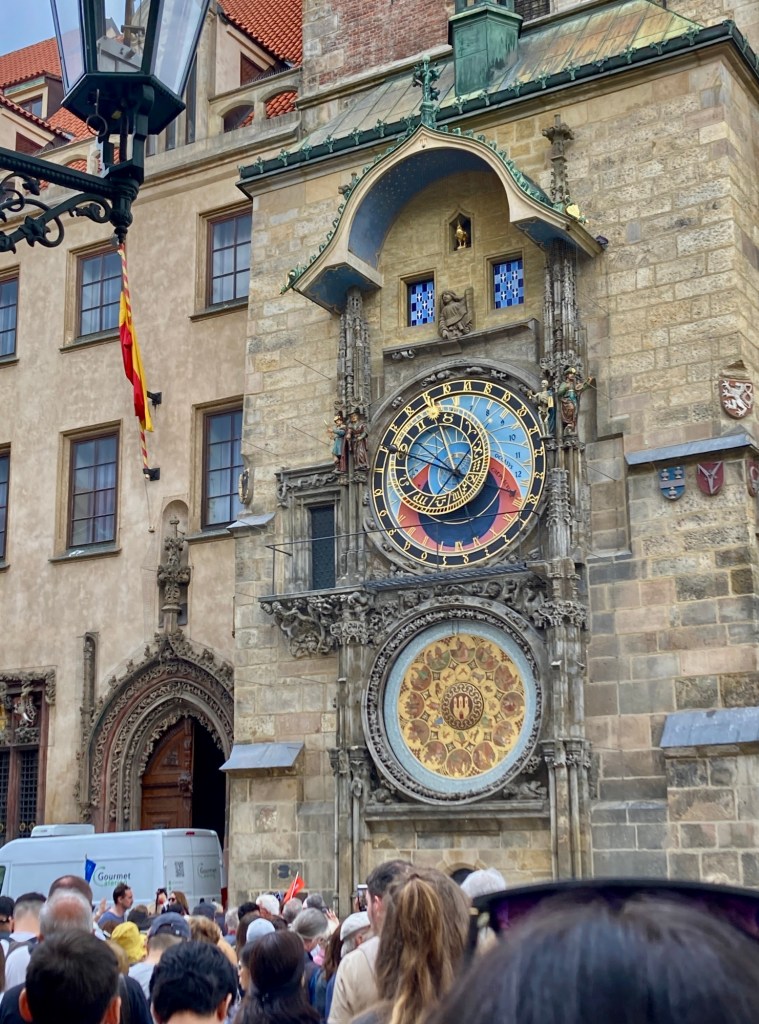
The famous Astronomical Clock was also on our itinerary, and for every other tourist in Prague. However, the clock is an incredible piece engineering that has been running continuously since it was installed in 1410! The medieval clock is located in Old Town Square and draws the biggest crowds at the top of of the hour when all twelve Apostles make an appearance. Click here to read more about the history of the clock.
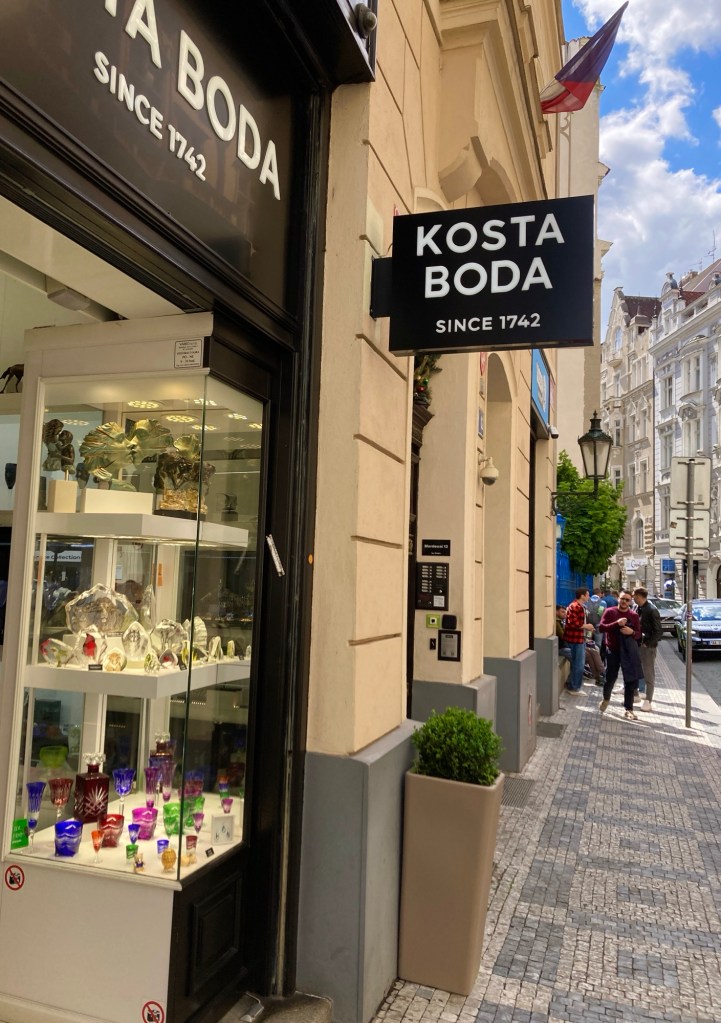
I saw this sign as we were walking to the synagogue; Kosta Boda glassworks, founded in 1742; wow!
Although we are currently in Kotor, Montenegro, I have more to share about Prague in the coming weeks. It’s an incredible city with rich history, amazing architecture, great food and so much more.
Click here to read theTravelsketcher’s post about our time in Kotor and the surrounding area.
As always, I would love to hear from you, so feel free to leave a message.
All the best,
Tricia


I toured the same museum years ago and also found it as you have described, “ a sobering reminder of the devastation hatred and ignorance has on communities when specific ethnic or religious groups are targeted.” Well said, Tricia. Lest we forget.
LikeLiked by 1 person
Thanks, Lynette. We left feeling so distraught about what’s happening in the US under you know who. History just keeps repeating itself.
LikeLiked by 1 person
I didn’t visit this museum in Prague. These museums are important to remember the atrocities that one society inflicts on another, as is still happening today. Maggie
LikeLiked by 1 person
Yes, Maggie, these atrocities are happening in the US right now. It’s sickening. As difficult as these museums are to visit, they are important reminders. Thanks for your comment.
LikeLiked by 1 person
Kosta Boda is Swedish and is based in my husband’s part of Sweden.
https://www.kostaboda.se/
Interesting museum – so much history and pain.
LikeLiked by 1 person
How interesting! It’s amazing that it’s been around for centuries!
LikeLike
Yes – we did a short tour of some of the factories three years ago if you are interested
https://thistlesandkiwis.org/2023/06/21/postcards-from-sweden-part-1-glasriket-and-more-from-kalmar/
LikeLiked by 1 person
Thank you so much for this well photographed story – not having been to Prague, sadly I have not visited the Jewish Museum to learn and pay my respects. I was a small child when such antisemitism swept Europe and my birth country of Estonia – at the other end of life I still clearly remember matters which puzzled and I did not understand. My parents had regular bridge nights of 3-4 tables at home . . . my favourite, young, pretty and warm ‘auntie’ was Jewish – I still remember seeing her on the street when all this was happening and wanting to run over for a cuddle – and Mom roughly pulling me back screaming ‘Stop it! Do you want us to be sent to prison or killed – she is Jewish’! She had always been my favourite auntie . . . . I did not understand then . . . I cringe when I think of it now . . .
LikeLiked by 1 person
Oh Eha, what a tragic story; it certainly understandable how that has haunted you your entire life. Racism, antisemitism and hatred of specific people is hard to fathom. It’s leads to so much trauma, death and pain. Thanks so much for sharing.
LikeLiked by 1 person
Prague is such an interesting city with so much history. We were there when it was cold and rainy and it was still very crowded with tourists. We say the clock and cemetery but not the museum…remarkable.
LikeLiked by 1 person
I had a feeling that it might be crowded year round. But, as you said, it is an interesting and popular city, so that makes sense. Thanks for your comment.
LikeLiked by 1 person
I love old cemeteries like that, although we didn’t see this one in Prague. Safe travels to you both.
LikeLiked by 1 person
I do too; they’re so interesting. Thank you!
LikeLiked by 1 person
I’ve not visited the Jewish Museum during my trips to Prague, although I’ve seen the outside of one of the synagogues. Goes to show that many Jews in many European countries, not just Germany, were affected tremendously by the Holocaust. A very sobering experience to be had.
LikeLiked by 1 person
Agreed, Rebecca; it was a horrific time in history, and seems to be happening again in the US. Our politicians never learn. Thanks for sharing.
LikeLiked by 1 person
Prague is such an interesting city. I have never heard of the museum (thank you for the tour), but I’ve heard of the clock. Your photos are beautiful. And I suppose it’s tourist season in Europe now … but sometimes you just have to endure the crowds to see these special places.
LikeLiked by 1 person
Thanks so much, Corna, yes, Prague is lovely. You’re correct, it is close to tourist season here, so we must power through! 👊
LikeLiked by 1 person
The Jewish Museum was so moving. When we were there parts of it were closed, so I loved seeing your pictures from it. Prague has such a layered history to it
LikeLiked by 1 person
Agreed, Prague has such an interesting and rich history. The Jewish Museum is a difficult place to visit, but it’s important we do so; good to know you visited too. Thanks for commenting!
LikeLiked by 1 person
Love the Astronomical Clock. Wild to hear that it’s been running continuously since 1410. We didn’t get a chance to visit the Jewish Museum when we were in Prague.
LikeLiked by 1 person
I thought so too; it really drives home the saying, “they don’t make things like they used to!” Thanks for commenting!
LikeLiked by 1 person